

When a buyer asks me whether an electric care bed is “good enough” for a bulk order, I usually avoid answering from the catalogue alone. A catalogue can show the functions, frame size, motor count, and price. It cannot show whether the bed will still feel steady after months of use, whether the handset is easy for nurses to explain, whether the packing will survive a long route, or whether spare parts will be available when a distributor needs them quickly.
For B2B buyers, especially distributors, hospital project contractors, nursing home operators, and importers, the best way to evaluate an electric care bed is to look at it as a working system. The bed is not only a steel frame with motors. It is a combination of structure, movement, safety details, accessories, packaging, service support, and the supplier’s ability to repeat the same quality across many units.
This guide is written from that practical angle. It can help you ask better questions before confirming a container order for an electric hospital bed, a home care model, or a related nursing bed project.
Start With the Real Use Scenario
The first mistake I see in electric care bed sourcing is choosing by function quantity before clarifying the use scenario. A three-function bed, five-function bed, and low-bed model may all look suitable in a brochure, but they serve different rooms, staff habits, and patient profiles.
Before comparing prices, write down where the beds will be used. Are they for a general hospital ward, a rehabilitation center, a nursing home, a private home care program, or a government tender? Each setting has a different balance between comfort, safety, cleaning, and budget.
For hospital wards, buyers often care about durability, bed height, side rail operation, brake reliability, and easy disinfection. For nursing homes, quiet movement, simple controls, and safe transfer height may be more important. For home care distributors, packaging size, installation time, and clear user instructions can affect after-sales cost. If the project includes pressure injury prevention, it may also need compatible anti-bedsore air mattress options rather than a bed frame alone.
Check the Motor System Carefully
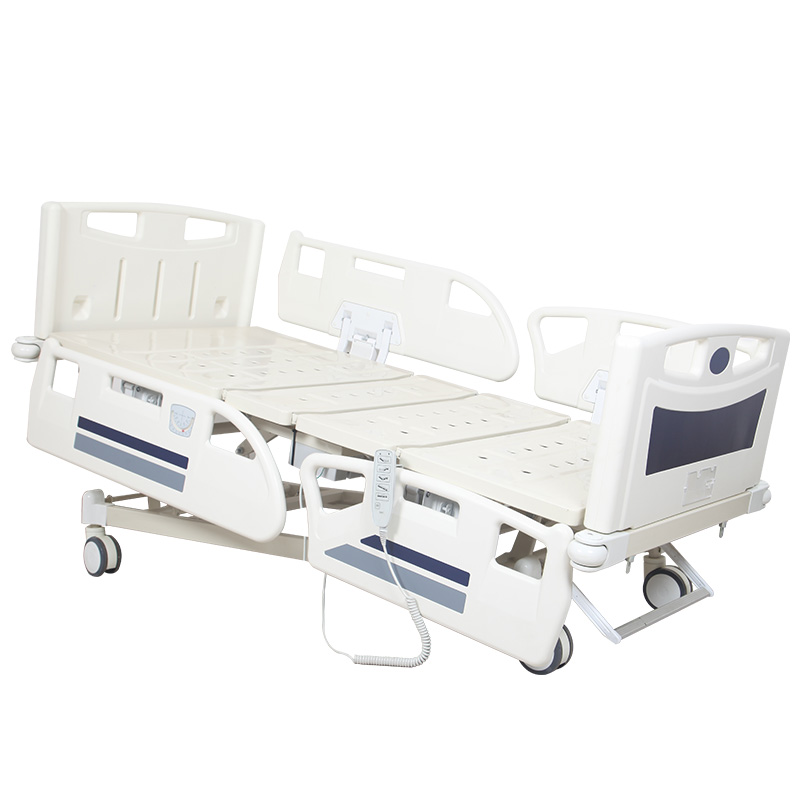
The motor system is the heart of a motorized care bed. Many buyers compare motor brand names, and that is understandable, but the brand alone does not tell the full story. You also need to check rated load, movement speed, noise level, cable protection, control box placement, and how the motors are fixed to the frame.
Ask for video of each function under load, not only an empty-bed demonstration. Backrest lifting should move smoothly without shaking. Knee-rest lifting should not create a sudden angle that makes the mattress slide forward. Hi-low movement, if included, should feel stable at the top position.
Also confirm the power standard early. Buyers sometimes leave voltage and plug type to the end of negotiation, then discover the quoted model was not prepared for their market. For container orders, small electrical details can become expensive when hundreds of units are already packed.
Do Not Ignore the Handset and Control Layout
The handset looks like a small accessory, but it is one of the parts that users touch most. In a nursing home or home care setting, the buttons should be clear, responsive, and not too easy to press by mistake. In hospital projects, staff may prefer lockout options so certain functions can be controlled by caregivers rather than patients.
When reviewing samples, press every button several times and listen to the response. A handset should not feel loose or fragile. The cable length should be practical for the bed layout. The hook should hold well on the side rail or bed board. If the supplier offers multiple handset options, ask which one is used for standard production and which one is an upgrade.
Look at Frame Stability, Not Only Steel Thickness
Steel thickness matters, but it is not the only sign of strength. Frame design, welding quality, cross support, bed platform structure, and surface treatment all affect durability. A well-designed frame can perform better than a heavier but poorly supported one.
During inspection, look at the corners, welding points, motor brackets, caster mounting plates, and side rail connection areas. These are the places where stress usually appears first.
For B2B purchasing, repeatability is as important as one good sample. Ask the factory how it controls welding consistency, powder coating thickness, and assembly inspection. If possible, review several beds from the same batch, not only the showroom sample. A stable factory production process matters because distributors need predictable quality across future repeat orders.
Side Rails, Bed Boards, and Casters Deserve Attention
Side rails are often treated as a visual feature, but they influence safety, cleaning, and user confidence. Aluminum alloy rails, ABS rails, and full-length nursing rails all have different advantages. Check whether the release mechanism is easy for staff but not too easy for patients to operate accidentally. Rails should move smoothly and lock firmly.
Bed head and foot boards should be easy to remove if the project requires quick cleaning or emergency access. ABS boards are common because they are easy to clean and give a modern look, but the connection hardware must be strong.
Casters are another area where cost cutting appears quickly. A care bed may look solid in photos, but weak casters can make the whole product feel cheap. Confirm caster diameter, brake style, directional control if needed, and whether the brakes are easy to operate with shoes.
Plan Accessories Before the Order Is Final
Bulk buyers often negotiate the bed first and discuss accessories later. That can work, but it is not ideal. Accessories influence packing, documentation, spare parts, and the total project quotation. Common options may include IV poles, mattress retainers, dining tables, bed extension parts, lifting poles, oxygen cylinder holders, and other medical bed accessories.
For distributors, spare parts planning is especially important. A buyer should ask which parts are recommended for local stock: handsets, control boxes, motors, casters, side rail locks, and power cables are typical examples. A supplier that can provide a clear spare-parts list is usually easier to work with over the long term.
Review Packaging Like a Logistics Person
Good packaging is not decoration. It protects margin. Electric care beds are large, heavy, and full of parts that can be scratched or bent during transport. Ask for carton dimensions, gross weight, packing photos, loading quantity, and reinforcement details.
For importers, container loading data should be checked before the final price comparison. A bed that is slightly cheaper per unit may become more expensive if fewer units fit into a container. Knock-down packing can improve loading quantity, but it may increase installation work. Fully assembled packing is easier for end users but usually takes more space.
Ask Supplier Questions That Reveal Experience
Before confirming a bulk order, ask questions that require practical answers. How many units of this model were shipped in the last year? Which parts have been improved compared with the older version? What is the normal lead time for motors and control boxes? Can the supplier provide assembly instructions, loading photos, and inspection reports? What happens if a handset fails during the warranty period?
The answers do not need to sound perfect. A reliable supplier will explain limits, options, and trade-offs. For example, a stronger caster may increase cost but be recommended for hospital projects, while a simpler caster may be acceptable for some home care programs.
If your project is still in the comparison stage, it is reasonable to contact the sales team with a clear use scenario, target quantity, destination country, and required functions.
Final Advice for B2B Buyers
An electric care bed purchase should not be judged by one number on a quotation sheet. The better approach is to compare the complete working package: frame design, motor reliability, control layout, side rail safety, caster performance, accessory compatibility, packaging, spare parts, and factory support.
If I were reviewing a new electric care bed supplier, I would start with a sample, test it under realistic conditions, ask for production details, and study the supplier’s response speed. A good bed should move smoothly, feel steady, be easy to explain to caregivers, and arrive at the destination without avoidable damage.
That is the real value of careful sourcing. It does not only reduce risk; it helps buyers build a product line they can sell with confidence, reorder without anxiety, and support properly in their own market.