

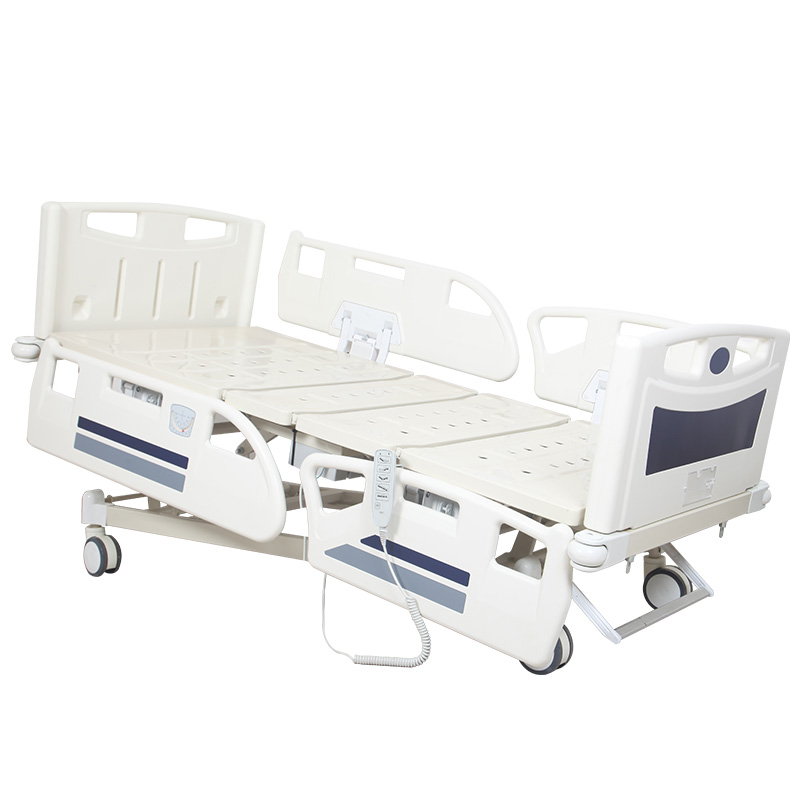
Searching for an electric hospital bed for sale usually means the buyer has already moved beyond basic product research. At this stage, the important question is no longer simply, “What is an electric hospital bed?” Instead, hospital buyers, distributors and medical equipment importers need to determine which electric bed configuration is suitable, what should be included in the quotation, which specifications directly affect price, and how to compare different offers fairly. Two electric hospital beds may look similar in photographs while using very different motors, frame structures, side rails, caster systems, mattress configurations and control systems. Before asking for the lowest price, buyers should first define the actual product they need. You can review different electric hospital bed for sale configurations according to ward requirements, function level and purchasing quantity. The same electric bed is not necessarily suitable for every hospital department. Before comparing quotations, buyers should identify where the beds will be used. The application determines how many functions are actually required. It is common for buyers to assume that a five-function bed is automatically better than a three-function model. That is not always true. If a general ward mainly requires backrest, leg and height adjustment, a three-function electric hospital bed may already provide the necessary daily functionality. Additional functions should solve real clinical or caregiver needs. Depending on the model, electric hospital beds can provide several powered movements. The backrest raises the patient's upper body from a flat position toward a more upright posture. Depending on the selected model, the maximum angle may be approximately 70–75°. The leg section supports lower-body positioning. Depending on the model, the adjustment may be approximately 30–45°. The complete mattress platform moves vertically. This is particularly important for caregiver working height and patient transfer. Selected higher-function electric beds may include whole-bed tilt functions. Depending on the design, the tilt range may be around 0–12°. The exact range should always be confirmed for the selected model. A three-function electric hospital bed normally focuses on the three most frequently used powered movements: This configuration can be practical for many general hospital wards. A five-function model usually adds additional whole-bed positioning functions. Depending on the design, these may include Trendelenburg and reverse Trendelenburg. Buyers should confirm the exact function definition because suppliers may use different naming systems. This is an important technical point when comparing products. A quotation stating “five-function electric bed” does not automatically tell the buyer how many actuators are installed. One actuator may contribute to more than one combined movement depending on the bed's mechanical design. The actuator system is one of the core differences between electric hospital beds and manual models. A professional quotation should identify the motor configuration clearly. Depending on configuration, IPX4 motors may be supplied, while selected systems may offer IPX5 options. The exact motor specification should be confirmed before order placement. For hospitals and distributors, long-term serviceability matters. If one actuator eventually fails, it is preferable to replace the affected component rather than the entire electrical system where the design permits. The control box coordinates signals between the handset and actuators. Buyers should not assume that every controller from the same brand is interchangeable. Port configuration and function mapping can differ between bed models. The controller should show only the movements available on the supplied bed. Selected higher-level hospital beds may place patient controls in the side rails. This can improve patient accessibility but also changes the electrical and rail configuration. Buyers should only specify this option if it fits the intended department and budget. Higher-level electric hospital beds may also provide caregiver-oriented control interfaces. These can offer additional functions depending on the model. They should not be assumed to be standard on every electric bed. A high-quality motor cannot compensate for a weak bed frame. The electric system and mechanical structure must work together. Depending on the product, robust hospital beds may use main frame tubing around 80 × 40 mm with different material thicknesses. The exact specification should be confirmed for the selected model. Hospital beds are used with the patient, mattress and sometimes additional equipment. Depending on the model, safe working loads around 250–260 kg or higher may be available. This should never be assumed across the entire product range. Always confirm the rated load for the exact model being quoted. The mattress platform usually consists of several articulated sections. The sections should move smoothly without excessive twisting or misalignment. The phrase “electric hospital bed for sale” tells the buyer nothing about the rail configuration. Depending on the model, electric beds may use: Selected designs may provide rail height around 400 mm above the platform. However, mattress thickness reduces the usable height above the sleeping surface. Bed and mattress should therefore be evaluated together. Split side rails divide the bedside protection into head-side and foot-side sections. This can allow more selective access to the patient. However, the exact rail design should be checked together with mattress size and bed movement. Do not judge rails only from photographs. A hospital bed may be moved between patient rooms, treatment areas or departments. The caster system therefore matters. Some electric hospital beds use individual caster brakes. Higher-level models may use central locking systems. Can be practical for beds that move less frequently. Can make locking and releasing the bed faster in environments where beds are moved regularly. Selected medical caster systems may include directional or steering support. This can help during corridor movement but is not necessary for every ward bed. The feature should be specified only when required. Height-adjustable beds should not be compared only by their maximum height. The buyer should evaluate the complete range. If the platform minimum height is 400 mm and the mattress is 80 mm thick, the actual sleeping surface is approximately 480 mm above the floor. This is why buyers should ask for both bed height and final mattress-top height. Some quotations include a mattress while others do not. This can create misleading price comparisons. Hospital beds commonly have external dimensions larger than the actual mattress platform. For example, a bed around 960 mm wide externally may use a mattress around 900 mm wide depending on model. The quotation should identify the actual mattress size. Buyers should never assume that all product photographs show standard included accessories. A clear quotation should distinguish between: Items supplied with every bed. Items that can be added according to the project. This prevents buyers from comparing different product packages as if they were identical. An electric hospital bed price is determined by much more than the number of functions. This is one of the most important rules when reviewing offers. Supplier A may offer a lower price because the bed uses: Supplier B may include a higher configuration. The prices cannot be compared fairly until both quotations are normalized. A professional electric hospital bed quotation should ideally identify: Distributors usually need more than one shipment. They should therefore evaluate whether the same model can be supplied consistently over time. Hospitals should focus strongly on daily workflow. Contractors may need a combination of technical and logistical information. For a new supplier or customized configuration, a sample can be useful before a large bulk order. A physical sample allows the buyer to verify details that photographs cannot show clearly. Do not test only the backrest because it is visually obvious. Run every powered movement through its normal range. Observe whether: Some problems only become visible at the extreme positions. A bed without its mattress does not represent the final clinical configuration. Once the mattress is installed, buyers can evaluate: International buyers should confirm the electrical configuration for the destination market. These details should be finalized before production rather than changed during packing. Backup battery systems may be available on selected configurations, but they should not be assumed to be standard. Buyers should ask explicitly whether the quoted bed includes backup power. The answer depends on the exact bed design. Some models may offer battery backup or mechanical emergency features. The supplier should explain the supported procedure for the selected model. A supplier should not answer technical questions using specifications from another electric bed model. The quotation, datasheet and product offered should refer to the same model. Clear model identification helps with: Distributors may request customization. These details should be confirmed before mass production. A private-label project may require consistency across: International buyers often require supporting documentation for supplier and product evaluation. Available documentation can include: The exact documentation applicable to the selected model and destination market should be confirmed before ordering. Destination-country registration and product documentation can involve different requirements. Buyers should provide the target market and project requirements so available documents can be reviewed correctly. An electric bed contains more service components than a basic manual bed. For this reason, warranty conditions should be understood before purchase. Our standard global warranty is one year unless another written agreement is specifically confirmed for a project. Long-term product support should include the ability to identify and supply suitable spare parts. Not every service issue is electrical. Depending on the model, buyers may also require replacement: Importers should decide whether a small spare-parts package should travel with the original shipment. This can reduce waiting time if a low-cost component is later damaged during service. For standard export orders, our normal payment terms are: The final commercial terms should be stated clearly in the quotation or Proforma Invoice. For regular hospital bed orders, a typical production lead time is approximately 40 days, depending on model, quantity and customization. Large or highly customized orders should be scheduled after all specifications are finalized. Our standard export quotation basis is FOB Tianjin. This allows the buyer or nominated forwarder to arrange international ocean freight separately. A buyer should distinguish between: The final landed cost depends on the destination market. Shipping cost can be strongly influenced by packing volume. Buyers planning a container order should request: In addition to the steel structure, electric beds contain: These components should be protected during long-distance transportation. Depending on the model, removable components can be detached to reduce packing volume. The packaging plan should ensure that every bed arrives with its complete set of components. For example, a shipment of 200 beds with one IV pole per bed requires 200 compatible poles. Simple counting errors can become significant in large projects. Before asking the supplier for the final price, provide as much information as possible. A vague inquiry such as “Send me your best price for electric bed” often produces a price that cannot later be compared properly. A detailed inquiry creates a more useful quotation. If you receive three electric hospital bed offers, compare them using the same checklist. A famous motor brand is useful, but it does not automatically make the whole bed better. Likewise, a central braking system cannot compensate for a weak frame. The complete product should be evaluated as one system. A good electric hospital bed combines: Usually not unless there is a clear operational reason. General wards often prioritize: ICU environments may require more advanced functions and controls. Large hospitals can standardize several levels of electric beds rather than one universal model. The hospital pays for advanced functions only where those functions are useful. This is perhaps the most important point for buyers. The phrase covers a wide range of configurations. The correct buying process is therefore: Buyers can review additional electric hospital bed models and specifications before deciding which configuration fits their hospital, distribution business or healthcare project. Hebei Heyuan Medical Equipment has approximately 20 years of experience manufacturing hospital beds, nursing beds and related medical furniture. Our electric hospital bed range includes electric three-function beds, electric five-function beds and other patient-care configurations for different hospital applications. Depending on the selected model, products can be configured with different motor systems, side rails, medical casters, braking systems, mattresses and accessories. OEM and ODM requirements can also be discussed according to quantity and technical specifications. When searching for an electric hospital bed for sale, the goal should not be to find the lowest number on a quotation sheet. The goal is to identify the electric bed configuration that meets the actual care requirement and then compare suppliers on an equal technical basis. Functions, motors, rails, casters, brakes, mattress, accessories, warranty and serviceability all contribute to the real purchasing value. If you are sourcing electric hospital beds for hospitals, distributors or healthcare projects, please contact our team with the required quantity, functions, destination market and preferred configuration. We can prepare a model-matched quotation for your project.Electric Hospital Bed for Sale: What Should Buyers Compare Before Requesting a Quote?
Start With the Intended Hospital Department
Typical Applications Include:
Do Not Start With the Highest Function Count
What Functions Are Common on Electric Hospital Beds?
Backrest Adjustment
Leg Adjustment
Height Adjustment
Trendelenburg and Reverse Trendelenburg
Three-Function Electric Hospital Bed for Sale
Why Buyers Choose Three Functions
Five-Function Electric Hospital Bed for Sale
Potential Applications Include:
Function Count and Motor Count Are Not Always the Same
Ask the Supplier:
Motor Quality Directly Affects the Electric Bed
Important Motor Information Includes:
Ask Whether Motors Can Be Replaced Individually
Confirm Availability of:
Control Box Compatibility Is Important
Handset Design Should Match the Bed Functions
A Practical Handset Should Provide:
What About Side-Rail Controls?
Footboard or Nurse Control Panels
Evaluate the Frame, Not Only the Electronics
Frame Evaluation Can Include:
Safe Working Load Should Match the Application
Platform Structure Affects Stability
Check:
What Type of Side Rails Are Included?
Side-Rail Height Should Be Evaluated With the Mattress
Split Rails Can Improve Caregiver Access
Rail Locking Should Be Tested Before Purchase
Test:
Casters Change How the Bed Feels in Daily Use
Compare:
Independent Brakes vs Central Braking
Individual Brakes
Central Braking
Do You Need Steering Control?
Minimum and Maximum Bed Height Matter
Minimum Height Influences:
Maximum Height Influences:
Remember to Add Mattress Thickness
Hospital Bed Mattress Is Part of the Configuration
Confirm:
Mattress Dimensions Must Match the Platform
What Accessories Are Included in the Sale Price?
Possible Accessories Include:
Standard and Optional Accessories Should Be Separated
Standard Configuration
Optional Accessories
Why Electric Hospital Bed Prices Vary
Price Can Change With:
Do Not Compare Unit Prices Until Specifications Match
Ask for a Detailed Quotation Instead of One Line
Electric Hospital Bed for Sale for Distributors
Important Distributor Questions Include:
Electric Hospital Bed for Sale for Hospitals
Consider:
Electric Hospital Bed for Sale for Project Contractors
They Commonly Require:
Should You Order a Sample First?
Sample Evaluation Can Include:
Operate Every Function on the Sample
Check the Bed at Minimum and Maximum Height
At Minimum Height, Inspect:
At Maximum Height, Inspect:
Inspect the Bed With the Mattress Installed
What About Power Supply and Plug Type?
Confirm:
Is Backup Power Included?
What Happens During a Power Failure?
Ask for Model-Specific Information
Why Model Identification Matters Later
OEM and ODM Requirements Should Be Defined Early
Possible Requirements Include:
Private Label Does Not Only Mean Printing a Logo
What Certificates and Documents Are Available?
Do Not Assume One Certificate Covers Every Market Requirement
Warranty Is Part of the Purchase Decision
Ask What Happens After the Warranty
Common Electrical Spare Parts May Include:
Spare Mechanical Components Matter Too
For Bulk Orders, Discuss Spare Parts Before Shipment
What Are Typical Payment Terms?
What Is the Typical Production Lead Time?
What Trade Term Is Used?
FOB Price Is Not the Same as Landed Cost
Packing Dimensions Matter for Electric Hospital Beds
Why Electric Beds Need Careful Packing
Headboards and Rails May Be Packed Separately
Accessory Counting Becomes Important on Large Orders
What Should Be Confirmed Before Requesting the Final Quote?
Useful Information Includes:
The More Complete the Requirement, the More Accurate the Quote
What Should Buyers Compare Across Three Suppliers?
Compare:
Do Not Let One Feature Dominate the Decision
Product Balance Matters More Than Specification Marketing
Should a General Ward Buy the Same Bed as an ICU?
A Mixed Hospital-Bed Fleet Can Be More Efficient
For Example:
This Also Helps Control Purchasing Cost
Electric Hospital Bed for Sale Does Not Mean One Standard Product
Compare the Complete Electric Hospital Bed Range
Electric Hospital Beds From Heyuan Medical
Request the Right Quote, Not Just the Lowest Quote