

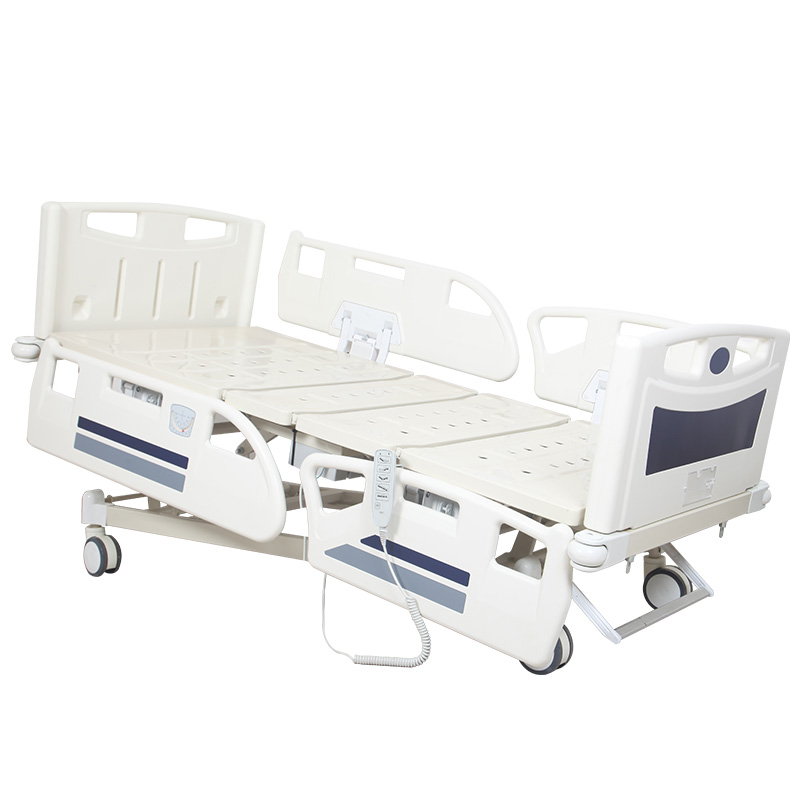
An electric hospital bed is designed to make patient positioning easier, reduce manual nursing work and provide greater flexibility than a traditional manual hospital bed. However, electric hospital beds are available in many different configurations. Some models provide only basic backrest and leg adjustment, while others add overall height adjustment, Trendelenburg positioning, reverse Trendelenburg, central braking and more advanced control systems. For hospitals, medical equipment distributors and healthcare project buyers, understanding these differences is important because a higher number of functions does not automatically mean that a bed is more suitable for every application. The correct model depends on the patient's condition, nursing frequency, hospital department, available budget and the level of positioning flexibility required. An electric hospital bed uses electric actuators instead of manual crank mechanisms to adjust different sections of the bed. The user or caregiver normally operates the bed through a hand controller, nurse control panel or another electrical control system depending on the model. Common electric movements include: More advanced models may also provide additional clinical positioning functions. You can compare different configurations in our electric hospital bed range. Manual hospital beds can meet many basic nursing requirements, but every adjustment requires a caregiver to operate a crank mechanism. Electric adjustment changes this process significantly. A caregiver can change the patient's position by pressing a button rather than manually turning a crank. This is particularly useful when positioning needs to be adjusted several times during the day. Repeated manual adjustment can increase the physical workload of nursing staff. Electric actuators perform the mechanical movement, allowing caregivers to focus more on patient care. Electric movement allows the bed to stop at different positions within its adjustment range. This gives patients and caregivers greater flexibility when selecting a comfortable or clinically appropriate position. Backrest adjustment raises the upper section of the mattress platform and is one of the functions used most frequently on an electric patient bed. Raising the patient's upper body can help with eating, reading, communication and general daily care. It can also allow caregivers to position patients more conveniently without manually lifting the upper body. A typical hospital bed may provide a backrest adjustment range of approximately 0–75°, depending on the model. Movement quality is important. The back section should rise smoothly without excessive vibration, sudden movement or abnormal noise. The actuator, pivot structure and bed platform should work together to maintain stability throughout the adjustment. The leg section can also be raised electrically on many hospital bed models. This allows the lower body position to be adjusted independently from the backrest. Depending on the model, the leg-rest angle may reach approximately 40–45°. The exact adjustment range should always be confirmed in the technical specification. Combining backrest and leg adjustment can create a more supportive semi-seated position. This is useful during routine patient care and can help reduce the tendency of the patient to slide toward the foot end when the back section is raised. Overall height adjustment raises or lowers the entire sleeping platform while keeping it approximately horizontal. This function is commonly included in a 3 function electric hospital bed. Lowering the bed can make it easier for appropriate patients to get into or out of bed. This can be especially useful for elderly patients or people with limited mobility. Caregivers can raise the bed when performing daily nursing, examination, cleaning or other procedures. This can reduce the need to work continuously at a very low height. Not every electrically adjustable bed has the same minimum and maximum height. For example, one model may provide a platform height range of approximately 400–700 mm, while another design may use a different range. Buyers should therefore compare actual figures rather than assuming that all height-adjustable beds are equivalent. A three-function model is one of the most widely used configurations for general hospital care. The three major electric functions normally include: This combination provides considerably more flexibility than a basic manual hospital bed without introducing all of the functions found on higher-level ICU models. This configuration can be suitable for general wards, private hospitals, rehabilitation departments and other care areas where powered height and patient positioning are needed. For many projects, three functions provide a practical balance between usability and purchasing cost. Hospitals receive the main electric positioning benefits without paying for advanced functions that may not be necessary in every ward. A 5 function electric hospital bed usually builds on the three basic movements and adds two tilt functions. The five major functions are commonly: This creates a more versatile electric medical bed for departments requiring a wider range of patient positions. Trendelenburg positioning tilts the entire bed so that the head end is lower than the foot end. Reverse Trendelenburg moves the bed in the opposite direction, with the head end higher than the foot end. On many electric beds, coordinated movement of the lifting actuators changes the angle of the complete bed platform. The exact mechanism depends on the design of the bed. Different products can provide different tilt ranges. For example, some electric beds may provide approximately 0–12° of Trendelenburg and reverse Trendelenburg adjustment. The actual value should be confirmed for the selected model. No. This is an important point for hospital procurement. A five-function bed offers greater positioning capability, but that does not mean it is necessary for every general ward. For routine inpatient care, a three-function electric bed may already provide the most frequently used movements. More advanced models can then be allocated to departments where additional tilt positioning is genuinely required. Instead of buying the same high-specification bed for every department, hospitals can use different electric bed configurations according to actual care requirements. This approach can provide a better balance between functionality and project cost. An electric ICU bed is generally designed for departments where patients require closer monitoring and more frequent positioning. Although the exact configuration differs between models, ICU beds may combine multiple electric functions with more advanced side rail systems, central braking and additional control options. The complete bed structure is normally designed around higher-intensity clinical use. Buyers should evaluate the complete configuration, including rails, casters, brakes, controllers and accessories rather than looking only at the number of motors. The motor and actuator system converts electrical input into physical movement of the hospital bed. Its performance directly affects adjustment smoothness and long-term reliability. Backrest, leg-rest and height adjustment can require different actuator arrangements. In higher-function models, several actuators may operate together to create complete bed tilt. More motors do not automatically make one bed better than another. The more important consideration is whether the complete drive system is correctly matched to the bed structure and required functions. Hospital environments benefit from smooth and relatively quiet adjustment. Abnormal mechanical noise can indicate poor alignment, loose components or issues within the movement system. The hand controller is the main interface between the user and the electric functions on many models. Users and caregivers should be able to understand which button controls each function. An unnecessarily complicated controller can make daily operation less convenient. Depending on the model and control system, selected functions may be disabled to prevent unintended operation. This feature can be relevant in higher-level hospital environments where staff need greater control over bed positioning. An electric hospital bed normally operates from mains electricity, but certain configurations can include a backup battery. A battery can allow limited electrical operation when mains power is temporarily unavailable or when the bed is being moved between areas. Battery systems add cost and maintenance requirements. Buyers should therefore determine whether backup operation is genuinely needed for the intended department. Some electric bed configurations can incorporate manual backup mechanisms for selected movements. This can provide another operating method if electrical adjustment becomes unavailable. The availability and mechanism should be confirmed according to the specific product model. Electric beds are available with several types of side rail systems. The rail influences both patient protection and caregiver access. Four-piece ABS side rails are commonly used on modern electric beds. The split design gives caregivers access to different parts of the patient while other rail sections remain raised. Some electric beds use longer aluminum alloy folding side rails. This design provides a different combination of protection, appearance and cost. The protective height of the side rail should be evaluated together with mattress thickness. A thicker mattress reduces the effective rail height above the mattress surface. The rail may be operated many times every day. Supporting pillars, hinges, connectors and locking mechanisms should remain stable through repeated use. Many modern electric hospital beds use molded PP or ABS head and foot boards. Depending on the model, removable panels can provide greater flexibility during patient care and maintenance. The headboard should remain firm after installation and should not move excessively during normal bed operation or transport. Hospital beds are heavy products, especially when occupied by a patient. Good medical casters make movement easier and more controlled. Quality casters are designed to roll smoothly while reducing unnecessary noise in hospital corridors. Larger medical casters can improve movement over small floor transitions and can make a loaded bed easier to maneuver. The required size depends on the bed design and intended application. The braking system is another major product difference between electric hospital bed configurations. Each braked caster is operated separately. This configuration is practical and can reduce product cost. A central braking system allows multiple wheels to be controlled through a coordinated pedal mechanism. This is often preferred on higher-level electric and ICU beds that need to be repositioned frequently. Neither system is automatically correct for every project. General wards may use independent brakes effectively, while higher-intensity environments may benefit from the convenience of central braking. The mattress platform forms the main supporting surface beneath the patient. Different hospital bed models may use stamped cold-rolled steel panels, strip-style steel platforms or other structures. Integrated stamped sections can provide a clean and modern appearance while maintaining structural support. Strip structures can provide a practical and economical solution for certain hospital bed designs. Hospitals should consider how easily the bed platform and surrounding structure can be cleaned during regular ward maintenance. An electric hospital bed must safely support the patient, mattress and normal accessories. Buyers should request an actual load specification rather than relying on descriptions such as “strong” or “heavy duty.” Load capability depends on the main steel frame, moving sections, lifting structure and electric actuators working together. A strong frame alone is not enough if the moving system is not properly matched to the required load. Hospitals should distinguish between the external dimensions of the bed and the usable mattress platform. For example, a bed with an overall width close to 960 mm may use a mattress approximately 900 mm wide depending on the design. Using the external width can result in a mattress that is too large for the platform. The correct mattress dimensions should always be confirmed from the technical data of the selected bed. A thicker mattress raises the patient's sleeping surface. This reduces the effective side rail height above the mattress. The mattress and rail system should therefore be evaluated together, especially when buyers request non-standard mattress thickness. The easiest approach is to begin with the functions that will actually be used. Two electric beds with the same number of functions can still be very different products. Important differences may include: For this reason, buyers should compare the complete technical configuration before comparing the final unit price. There is no single configuration that is best for every hospital. The correct choice depends on where the bed will be used and what functions are required. For many hospital projects, using several configurations can be more efficient than buying the same model for every department. General wards may use practical three-function beds, while departments requiring more complex positioning can use five-function or ICU configurations. This allows hospitals to allocate their equipment budget according to actual clinical use. Before placing an order for electric hospital beds, the final product specification should clearly confirm: Confirming these details makes it much easier to compare different models accurately. Hebei Heyuan Medical Equipment has approximately 20 years of experience manufacturing hospital beds, nursing beds and related medical furniture. Our electric hospital bed range includes different configurations for general wards, higher-level patient care and international hospital projects. Available models include electric three-function hospital beds, electric five-function hospital beds and other electric patient bed configurations. We focus on practical steel structures, stable side rail systems, medical casters, reliable adjustment mechanisms and product configurations suitable for different healthcare environments. OEM and ODM configurations can also be discussed according to order quantity and market requirements. An electric hospital bed should not be selected simply because it has more motors or more functions. The best configuration is the one that matches the actual patient care environment. Backrest and leg adjustment provide the foundation for everyday positioning, height adjustment improves flexibility for both patients and caregivers, while Trendelenburg and reverse Trendelenburg functions provide additional positioning capability for departments that require them. Side rails, casters, brake systems, motors and the main bed structure are equally important because these components determine how the product performs during daily use. If you are selecting electric hospital beds for a hospital, medical equipment distribution business or healthcare project, please contact our team with the required functions, quantity and destination market. We can help you compare suitable electric bed configurations according to your actual product requirements.Electric Hospital Bed Functions Explained: Which Model Fits Different Patient Care Needs?
What Is an Electric Hospital Bed?
Why Do Hospitals Use Electric Beds Instead of Manual Beds?
Faster Patient Positioning
Less Physical Effort for Caregivers
More Precise Adjustment
Backrest Adjustment Is the Most Common Electric Bed Function
Why Is Backrest Adjustment Useful?
Backrest Movement Should Be Smooth
Leg-Rest Adjustment Provides Additional Positioning Flexibility
Typical Leg Adjustment
Back and Leg Functions Can Be Used Together
Height Adjustment Is a Major Difference Between Basic and Higher-Level Electric Beds
Low Position for Patient Access
Higher Position for Nursing Work
Check the Actual Height Range
What Is a 3 Function Electric Hospital Bed?
Where Can a 3 Function Electric Bed Be Used?
Why Do Buyers Choose This Configuration?
What Is a 5 Function Electric Hospital Bed?
What Is Trendelenburg Positioning?
How Is the Tilt Created?
Check the Maximum Tilt Angle
Does Every Patient Need a 5 Function Bed?
Choose Functions According to Clinical Use
This Can Improve Project Budget Allocation
Electric ICU Beds Offer a Higher Level of Configuration
ICU Beds Are More Than Standard Beds With Extra Motors
The Electric Actuator System Is the Core of the Bed
Different Functions May Use Different Actuators
Motor Quantity Alone Does Not Determine Quality
Noise Should Be Controlled
The Hand Controller Should Be Easy to Understand
Buttons Should Correspond Clearly With Bed Movement
Some Beds Include Function Lockout
Battery Backup Is Optional on Some Electric Hospital Beds
Why Might a Hospital Request Battery Backup?
Not Every Project Requires It
Manual Emergency Backup Can Also Be Considered
Side Rails Are an Important Part of Electric Hospital Bed Design
ABS Split Side Rails
Aluminum Alloy Folding Rails
Rail Height Matters
Strong Rail Connectors Are Important
Headboards and Footboards Should Be Practical for Hospital Use
Detachable Designs Can Improve Access
Connection Stability Matters
Caster Quality Directly Affects Bed Mobility
Medical Silent Casters
Caster Diameter Affects Movement
Independent Brakes and Central Brakes Are Different
Independent Caster Brakes
Central Braking System
Which Brake System Is Better?
The Bed Platform Influences Strength and Cleaning
Stamped Steel Platforms
Strip-Style Steel Platforms
Cleaning Access Should Be Considered
Safe Working Load Should Be Clearly Specified
The Complete Structure Determines Load Capacity
Mattress Size Should Match the Sleeping Platform
Avoid Selecting the Mattress From External Bed Width
Mattress Thickness Also Affects Side Rail Protection
How Should Buyers Choose Between Electric Hospital Bed Models?
Choose a Basic Electric Model When:
Choose a 3 Function Electric Hospital Bed When:
Choose a 5 Function Electric Hospital Bed When:
Consider an Electric ICU Bed When:
Do Not Compare Electric Hospital Beds by Price Alone
Which Electric Hospital Bed Is Best for a Hospital Project?
What Should Buyers Confirm Before Ordering?
Electric Hospital Beds From an Experienced Manufacturer
Choose the Functions That Match Real Patient Care Needs