Powered Repositioning for Patients Who Need More Daily Assistance
For a person with limited mobility, remaining in bed for extended periods creates a very different set of care requirements from those of an independently mobile user. Caregivers may need to help with turning, sitting up, changing leg position, toileting, meals and personal hygiene several times throughout the day.
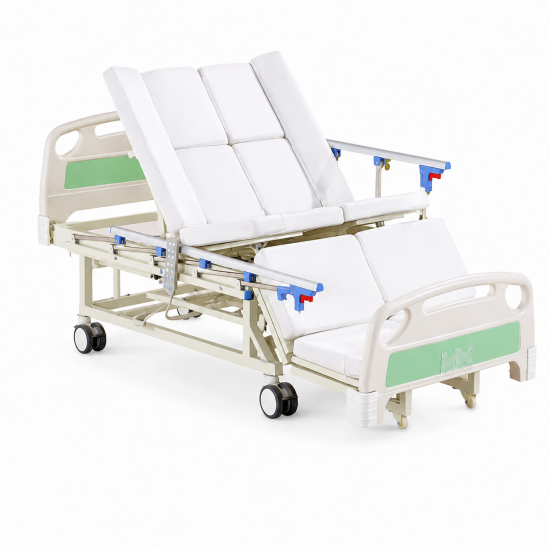
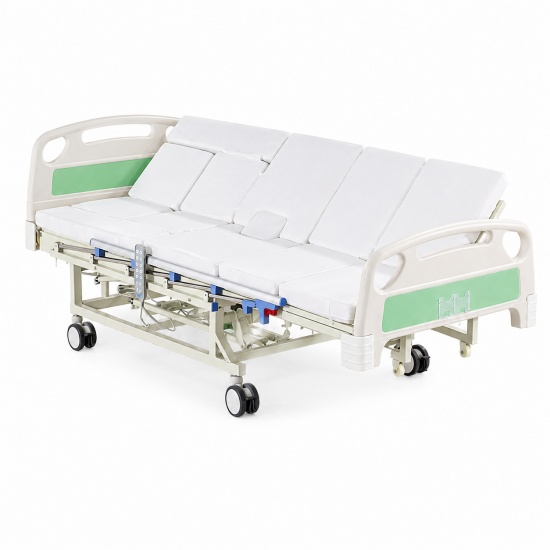
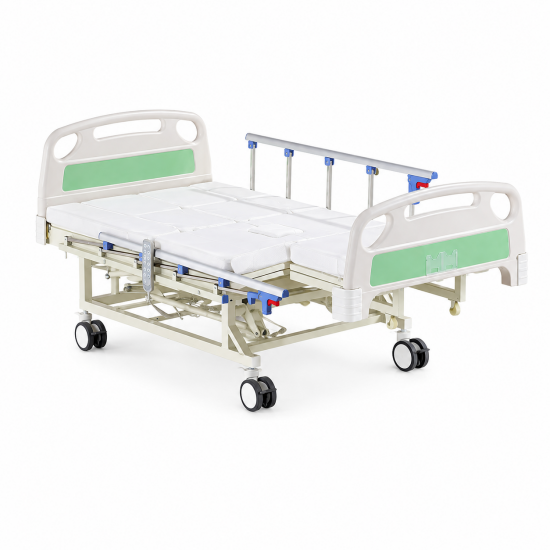
This electric lateral turning care bed brings these commonly used functions together in one platform. Its main feature is powered full-body left and right turning, supported by electric backrest and leg positioning. The bed uses a standard-width sleeping platform and is equipped with fold-down aluminum alloy side rails, making it suitable for users who require advanced repositioning assistance without the additional width of a bariatric care bed.
Electric Full-Body Left and Right Turning
Designed Around Routine Repositioning
The turning system assists the user toward either the left or right side through powered movement of the supporting bed surface. Rather than limiting the turning action to one small area of the body, the structure is designed to provide coordinated support along the sleeping surface during lateral repositioning.
This makes the function particularly relevant for bedridden users who cannot easily roll or change position without assistance.
Why Full-Body Support Matters
Turning a dependent user is not simply a matter of raising one side of the mattress. The way the body is supported during the movement affects how practical the function is for everyday nursing.
By coordinating the supporting sections from the upper-body area toward the lower limbs, this bed provides a more continuous turning movement than designs that concentrate lateral adjustment around only part of the sleeping surface.
Powered Assistance Instead of Entirely Manual Turning
In long-term care, repositioning is a repetitive task. The electric turning mechanism provides mechanical assistance so that caregivers do not have to generate the complete turning movement by physical effort alone.
The caregiver can remain involved in supervising the user's position and providing additional support as required while the bed assists with the movement itself.
Electric Backrest Adjustment for Sitting and Daily Activities
The back section can be raised through the handset, allowing the user to move from a flat position toward a supported sitting posture without manually lifting the upper body.
Useful Beyond Sleeping
Backrest adjustment is useful during meals, drinking, reading, communication and routine personal care. For users who spend most of their time in bed, these changes of position make the bed more useful as an everyday care platform rather than simply a place for sleeping.
Caregiver-Friendly Adjustment
Because the movement is electrically controlled, caregivers can adjust the user's upper-body position with less manual handling. This is especially practical when the same adjustment needs to be performed several times during a normal day.
Electric Leg Positioning
The leg section can also be repositioned electrically according to the user's daily posture requirements. Back and leg adjustments can be used independently as care routines change throughout the day.
Together with lateral turning, these functions provide caregivers with several ways to alter the user's position without transferring the person away from the bed.
Standard-Width Platform for Everyday Care Settings
Advanced Functions without an Extra-Wide Bed
Turning assistance is not limited to bariatric or extra-wide beds. Many standard-size users also require regular lateral repositioning because of age, reduced mobility, rehabilitation needs or long-term dependency.
This model retains the width of a conventional care bed while incorporating a more specialized turning system. It can therefore be considered when advanced repositioning is required but additional bed width is unnecessary.
Practical for Existing Room Layouts
Maintaining a standard-width platform can also be useful in rooms where bedside clearance matters. Caregivers still need space to approach the bed, operate the side rails and perform daily nursing procedures.
Fold-Down Aluminum Alloy Side Rails
Instead of large molded ABS side panels, this configuration uses foldable aluminum alloy side rails. The design provides bedside protection when required while allowing the side of the bed to be opened for closer caregiver access.
Easy Access for Hands-On Care
When the rail is lowered, caregivers can approach the sleeping surface more directly for repositioning, clothing changes, hygiene assistance and other bedside procedures. Once the procedure is completed, the rail can be returned to its protective position.
A Different Choice from ABS Panel Rails
Both ABS and aluminum rail configurations can be appropriate depending on the intended care environment. Aluminum folding rails are particularly practical when frequent side access is an important part of the caregiver's routine.
Integrated Toileting for Users with Limited Mobility
Moving a highly dependent user from the bed to a toilet can require considerable effort. This model incorporates a toileting opening so that appropriate bedside toileting procedures can be carried out with caregiver assistance.
Reducing Unnecessary Transfers
For users who have difficulty standing or transferring, the ability to manage more daily care activities around the bed can simplify the routine for both the user and caregiver.
The toileting function works as part of the wider care system rather than as an isolated feature, complementing turning, sitting and other positioning functions.
Daily Living Functions Integrated Around the Bed
Overbed Dining Table
An overbed table provides a convenient surface for meals, drinks and personal items. The electric backrest can first be raised to establish a supported sitting position before the table is used.
Bedside Hair-Washing Support
For users who cannot easily access a bathroom, a compatible washing basin allows caregivers to assist with hair washing while the user remains at the bedside.
IV Pole
An IV pole can be incorporated for appropriate nursing requirements, extending the bed's application across home care, rehabilitation and professional long-term care environments.
Why Electric Functions Matter in Long-Term Care
A multifunction bed should not be judged simply by counting how many movements it provides. For caregivers, the practical value comes from how often those movements are needed and whether they make repetitive care tasks easier to manage.
Turning
Powered lateral repositioning assists with one of the more physically demanding tasks involved in caring for a dependent user.
Sitting Up
Electric backrest movement helps the user transition between lying and supported sitting without repeated manual lifting.
Changing Leg Position
Powered leg adjustment provides another way to change posture during extended periods in bed.
Personal Care
Toileting, dining and hair-washing support allow several routine activities to be managed around the same care platform.
How Is This Model Different from a Partial-Turning Bed?
Buyers comparing turning beds should pay attention to how much of the sleeping surface participates in the turning movement. A product described simply as a “turning bed” may use either partial or more extensive body support.
Partial Turning
In a partial-turning configuration, lateral movement may be concentrated around selected sections of the sleeping platform. Such a design can be suitable when only limited repositioning assistance is required.
Full-Body Lateral Turning
This model is designed around coordinated turning support extending across the main body areas. The intention is to assist the user's body through the lateral movement rather than creating a localized tilt around only one section.
This distinction is worth confirming when purchasing beds for highly dependent users who require regular assisted repositioning.
Who Is This Electric Turning Care Bed Suitable For?
This configuration is intended for users who need greater assistance than a conventional adjustable Nursing Bed typically provides, particularly when independent turning has become difficult.
Typical Care Applications Include:
- Long-term bedridden users
- Elderly people with reduced mobility
- Users requiring regular left and right repositioning
- Post-treatment and rehabilitation care
- Nursing homes and long-term care facilities
- Home-care environments
- Users requiring assistance with toileting and personal hygiene
Important Points for Buyers to Compare
Turning Structure
Check whether the product provides partial turning or coordinated full-body lateral repositioning. The mechanism behind the function is more important than the word “turning” alone.
Electric Control Functions
Confirm which movements are electrically powered and how they are operated. This helps determine how the bed will fit into the caregiver's normal workflow.
Side-Rail Design
Consider whether caregivers need frequent access from the side. Fold-down aluminum rails and molded ABS panels offer different approaches to protection and bedside accessibility.
Required Bed Width
An extra-wide bed should be selected when the user's body size requires it. For standard-size users, a conventional-width turning bed can provide the necessary functions while occupying less room.
Daily Care Requirements
Consider how often the user needs assistance with turning, sitting, toileting, meals and hygiene. The most suitable configuration is the one that matches the actual care routine rather than simply offering the longest feature list.
Electric Care Designed Around Repetitive Daily Tasks
This electric lateral turning care bed combines full-body repositioning with backrest adjustment, leg positioning and practical bedside care functions in a standard-width platform. It is designed for users who need substantial daily assistance but do not require an extra-wide bed.
The fold-down aluminum alloy side rails further support hands-on care by allowing easier side access when required, while the powered positioning system assists caregivers with movements that may otherwise need repeated manual effort.
For distributors, nursing facilities, rehabilitation providers and home-care equipment buyers, our Turning Nursing Bed range includes different side-rail structures, turning mechanisms and configurations for different levels of care.
For specifications, configuration options, wholesale purchasing or OEM/ODM requirements, please contact us for further information.