

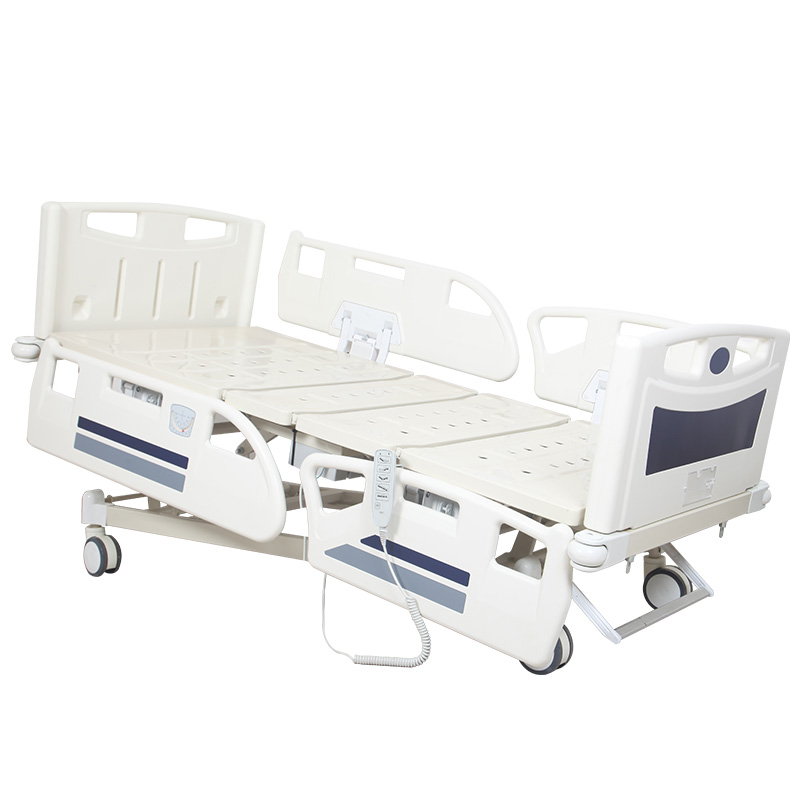
A hospital buyer receives two quotations for an electric hospital bed. Supplier A writes: 5-Function Electric Hospital Bed — 4 Motors Supplier B writes: 5-Function Electric Hospital Bed — 5 Motors The buyer immediately asks: “Why does one five-function bed have four motors while another has five?” Then comes another question: “Does the bed with five motors have one more function?” Not necessarily. This confusion happens because two different things are being counted. Functions describe what the bed can do. Motors or actuators describe part of how the bed produces those movements. When comparing an Electric Hospital Bed, buyers should therefore avoid using actuator quantity as a shortcut for function quantity. Depending on the model, common functions may include: The actuator converts electrical input into controlled linear movement within the bed mechanism. An electric bed is not simply a collection of independent motors attached to separate buttons. An actuator may extend or retract to change the angle of the backrest through the bed's linkage and pivot structure. These are two different ways of describing the same system. The exact mechanical arrangement differs between manufacturers and models. This is one reason catalogues should not be compared by actuator count alone. Manufacturers can use different lifting architectures. Instead of simply asking: “How many motors?” ask: “Which actuators control the height movement, and how is the platform kept synchronized?” On some electric hospital bed architectures, tilt can be created by controlling the relative positions of the lifting system. The exact implementation depends on the bed design. They may be achieved through the same underlying lifting architecture operating in different relative positions. They may count: Backrest = 1 motor Leg = 1 motor Height = 1 motor Trendelenburg = 1 motor Reverse Trendelenburg = 1 motor and conclude: “A five-function bed must have five motors.” Ask the supplier to write every function separately. This converts “five functions” from a marketing label into a technical specification. Some catalogues count individual movements. Some count positioning combinations. Some emphasize electrical adjustments. Ask each supplier for a complete movement list. A typical product may provide: The buyer and manufacturer should be discussing the same movements. Actuator configuration is an important part of an electric hospital bed. It can help explain: A simple diagram can identify: It connects each actuator with the mechanism it controls. The four actuators may not all be identical. A distributor sees four actuators on the bed and orders one actuator model as the spare part. For example: The control box must provide the appropriate connections and control logic for the intended configuration. This becomes especially important when comparing different variants from the same supplier. A control system may coordinate multiple actuators to create a particular movement. The control logic determines how the system responds. A handset may have separate up and down buttons for one adjustment. Higher-specification beds may also include additional controls depending on their design. One manufacturer may use individual movement controls. Another may provide additional preset or combined-position controls. This is especially useful before approving a sample. Depending on the design, caregiver and patient control interfaces may differ. Buyers should distinguish between: Depending on the system, it may allow caregivers to control or restrict certain operations. Define functions and control features separately in the procurement sheet. An emergency stop function relates to the electrical control system. List them separately. For example, products may use mechanical or electrical arrangements depending on their design. Record it as a separate product feature with its operating method. Suppose two beds provide the required movements. One uses four actuators. The other uses five. The relevant question is whether the complete system meets the required specification. Then evaluate its performance and documentation. More electrical components can mean more component positions to identify and manage. This is why buyers should ask: “How many actuator models are used?” not only: “How many actuators are installed?” Ask whether they share: Ask for exact model information. “Which motor brand do you use?” This is useful. Depending on the product, this includes the control box and associated power components. Do not focus so heavily on motor quantity that basic electrical specifications are ignored. More components can create more cable-routing requirements. Technicians should not select replacement parts by appearance. This is particularly important for distributors supporting beds for several years. A backrest actuator problem may affect one movement. A lifting-system actuator problem can affect a different part of bed operation. Technical teams should know how to identify the relevant component before replacement. For distributors and hospitals, replacing a defined component can be different from replacing the complete electrical system. The exact synchronization method depends on the design. Observe whether the platform moves according to the intended design. Movement speed depends on the complete system design. These can include: Unexpected noise can be a clue that further inspection is required. Operating characteristics can also matter. The purpose is to understand how the electrical system is intended to operate. This wording is too vague. Actuator, control box and handset may have different specifications. Mass production should follow the approved specification unless a change is agreed. That does not make them automatically equivalent. Ask for: That specification may force a particular architecture without explaining the actual clinical or operational requirement. Depending on the project, the technical specification can address: In that case, the buyer can state the requirement clearly. It should still define what movements the bed must provide. Ask for the complete movement list. Understand what each movement actually provides. Now examine the architecture. Do not guess from quantity. Useful for technical evaluation and spare parts. Confirm the system configuration. Separate button count from function count. Check actual movement. Confirm the quoted configuration. Protect sample-to-batch consistency. Record the actual quantity. Request an actuator map. Do not assume they are interchangeable. Useful for future spare parts. Understand the lifting architecture. Understand coordinated movement. Match it to the actuator system. Request the function diagram. Separate control interfaces from mechanical functions. Plan after-sales service before shipment. Understand serviceability. Establish change-control expectations. Motor quantity is easy to understand. Three sounds simpler than four. Five sounds more advanced than four. That makes it tempting to use actuator quantity as a product ranking system. But an electric hospital bed is not designed that way. The buyer needs to separate three layers: Layer 1 — What movements does the bed provide? This defines the functional requirement. Layer 2 — How does the mechanical system create those movements? This explains the actuator and linkage architecture. Layer 3 — How does the electrical system control those components? This includes the control box, handset, cables and other control interfaces. Only after these three layers are understood does the number of motors become meaningful. A five-function electric hospital bed does not become better simply because another actuator is added. And a four-actuator design does not become inferior simply because another supplier uses five. The correct comparison is whether the complete electrical and mechanical system provides the required movements reliably, with clearly identified components and appropriate technical documentation. For hospital importers and distributors, this approach has another advantage. It makes future spare-parts planning much easier. Instead of knowing only that the bed has “four motors,” the buyer knows: which actuator controls the backrest, which controls the leg section, which are involved in height adjustment, which control box connects them, which handset operates the system, and which exact parts should be stocked for after-sales service. That is the difference between reading a catalogue specification and understanding an electric hospital bed system. Hebei Heyuan Medical Equipment Co., Ltd. manufactures electric hospital beds, ICU hospital beds and related patient-care equipment for hospitals, distributors and international healthcare projects. Buyers can explore our Electric Hospital Bed range for different hospital and project requirements. For distributor orders, hospital projects, OEM requirements or bulk electric hospital bed procurement, please contact us with the required functions, quantity, electrical configuration and destination market.A Five-Function Hospital Bed Does Not Necessarily Mean Five Motors
First Separate “Function” From “Motor”
A Function Is an Intended Bed Movement or Positioning Capability
These Describe What the User Can Make the Bed Do
An Actuator Is a Component Used to Create Mechanical Movement
The number of movements and the number of actuators are therefore not automatically identical
Why Can One Actuator Contribute to More Than One Bed Position?
The Answer Is Mechanical Geometry and Control Logic
The Actuators Work Inside a Mechanical System
The Final Bed Position Can Depend on
This is why motor count alone cannot describe the complete function set
Take Backrest Adjustment as the Simplest Example
The Back Section Usually Requires a Controlled Mechanical Movement
The User Sees a Backrest Function
The Technician Sees an Actuator, Mounting Points, Pivot Geometry and Control Circuit
Procurement teams should understand both
Leg Adjustment Is Another Separate Movement
The Leg Section May Use Its Own Actuator Depending on the Bed Design
Do Not Assume Every Supplier Uses the Same Architecture
Two Beds Can Produce Similar Leg Positions Through Different Mechanical Designs
Compare the actual movement specification
Height Adjustment Is Where Motor Count Becomes More Confusing
An Electric Hospital Bed Must Raise and Lower the Mattress Platform While Maintaining the Intended Structure
The Number and Arrangement of Actuators Can Vary
A Buyer Should Ask How the Height System Works
This reveals much more about the electrical and mechanical design
Why Can Trendelenburg Be a Function Without Having a Dedicated “Trendelenburg Motor”?
This Is One of the Most Important Concepts to Understand
The Function Comes From Coordinated Movement
The Bed Does Not Necessarily Need an Actuator With a Label Saying “Trendelenburg Motor”
This is why function count cannot be reconstructed reliably from motor count alone
The Same Principle Applies to Reverse Trendelenburg
Trendelenburg and Reverse Trendelenburg Describe Opposite Tilt Directions
Two Functions Do Not Automatically Require Two Dedicated Motors
This Is Where Buyers Often Make the Wrong Calculation
That conclusion is not universally valid
What Should “Five Functions” Actually Mean?
Do Not Accept the Label Without a Movement List
For Example
Then Request the Adjustment Range for Each Relevant Movement
Function names should be supported by actual movement data
Why Do Different Suppliers Count Functions Differently?
There Is Often Inconsistent Marketing Terminology Across the Market
This Can Make Two Similar Beds Appear Different on Paper
Never Compare Only “3-Function,” “5-Function” or “7-Function” Labels
Normalize the definitions before comparing products
A Three-Function Electric Hospital Bed Should Also Be Defined by Movements
Do Not Assume the Label Means Exactly the Same Configuration Everywhere
But the Purchase Specification Should State the Functions Explicitly
This Prevents Misunderstanding During Quotation and Production
Never rely on the function number alone
Motor Count Is Still Important — Just for a Different Reason
The Message Is Not That Buyers Should Ignore Actuator Quantity
It Simply Answers a Different Question
Motor Count Helps Buyers Understand the System Architecture
Use actuator count to understand architecture, not to guess function count
Ask for an Actuator Map
This Is Especially Useful for Technical Procurement
The Exact Arrangement Depends on the Product
This Diagram Is More Useful Than a Catalogue Saying “4 Motors”
Buyers can then understand the real bed architecture
Ask for the Exact Actuator Model Too
“Four Motors” Is Not a Complete Component Specification
Different Positions Can Require Different Actuator Specifications
Record
This information becomes valuable for spare-parts planning
Do Not Assume Four Actuators Mean Four Identical Spare Parts
This Can Create a Serious Distributor Inventory Mistake
But the Backrest and Height Systems May Use Different Components
Build a Position-Specific Spare-Parts List
Do not manage electric bed spare parts by visual similarity
The Control Box Must Match the Actuator Architecture
Adding More Actuators Changes the Electrical System
Do Not Compare the Control Box Separately From the Bed
Ask Which Exact Control Box Is Used With the Quoted Actuator Configuration
The control system should be evaluated as one complete architecture
More Motors Can Mean More Control Channels
But Again, Channel Count Is Not Function Count
The Relationship Is Not Always One Button = One Motor
A Single Button Command Can Potentially Control Coordinated Movement Depending on the Design
This is why electrical diagrams are useful for technical buyers
Handset Buttons Can Also Mislead Buyers
Do Not Count Buttons and Assume They Equal Functions
Two Buttons Can Represent One Adjustable Function
Other Buttons May Control Combined Positions
Count movements, not icons
Why Does One Five-Function Bed Have More Buttons Than Another?
Control Interface Design Can Differ Even When the Core Movements Are Similar
Compare What Each Button Actually Does
Ask for the Handset Function Diagram
Button count alone does not define the bed
Side-Rail Controls Add Another Layer of Complexity
Some Electric Hospital Beds Include Controls in the Side Rails
This Does Not Necessarily Mean the Bed Has More Mechanical Functions
It May Mean the Same Functions Can Be Accessed From More Than One Location
These are separate specifications
Central Nurse Controls Do Not Automatically Add Bed Functions Either
A Nurse Control Panel Can Provide Additional Management Features
That Is a Control-System Feature
Do Not Automatically Count Every Control Feature as Another Mechanical Bed Function
This makes ICU bed comparison much clearer
Emergency Stop Is a Feature, Not Another Motor Function
This Is Another Example of Why Feature Count and Function Count Should Be Separated
It Should Not Be Used to Inflate the Number of Mechanical Positioning Functions
The Same Principle Applies to Other Electrical Features
A clean specification separates movements, controls and safety-related features
CPR Functions Need Clear Definitions Too
“CPR” Can Refer to Different Mechanisms Depending on the Bed
Ask the Supplier Exactly What Happens When CPR Is Activated
Do Not Simply Add “CPR” to the Function Count
Precise terminology prevents inflated specifications
More Motors Do Not Automatically Mean a Better Hospital Bed
This Is One of the Most Important Purchasing Lessons
The Five-Actuator Bed Is Not Automatically Superior
The Buyer Still Needs to Evaluate
Component quantity is not a quality score
Fewer Motors Do Not Automatically Mean Lower Quality Either
A Well-Designed Mechanical Architecture May Achieve the Required Functions Efficiently
Do Not Penalize a Product Simply Because the Number Is Smaller
Ask Why the Architecture Is Different
Understand before comparing
Motor Quantity Does Affect Spare-Parts Planning
A Distributor Importing 500 Electric Beds Should Think Beyond the Initial Purchase
But the Real Issue Is Component Variety
Five Actuators Using Two Models May Be Easier to Manage Than Four Actuators Using Four Different Models
Quantity and variety are different maintenance questions
Common Components Across Bed Models Can Reduce Distributor Complexity
A Supplier May Offer Three-Function and Five-Function Electric Beds From the Same Product Family
Verified Component Commonality Can Simplify Spare-Parts Inventory
Do Not Assume Compatibility Because the Brand Is the Same
Compatibility should be documented
Motor Brand Alone Is Not Enough for Supplier Comparison
Buyers Often Ask One Question
But It Should Be Followed by Several More Questions
Ask
A brand name is only the beginning of electrical-system evaluation
Ask About the Power Supply Architecture
The Actuators Need a Compatible Electrical System
Destination-Market Requirements Should Be Considered
Procurement Teams Should Confirm the Quoted Electrical Configuration
The complete power and control system matters
Cable Quantity and Routing Increase With System Complexity
Every Electrical Component Needs Appropriate Connections
Inspect the Underside of the Bed
Operate Every Function and Observe Whether Cables
Electrical architecture must work together with mechanical movement
Connectors Should Be Identified During Spare-Parts Planning
Two Actuators May Look Similar but Use Different Connections or Specifications
Use Exact Part Identification
Maintain a Component List for Each Bed Model
Good documentation reduces incorrect replacement
What Happens if One Actuator Fails?
The Answer Depends on Which Actuator and Which Bed Architecture
Do Not Assume Every Motor Failure Has the Same Consequence
Ask the Manufacturer for Troubleshooting Guidance
Position-specific diagnosis matters
Can Actuators Be Replaced Individually?
This Is an Important After-Sales Question
Ask What the Manufacturer's Approved Service Procedure Allows
Also Ask Whether Replacement Requires
Serviceability should be considered during procurement
Synchronization Deserves Special Attention in Lifting Systems
Where More Than One Actuator Contributes to Platform Movement, Coordinated Operation Becomes Important
Ask the Manufacturer How the System Maintains the Intended Geometry
During Sample Evaluation, Operate Height and Tilt Functions Repeatedly
Do not attempt to modify synchronization settings without manufacturer instructions
Function Speed Is Another Specification Separate From Motor Count
Five Motors Do Not Automatically Make a Bed Move Faster
Compare Actual Operation
For Important Projects, Buyers Can Ask About
Use performance information rather than assumptions based on quantity
Noise Is Also Not Determined by the Number of Motors Alone
An Electric Bed Contains Multiple Possible Noise Sources
A Bed With Fewer Motors Is Not Automatically Quieter
Evaluate the Complete Product During Operation
Do not turn motor quantity into a noise rating
Duty Cycle Is More Useful Than Many Buyers Realize
Electric Actuators Are Not Defined Only by Force and Stroke
Ask for the Relevant Actuator Technical Information for the Quoted Bed
This Is Particularly Useful for Technical Evaluation
Do not infer operating limits from another actuator model
IP Rating Should Be Verified for the Exact Electrical Components
Buyers Sometimes Ask for “Waterproof Motors”
Ask for the Manufacturer's Stated Protection Rating Where Relevant
Check Which Component the Rating Applies To
Do not apply one component's rating to the complete bed without evidence
Electrical Component Documentation Should Match the Production Configuration
A Sample May Use One Actuator Family
Record Critical Electrical Components During Sample Approval
This Can Include
Component-level approval helps protect batch consistency
Do Not Allow an Unapproved Motor Substitution During Mass Production
Two Actuators Can Have Similar External Dimensions
Important Specifications May Differ
If the Manufacturer Proposes a Component Change
Change control is especially important for repeat orders
How Should Buyers Write Motor Requirements Into a Tender?
Avoid Writing Only “5 Motors”
Start With the Required Bed Movements
Then Define Relevant Electrical Requirements
Specify the outcome and the required technical evidence
When Should Motor Quantity Be Specified?
There Can Be Projects Where a Particular Architecture Is Required
But Do Not Use Motor Quantity as a Substitute for Function Definition
Even When the Tender Specifies Four or Five Actuators
Architecture and functionality should be documented separately
Use This Electric Hospital Bed Comparison Method
Step 1 — Ignore “3-Function” or “5-Function” Temporarily
Step 2 — Record the Adjustment Range
Step 3 — Ask How Many Actuators Are Installed
Step 4 — Map Each Actuator to Its Mechanical Role
Step 5 — Identify the Exact Actuator Models
Step 6 — Identify the Control Box
Step 7 — Review the Handset and Other Control Interfaces
Step 8 — Operate Every Required Function on the Sample
Step 9 — Review Electrical Documentation
Step 10 — Record Critical Components for Mass Production
This method produces a much clearer comparison than simply counting motors
Ask Suppliers These 12 Questions About the Motor System
1. How Many Electric Actuators Are Installed?
2. What Movement Does Each Actuator Control?
3. Are All Actuators the Same Model?
4. What Are the Exact Actuator Models?
5. How Is Height Adjustment Achieved?
6. How Are Trendelenburg and Reverse Trendelenburg Produced?
7. Which Control Box Is Used?
8. Which Handset Is Used?
9. Are Side-Rail or Nurse Controls Included?
10. Which Electrical Components Should a Distributor Keep as Spare Parts?
11. Can Individual Actuators Be Replaced According to the Manufacturer's Service Procedure?
12. Will the Same Electrical Components Be Used in Mass Production and Repeat Orders?
These questions reveal much more than “How many motors?”
The Better Question Is Not “How Many Motors Does This Bed Have?”