

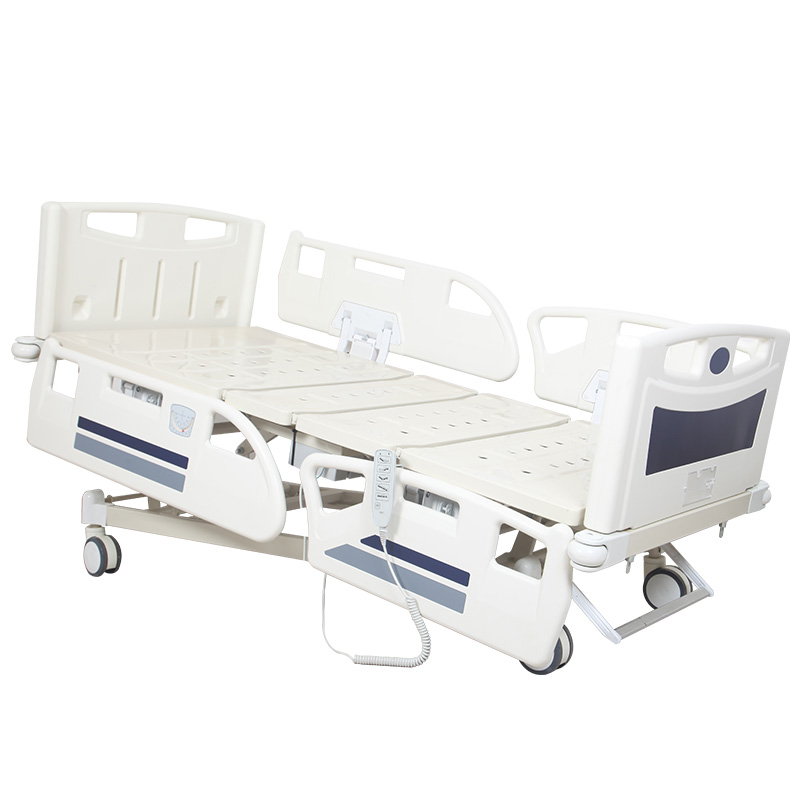
When searching for an electric hospital bed for sale, hospital procurement teams and medical equipment distributors will find products that look similar in catalog photographs but differ in their mechanical structure, adjustment functions and standard configurations. Some electric beds are designed for general wards, while others provide additional positioning functions or specialized configurations for intensive care. Differences may also exist in the bed frame, mattress platform, side rails, actuator arrangement, handset and caster system. For importers and project buyers, the important question is not simply whether a bed is electric. It is whether the complete product configuration matches the intended application and the technical requirements of the order. Our electric hospital bed range includes different product configurations, with available functions and components varying by model. This article introduces the main product types and explains which physical and technical details deserve attention when comparing them. Browse our electric hospital bed product range to review available models for hospital projects, medical equipment distribution and institutional purchasing. Electric hospital beds for general wards are designed around adjustable patient-support surfaces and electrically operated mechanisms. Depending on the model, the bed may provide backrest adjustment, leg-section adjustment and overall height adjustment. The exact combination of functions depends on the selected product. Buyers should therefore identify the model and its confirmed functions rather than rely on a broad description such as fully electric hospital bed. These details help distinguish complete products that may otherwise look almost identical in photographs. For distributors building a hospital bed product portfolio, general-ward models can form one category, with additional models selected according to the functions and configurations required by individual customers. Electric hospital beds are available with different combinations of powered movements. Three-function and five-function models are two common configurations, but the number of functions alone does not describe every technical difference between them. A three-function electric hospital bed commonly provides backrest adjustment, leg-section adjustment and overall bed-height adjustment. The actual movements and adjustment ranges should be confirmed against the selected model's specification. A five-function model may include additional positioning movements beyond the basic adjustments. The exact functions depend on the product design and should be documented individually. The distinction matters when comparing quotations. Two beds described using the same function count may not have identical movement ranges, mechanical arrangements or control options. For this reason, buyers should compare the actual product specifications and approved configurations rather than assume that the function count alone defines the entire bed. An electric ICU hospital bed may be designed with additional positioning capabilities, specialized control arrangements or other features intended for the requirements of intensive care environments. However, the ICU designation does not automatically mean that every model includes the same functions or accessories. Buyers should evaluate the actual configuration of each product. These features should be verified against the exact model rather than inferred from a product photograph or a general ICU bed description. Hospitals and distributors sourcing ICU beds should also confirm whether the required accessories, electrical configuration and relevant documentation are included in the offered product package. The mattress platform is one of the main structural assemblies of an electric hospital bed. It supports the mattress and works with the adjustment mechanisms to produce the specified patient-positioning movements. Depending on the model, the platform may contain several articulated sections connected by hinges, pivots and supporting components. The arrangement of these sections affects how the backrest and leg areas move during adjustment. Two electric hospital beds may accommodate mattresses of similar dimensions while using different platform structures. For replacement mattresses or customized projects, buyers should confirm both the mattress dimensions and its compatibility with the articulated platform. Electric actuators provide the mechanical movement used by many powered hospital bed adjustment systems. Their installation positions, stroke lengths and mounting arrangements vary according to the bed design and the movements the model supports. The actuator configuration should therefore be evaluated as part of the complete bed rather than as an isolated motor specification. More actuators do not automatically mean more independent functions. The relationship depends on how the actuators, control system and mechanical linkages are configured. Buyers should confirm that the offered drive system corresponds to the functions and movement ranges documented for the selected bed model. The main frame supports the mattress platform, while the lower chassis carries the caster assemblies and may accommodate the height-adjustment structure. These assemblies work together to support the bed's intended movements and overall configuration. Electric hospital beds with similar exterior designs may use different frame structures or lifting arrangements. The differences can affect component compatibility, dimensions and the space available for mechanical assemblies. For project purchasing, the complete bed specification should identify the frame configuration rather than combine dimensions or component information from different models. Side rails, headboards and footboards influence the appearance of an electric hospital bed, but they are also physical components of the complete assembly. Different models may use different rail materials, panel designs, mounting arrangements and locking mechanisms. These differences can affect the product configuration even when the underlying bed functions appear similar. Color customization may be available for selected components, subject to the manufacturer's options for the model. Buyers should distinguish standard components from optional designs when requesting a quotation, especially when several bed models are included in one order. The caster system forms part of the lower bed assembly. Wheel diameter, mounting height, braking arrangement and other mechanical details may differ between electric hospital bed models. A central braking system, individual caster brakes or directional-control features should not be assumed to be standard across an entire product range. Changing the caster may affect the installed height or compatibility with the braking mechanism. Replacement components should therefore match the manufacturer's approved configuration. For buyers comparing several electric bed models, the specified caster and brake arrangement should be recorded separately for each product. An electric hospital bed shown in a catalog may be photographed with a mattress, IV pole or other accessories. However, the photograph does not establish which items are included in the quoted price. A bed-only quotation and a complete bed package can contain different items even when the main bed model is identical. Accessories should be identified as standard, optional or separately quoted. Any accessory attached to the bed should also be compatible with the specified model. This is particularly important for international orders, where the buyer may need to compare several suppliers offering different combinations of products and accessories. Electric hospital beds require a compatible electrical system, including the specified actuators, control box, handset and power connection. Electrical input requirements and plug configurations should be confirmed for the destination market and the selected model. A plug change alone should not be treated as proof that the complete product meets all local requirements. Any required regulatory documentation should be checked for its applicability to the exact model and configuration. For distributors importing electric hospital beds, confirming these details before ordering can help avoid misunderstandings about the product supplied. When choosing an electric hospital bed for sale, buyers should begin with the actual product requirements rather than selecting a model solely by its appearance or function count. A general ward may require a different configuration from an ICU project. A project that needs additional positioning movements may also have different technical requirements from one that prioritizes a simpler electric adjustment system. Once these requirements are established, the buyer can compare available models against a consistent specification. If a requested feature is not part of the standard configuration, the manufacturer should confirm whether it is available as an option before the quotation is finalized. For distributors, importers and hospital project contractors, a clear product specification helps connect the selected model with the actual goods to be supplied. The quotation, technical datasheet and final order confirmation should refer to the same model and configuration. This information helps distinguish different product configurations and provides a clearer basis for quotation comparison. It also reduces the risk of treating optional components as standard or assuming that two visually similar beds have identical specifications. An electric hospital bed is a complete mechanical and electrical product, not simply a bed frame with a motor. Its mattress platform, actuators, controls, side rails, caster system and accessories all contribute to the final configuration. When comparing an electric hospital bed for sale, buyers should identify the required functions first and then confirm that the remaining components match the intended application. Explore our electric hospital bed range to review available models for general wards, specialized care environments and medical equipment distribution. Hebei Benhui Medical Equipment Technology Co., Ltd. handles international export and quotation arrangements, with manufacturing provided by Hengshui Heyuan Medical Equipment Co., Ltd. Available functions, electrical configurations and accessories vary by model. If you are sourcing electric hospital beds for a hospital project or distribution business, please contact our team with your required functions, quantities and destination market. We can help clarify the available models and prepare a quotation based on the confirmed product configuration.Before You Choose an Electric Hospital Bed for Sale, Look at the Actual Bed Design
Electric Hospital Beds for General Wards
Product details to review
Three-Function and Five-Function Electric Bed Configurations
What to establish for each model
Electric ICU Beds Have More Specialized Product Requirements
ICU bed components worth confirming
The Mattress Platform Defines the Moving Surface
Platform details to compare
Actuators Must Match the Required Bed Movements
Important drive-system details
The Main Frame and Lower Chassis Affect the Complete Configuration
Frame specifications to review
Side Rails and Bed Ends Are Part of the Product Design
Details to confirm
Casters and Brakes Should Be Specified by Model
Confirm the wheel configuration
Mattresses and Accessories Can Change the Supply Package
Common items to clarify
Electrical Configuration Depends on the Destination Market
Electrical information to request
How to Match the Product Model to the Intended Application
Build the model specification around these details
What to Confirm Before Placing an Electric Hospital Bed Order
A practical product confirmation list
Find an Electric Hospital Bed That Matches Your Product Requirements