

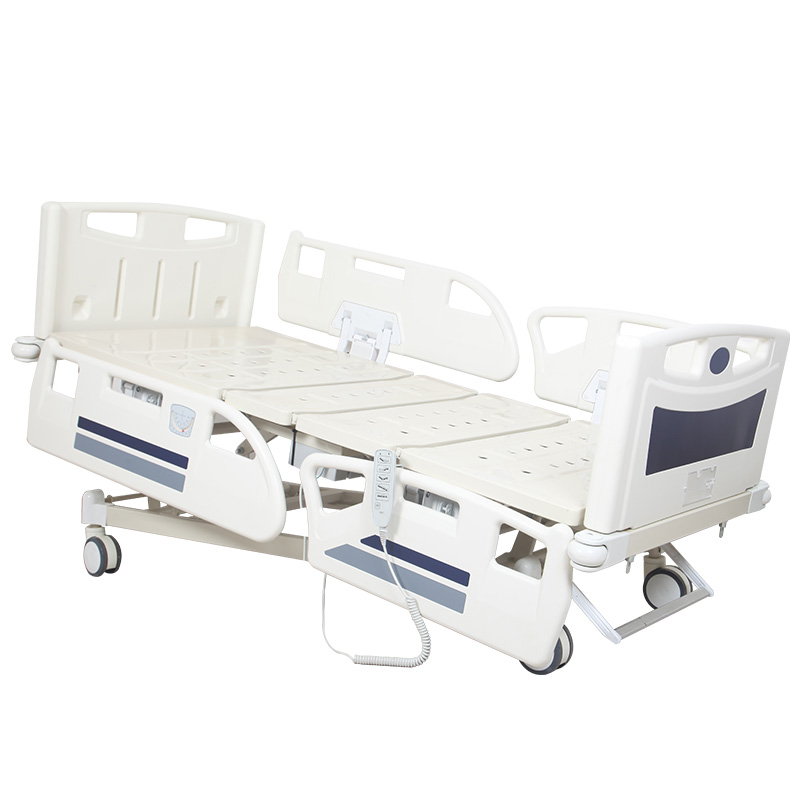
An electric medical bed is more than a powered adjustable sleeping platform. For hospital and clinical use, the complete product needs to combine electric positioning with a stable steel frame, medical side rails, suitable casters, reliable brakes, a compatible mattress platform and practical patient-care accessories. This distinction matters because two beds may both provide powered backrest and leg adjustment while being designed for very different environments. A bed intended for routine medical use must support repeated positioning, cleaning, movement and caregiver access throughout the day. Buyers should therefore evaluate the complete construction rather than looking only at the number of motors. You can review different electric medical bed models according to ward function and product configuration. An electric medical bed is a powered patient-care bed designed to provide adjustable positioning in hospitals, clinics, rehabilitation departments or other healthcare environments. Depending on the model, electric movements may include: However, these functions alone do not define whether the product is suitable for clinical use. The surrounding mechanical and structural systems are equally important. A household adjustable bed mainly focuses on sleeping comfort. A medical bed must also consider caregivers, patient access, mobility, side protection, cleaning and compatibility with medical accessories. The steel frame carries the patient, mattress, actuators and all moving platform sections. Every electric adjustment transfers force through this structure. The frame must remain stable while the backrest, legs and complete platform move under load. Excessive flexing can affect: Depending on the model, hospital bed frames may use rectangular tubing such as approximately 80 × 40 mm with different wall thicknesses. However, buyers should not judge structural quality from tube dimensions alone. An electric actuator works best when the mechanical structure moves freely and evenly. If the frame or moving sections are misaligned, the motor may encounter unnecessary resistance. The mattress platform is divided into several sections so that different parts of the patient's body can be positioned independently. The exact structure varies according to the bed model. The platform should remain properly aligned as the bed changes position. A weak platform can flex or twist under repeated load. Many electric medical beds use punched or formed cold-rolled steel panels. The structure can provide a balance between strength, weight and cleaning access. Perforations or formed openings can reduce large completely closed surfaces beneath the mattress. The platform is typically coated to protect the steel and provide a suitable finished surface. The backrest section is one of the most frequently adjusted areas on an electric patient bed. Depending on the model, the back section may reach approximately 70–75°. The lower platform section can also move electrically. Depending on the model, the leg section may reach approximately 30–45°. The combined position can provide more support than raising the backrest alone. It also gives caregivers more flexibility when setting the bed for different daily activities. On suitable models, the complete mattress platform can move vertically. A lower position may improve access for suitable patients entering or leaving the bed. A higher platform provides a more convenient working level during cleaning, bedding changes and bedside care. Two beds can both be described as height-adjustable while having very different minimum and maximum positions. For example, selected electric models may provide a range around 400–700 mm, while other configurations may differ. Buyers should therefore request actual minimum and maximum platform heights. Electric actuators move the adjustable sections. The number of actuators depends on the bed configuration. A common mistake is assuming that every bed function requires a completely separate motor. The mechanical structure may use coordinated actuator movement to create more than one positioning result. For this reason, buyers should confirm both the actual movements and the actuator configuration instead of judging the bed only by motor count. The most useful evaluation is often very practical. Electric components need appropriate protection for the intended environment. Depending on the selected actuator system, motor protection levels such as IPX4 may be available, with higher protection options on selected configurations. The exact protection rating should always be confirmed for the actual motor system supplied. The handset provides direct access to bed movement. The control interface should not include confusing functions that are not installed on the bed. Side rails are one of the clearest differences between a medical patient bed and an ordinary adjustable bed. They need to provide practical caregiver access while remaining stable during repeated daily operation. Many higher-level electric medical beds use four-piece ABS side rails. Individual sections can be lowered while other sections remain raised. This can improve access to different areas of the patient. Other electric medical beds may use folding aluminum alloy rails. They provide a straightforward mechanical structure and are widely used on medical patient beds. The most suitable design depends on the intended ward and required product level. A rail dimension measured from the metal platform does not represent the final height above the sleeping surface. The thicker the mattress, the less rail remains above the mattress surface. Therefore, mattress and rail specifications should always be evaluated together. Buyers naturally notice the appearance of ABS or aluminum rails. However, the supporting structure determines how stable the rail remains after repeated operation. Electric medical beds commonly use molded PP or ABS head and foot boards. Depending on the model, the boards can be removed when additional patient access is required. Smooth polymer surfaces are practical for routine maintenance. The boards should remain firm when the bed is moved. An electric medical bed can be relatively heavy because it includes a steel frame, motors, rails and lifting structure. Once a patient and mattress are added, caster quality becomes even more important. Quality medical casters can help reduce rolling noise. Wheel diameter influences how easily the bed moves over small floor transitions. Smooth caster rotation reduces the effort required to maneuver the bed. A clinical bed carries more load and is moved differently from ordinary furniture. The caster system must support: Some electric medical beds use individually braked casters. This structure is simple and suitable when the bed does not move frequently. Higher-level beds can use a central braking system. A central brake allows staff to lock multiple wheels through a coordinated mechanism. It becomes more useful when the bed is moved frequently within a healthcare facility. Central braking is not automatically necessary for every electric bed. General ward beds that remain in place for long periods may work well with individual brakes. Higher-mobility departments may benefit more from central braking. The load rating depends on more than the thickness of the main frame. It also depends on: Depending on the model, robust electric medical beds may provide a rated load around 250–260 kg or higher. The final specification should always be confirmed for the exact product. The external width of a medical bed is normally larger than the mattress width. A bed with an external width around 960 mm may use a mattress around 900 mm wide depending on the model. The external dimension includes: Medical mattresses may use thicknesses such as approximately 60 mm, 80 mm or other project-specific dimensions. The selected thickness changes: A rigid household mattress is generally unsuitable for an adjustable medical platform. A flexible structure can follow backrest and leg movement. Some mattress designs use separate foam sections to improve articulation. PU or waterproof Oxford fabric can be selected depending on the project. Yes, provided the air mattress is compatible with the platform. It should fit the usable mattress area. The air mattress should follow platform movement. The added mattress thickness should not reduce effective side rail height too much. Medical beds commonly include sockets for an IV pole. The pole can move together with the patient bed during room repositioning. This is more practical than relying only on a separate floor-standing pole in many ward situations. Depending on the intended use, an electric medical bed may be combined with: Buyers comparing complete configurations can also review our adjustable electric patient bed configurations before finalizing an order. The space beneath an electric medical bed contains actuators, lifting components and wiring. This area also affects how the bed interacts with other equipment. A height-adjustable medical bed should feel stable not only at its lowest position but throughout its working range. The lifting structure should remain controlled without excessive lateral movement. The bed should move evenly. Structural components and electrical cables should maintain appropriate floor clearance according to the bed design. An electric medical bed changes shape and height during operation. The cables must therefore have enough controlled movement to follow the bed. Can place unnecessary tension on connectors. Can create unnecessary hanging loops around moving structures. The cable routing should be designed specifically for the bed's movement range. Electric medical beds supplied internationally should match the destination market. In many product searches, the terms overlap. Electric medical bed emphasizes that the product is designed for a healthcare environment, while electric patient bed emphasizes the person using the bed. For purchasing decisions, the important point is not the wording alone but the actual technical configuration. These terms are also frequently used interchangeably. However, individual manufacturers may use them to describe different product levels. A general ward usually benefits from a configuration that prioritizes practical daily positioning and reliable mobility. Higher-care environments may require additional positioning or mobility features. A three-function bed with a strong frame, reliable motors and well-designed rails can be more appropriate for a general ward than a more complex bed whose additional functions are never used. The specification should follow the real care environment. A complete electric medical bed specification should clearly identify: Two electric beds can look almost identical in catalogue photographs. But beneath the visible panels, they may use different: These differences determine how the product performs in routine clinical use. Hebei Heyuan Medical Equipment has approximately 20 years of experience manufacturing hospital beds, nursing beds and related medical furniture. Our electric medical bed range includes different powered patient-bed configurations for general wards and higher-level patient-care environments. Depending on the model, products can be configured with ABS or aluminum alloy side rails, medical casters, independent or central brakes, PP head and foot boards, different actuator systems and suitable mattress options. OEM and ODM requirements can also be discussed according to the product configuration, quantity and destination market. An electric medical bed is suitable for clinical use because all of its systems work together. The electric actuators provide movement, but the steel frame carries the load. The platform supports the mattress. Side rails provide practical bedside protection. Casters provide mobility, and brakes stabilize the bed when it is in position. The mattress, headboards and medical accessories then complete the working system. For this reason, hospital buyers should evaluate an electric medical bed as one integrated product rather than selecting it only by motor quantity or function count. If you are selecting electric medical beds for hospitals, clinics, distributors or healthcare projects, please contact our team with the required functions, quantity and destination market. We can help you compare suitable electric medical bed configurations.Electric Medical Bed Design Explained: Which Parts Make It Suitable for Clinical Use?
What Is an Electric Medical Bed?
Why Is an Electric Medical Bed Different From an Ordinary Adjustable Bed?
An Electric Medical Bed Usually Includes:
The Main Steel Frame Is the Foundation of the Bed
Why Does Frame Strength Matter?
Steel Tube Size Is Only One Part of Frame Quality
Other Important Factors Include:
Frame Alignment Affects Electric Movement
Good Alignment Helps Provide:
The Mattress Platform Is a Working Mechanical Surface
Typical Sections Include:
Why Is Platform Rigidity Important?
This Can Affect:
Punched Steel Platforms Are Common on Medical Beds
Why Use Formed Steel?
Ventilation Openings
Surface Coating
Backrest Adjustment Supports Everyday Patient Positioning
Common Uses Include:
Leg Adjustment Creates More Positioning Options
Why Combine Back and Leg Movement?
Height Adjustment Changes the Caregiver Working Level
Lower Position
Higher Position
Why Is Height Range More Important Than Simply Having Height Adjustment?
The Motor System Converts Electrical Power Into Bed Movement
Typical Actuator Roles Include:
Motor Quantity Does Not Equal Function Count
What Should Buyers Look for in Electric Movement?
Observe Whether the Bed:
Motor Protection Is Relevant in Medical Environments
The Controller Should Match the Installed Functions
A Good Controller Should Have:
Side Rails Are Part of the Clinical Design
ABS Split Side Rails
Advantages of Split Rails
Aluminum Alloy Side Rails
Why Choose Aluminum Rails?
Side Rail Height Must Be Evaluated With the Mattress
Mattress Thickness Changes Effective Rail Height
Rail Connectors Are Often More Important Than the Visible Rail Panel
Important Components Include:
Headboards and Footboards Need to Support Daily Clinical Use
Detachable Design
Easy-Clean Surface
Stable Mounting
Medical Casters Determine How Easily the Bed Moves
Medical Silent Casters
Caster Diameter
Bearing Quality
Why Are Ordinary Furniture Wheels Not Enough?
Independent Brakes Are Practical for General Ward Beds
Each Wheel Is Locked Separately
Central Braking Is Useful for More Mobile Bed Configurations
One Coordinated Control
When Is It Most Valuable?
The Brake Choice Should Match Actual Ward Workflow
Safe Working Load Must Be Considered Across the Complete Bed
Mattress Size Must Match the Usable Platform
Example
Why Is the Bed Wider?
Mattress Thickness Affects More Than Comfort
The Mattress Must Bend With the Platform
Flexible Foam Mattress
Sectioned Mattress
Waterproof Cover
Can an Electric Medical Bed Use an Air Mattress?
Check Dimensions
Check Flexibility
Check Final Sleeping Height
IV Pole Sockets Are a Small but Important Detail
Why Integrate the IV Pole With the Bed?
Accessory Compatibility Is Part of Medical Bed Design
Why Does Under-Bed Clearance Matter?
Buyers Should Consider:
The Bed Should Remain Stable at Different Heights
At Maximum Height
During Adjustment
At Minimum Height
Electrical Cables Must Move With the Bed
Too Little Cable Slack
Too Much Uncontrolled Cable
Voltage and Plug Configuration Matter for Export Orders
Confirm Before Production:
Electric Medical Bed vs Electric Patient Bed: Is There a Difference?
Electric Medical Bed vs Standard Electric Hospital Bed
Buyers Should Compare the Actual Specification:
Which Electric Medical Bed Is Suitable for a General Ward?
Common Requirements May Include:
Which Bed Is More Suitable for Higher-Care Environments?
Depending on the Project, These Can Include:
Do Not Select an Electric Medical Bed Only by the Number of Functions
What Should Buyers Confirm Before Ordering?
Why Complete Product Configuration Matters More Than Appearance
Electric Medical Beds From an Experienced Manufacturer
Choose the Complete Medical Bed System, Not Just the Electric Functions