

5-Function Electric Care Bed for Flexible Daily Nursing
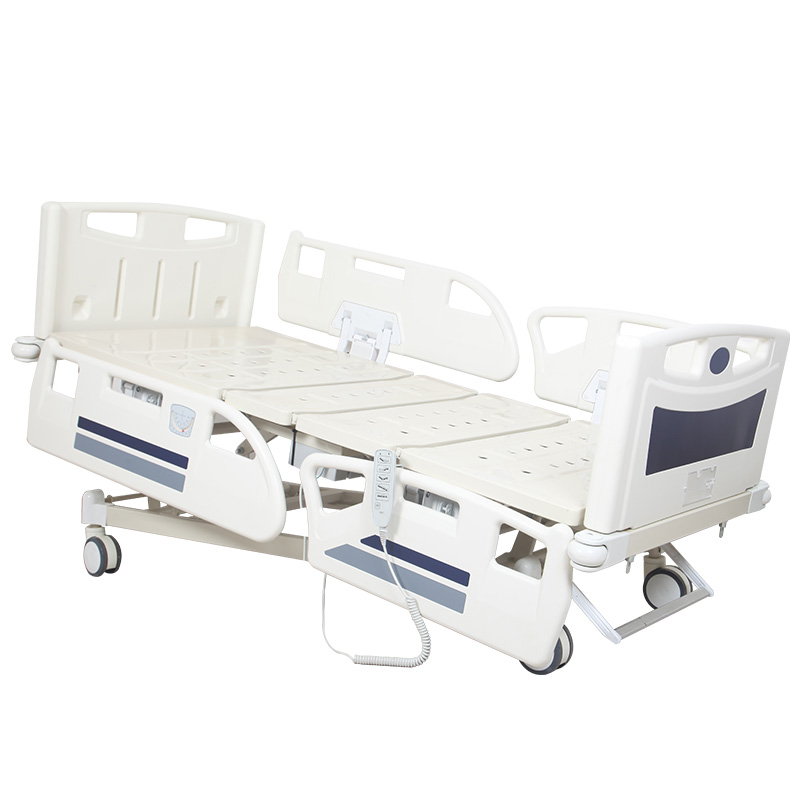
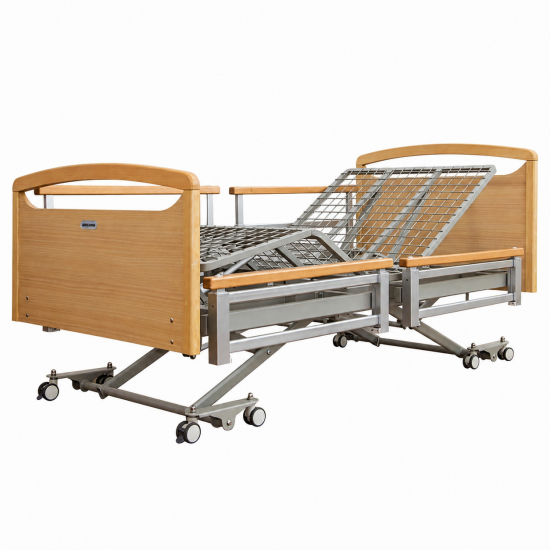
This 5-function electric care bed is designed for elderly care, nursing homes, rehabilitation centers and long-term care environments where both resident positioning and caregiver accessibility are important. Its electric adjustment system combines backrest positioning, knee-rest positioning, whole-bed height adjustment, Trendelenburg and reverse Trendelenburg functions in one professional care platform.
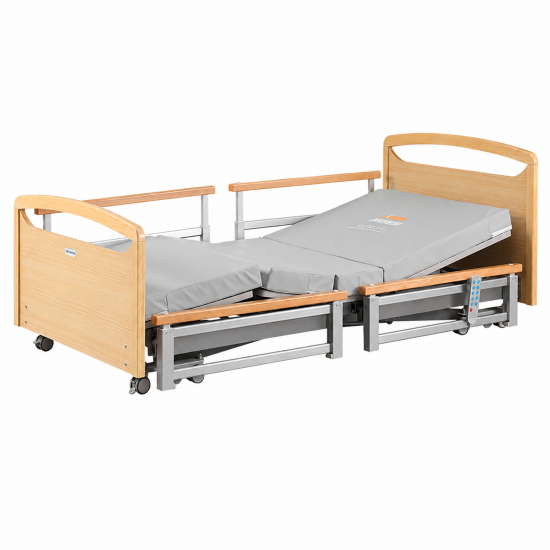
A particularly useful feature is the wide 23–70 cm height adjustment range. The bed can be lowered close to floor level when a lower sleeping position is preferred and raised to a practical working height when caregivers need to perform routine nursing procedures.
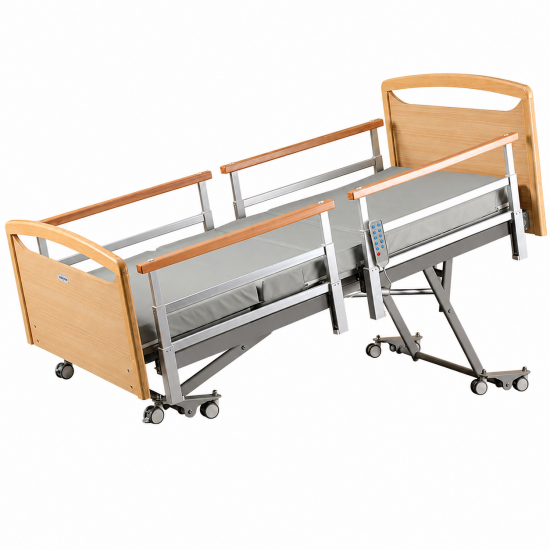
Four independently adjustable side rails provide extensive protection along both sides of the mattress while allowing individual sections to be lowered according to transfer or care requirements.
23–70 cm Electric Height Adjustment
Low Position for Resident Safety
The mattress platform can be lowered to approximately 23 cm from the floor. Compared with conventional fixed-height care beds, this low position reduces the vertical distance between the sleeping surface and the floor and can support safer room arrangements for elderly residents requiring additional bedside protection.
Suitable for Night-Time and Resting Positions
When intensive bedside care is not being performed, caregivers can lower the bed to create a lower resting position. This is particularly useful in nursing homes and long-term care facilities where some residents may require closer attention to bed height and fall-risk management.
70 cm High Position for Caregiver Access
For daily nursing procedures, the entire mattress platform can be raised to approximately 70 cm. Raising the working surface allows caregivers to choose a more appropriate height for tasks such as repositioning, personal hygiene, dressing and changing bed linen.
One Bed for Different Care Situations
The wide adjustment range means the same bed can serve two very different purposes: a low resting position for the resident and a higher professional working position for the caregiver. This flexibility is one of the key advantages of an electrically adjustable Nursing Bed in long-term care environments.
Five Electric Functions
Electric Backrest Adjustment
The backrest section can be raised electrically to support different upper-body positions. An elevated backrest can make eating, reading, communication and other daily activities more comfortable while also assisting caregivers with routine positioning.
Electric Knee-Rest Adjustment
The knee section can be adjusted independently through the electric control system. It can also be combined with backrest adjustment to create different resting and sitting positions according to individual care requirements.
Electric Whole-Bed Lifting
Whole-bed height adjustment allows the mattress platform to move between approximately 23 cm and 70 cm from the floor. This provides substantially greater flexibility than a fixed-height nursing bed.
Trendelenburg Adjustment
The complete mattress platform can be tilted into a Trendelenburg position, providing an additional whole-bed positioning option for professional care environments.
Reverse Trendelenburg Adjustment
Reverse Trendelenburg allows the complete platform to tilt in the opposite direction, extending the positioning capability of the bed beyond standard backrest and leg adjustments.
Four Independently Adjustable Side Rails
Greater Protective Coverage
Instead of using only one short rail on each side, this model is equipped with four separate side rail sections. Two rails are positioned on each side of the bed, extending protection across a larger proportion of the mattress platform.
Independent Operation for Flexible Care
Each side rail section can be operated independently. Caregivers can lower only the section needed for a specific task rather than opening the entire side of the bed.
For example, access to the upper section may be required for personal care while the lower rail remains raised. During transfer, the required rail section can be lowered while other sections remain in their protective positions.
Protection Without Sacrificing Accessibility
A side rail system should provide protection without unnecessarily restricting caregiver access. The four-section arrangement helps balance these two requirements by dividing the side protection into independently controlled areas.
Designed for Frequent Caregiver Interaction
Electric care beds are used repeatedly throughout the day. For this reason, practical adjustment is just as important as the number of functions available.
Handset-Controlled Positioning
The main bed movements are controlled through the wired handset, allowing adjustments to be made without manually operating mechanical cranks. This is particularly useful in facilities where caregivers need to reposition multiple residents during each shift.
Efficient Position Changes
Backrest, knee-rest and height positions can be changed according to different activities throughout the day. The bed can move from a low sleeping configuration to an elevated care position and then into a more upright resting position without requiring manual mechanical adjustment.
Wood-Finish Design for Residential Care Environments
Although the bed provides professional electric nursing functions, its exterior has been designed to reduce the institutional appearance associated with conventional hospital equipment.
Large Wood-Finish Head and Foot Panels
The head and foot panels feature a warm wood appearance that makes the bed easier to integrate into nursing home rooms, assisted living environments and long-term residential care facilities.
Wood-Finish Side Rail Tops
The four side rails incorporate matching wood-finish upper sections, creating visual continuity between the protective rails and the head and foot panels.
A More Coordinated Room Appearance
This combination gives the bed a furniture-inspired appearance while retaining the structural and positioning characteristics required from professional electric care equipment.
Suitable for Long-Term and Elderly Care Applications
Nursing Homes
The combination of electric positioning, low-level adjustment and four-section side protection makes the bed suitable for residents who require regular assistance with positioning and daily activities.
Elderly Care Facilities
The 23 cm low position provides an important option for elderly care environments, while the bed can still be raised to a professional working height when staff assistance is required.
Rehabilitation Centers
Multiple electric positions allow caregivers to adapt the bed configuration according to different stages of rehabilitation, resting and assisted daily activity.
Long-Term Care Facilities
The combination of resident-oriented low positioning and caregiver-oriented high positioning makes this model suitable for extended daily use in professional care facilities.
Professional Home Care
The wood-finish exterior can also be valuable for home-care applications where users require professional electric functions but prefer equipment that integrates more naturally into a residential environment.
Why the 23–70 cm Range Matters When Comparing Care Beds
Buyers should not evaluate an electric care bed only by counting the number of functions. The actual adjustment range determines how those functions can be used in everyday care.
Minimum Height Affects the Resting Environment
A bed capable of reaching approximately 23 cm provides a substantially different low-level configuration from a conventional nursing bed that remains much higher above the floor.
Maximum Height Affects Caregiver Working Conditions
At the opposite end of the range, the approximately 70 cm maximum height allows caregivers to bring the mattress platform to a more practical level for many bedside procedures.
Wide Adjustment Range Provides Greater Flexibility
For procurement teams comparing different electric care beds, the difference between minimum and maximum height can therefore be more meaningful than maximum height alone. A wider range allows one bed to accommodate more resident and caregiver scenarios.
What Procurement Teams Should Compare
Electric Functions
Confirm whether the bed provides independent backrest and knee adjustment together with whole-bed lifting and platform tilt functions.
Actual Height Range
Compare both the minimum and maximum mattress platform heights. For this model, the approximately 23–70 cm range is one of the primary specifications.
Side Rail Configuration
Check not only whether side rails are included, but also their coverage and operating method. Four independently operated sections provide a different level of flexibility from conventional single-section rails.
Caregiver Accessibility
Consider how easily caregivers can access the resident when individual rail sections are lowered and how conveniently the bed can be raised for routine care.
Appearance and Installation Environment
For nursing homes and residential care projects, the visual design of the bed may also influence purchasing decisions. Wood-finish components can help create a less institutional room environment.
A Practical Electric Care Platform for Modern Nursing Facilities
This 5-function electric care bed combines a 23–70 cm height adjustment range, multiple electric positioning functions and four independently adjustable side rails in one integrated system.
Its low position supports resident-focused care, while the raised position improves access for caregivers. The independently operated rails provide extensive bedside protection without requiring the entire side of the bed to be opened for every nursing procedure.
For nursing homes, elderly care centers, rehabilitation facilities and long-term care projects seeking a professional electric nursing bed with both functional flexibility and a residential-style appearance, this model provides a strong higher-specification option.
For dimensions, electrical specifications, mattress options, side rail configurations, OEM requirements or bulk purchasing information, please contact us.