

Electric Hi-Low Care Bed for Everyday Resident Positioning
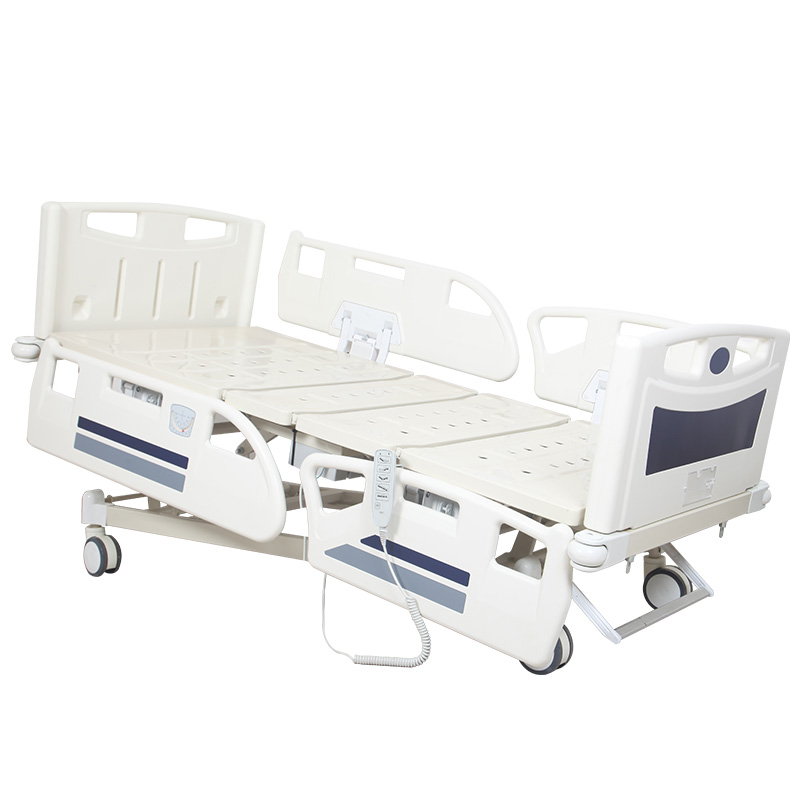
Designed around the daily routines of long-term care, this electric care bed provides three frequently used powered adjustments while incorporating a higher-specification lifting chassis for professional facility use. The electric system controls the backrest, knee section and overall bed height, allowing caregivers to adapt the sleeping surface for resting, sitting, personal care and bedside assistance.
Rather than adding unnecessary functions, this model focuses on the adjustments commonly required in nursing homes and elderly care facilities and combines them with vertical hi-low movement, a double scissor lifting mechanism, central locking casters and articulated metal side rails.
Three Electric Adjustments for Daily Care
Backrest Positioning
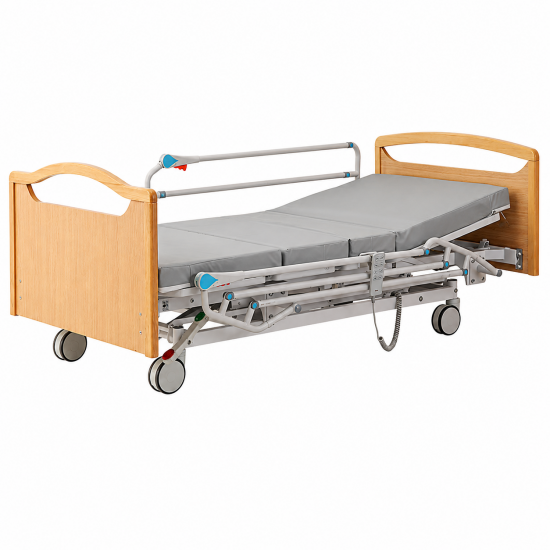
The electrically operated back section allows the upper body to be raised from a flat sleeping position to a more upright posture. This provides greater flexibility for activities such as eating, reading, communication and routine bedside care.
Knee-Rest Positioning
The adjustable knee section changes the position of the lower body without requiring caregivers to reposition the mattress platform manually. Backrest and knee-rest adjustments can be used independently according to individual positioning requirements.
Electric Bed Height Control
The entire mattress platform can be raised or lowered electrically. A higher working position can provide more convenient access during nursing procedures, while a lower setting can be selected according to resident and facility requirements.
Vertical Lifting Technology Built Around a Double Scissor Chassis
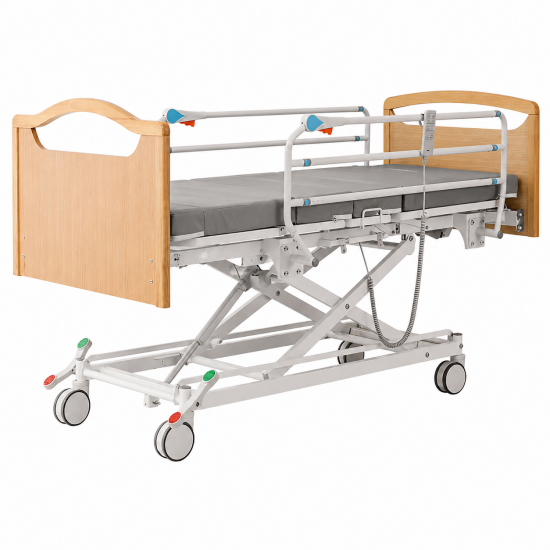
The hi-low mechanism is one of the main differences between this model and a conventional entry-level electric nursing bed. Beneath the mattress platform is a double scissor lifting structure engineered to support the complete bed deck during height adjustment.
Straight Up-and-Down Height Movement
The lifting geometry is designed so that the mattress platform travels primarily in a vertical direction as the bed height changes. This helps limit unnecessary forward or backward displacement of the bed deck and keeps the bed footprint more consistent during adjustment.
This characteristic can be particularly useful when beds are positioned close to walls, bedside furniture or other equipment in long-term care rooms where available space needs to be managed efficiently.
Double Scissor Support Mechanism
Two crossing support assemblies form the foundation of the electric hi-low system. This structural layout provides substantial support beneath the adjustable platform and creates a robust mechanical base for repeated lifting and lowering during everyday care.
For buyers comparing different types of Nursing Bed lifting systems, the chassis design is worth evaluating alongside the number of electric functions. A well-designed lifting mechanism directly affects how the bed performs during routine height adjustment.
Caregiver-Oriented Safety and Mobility Features
Central Locking Caster System
Professional care facilities frequently need to reposition beds for resident care, room cleaning and equipment access. For this reason, the bed incorporates a central locking caster system instead of depending only on separate individual caster brakes.
The centralized braking arrangement enables caregivers to secure or release the mobile chassis more conveniently during routine operation. Large twin-wheel casters also support practical movement within indoor care environments.
Three-Section Folding Metal Side Rails
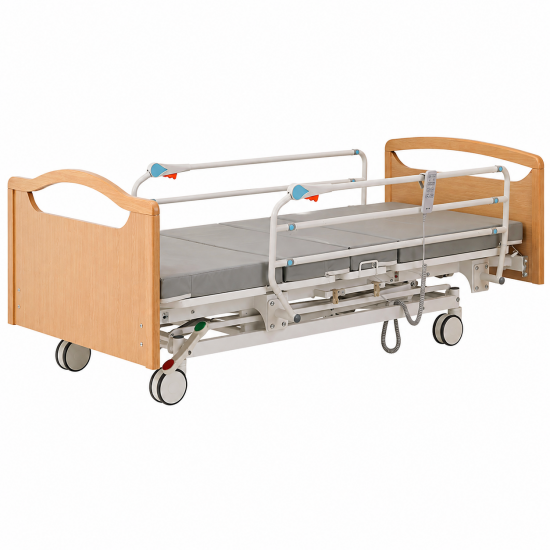
The side protection system uses a three-section folding metal construction. Instead of a simple fixed rail, the articulated design provides protective coverage along the mattress platform while allowing individual sections to fold down when closer bedside access is required.
Convenient Access During Nursing Procedures
When lowered, the folding rail structure opens the side of the mattress platform for resident assistance and routine care. When raised, the rails provide a defined protective boundary along the bed sides.
Metal Construction for Long-Term Facility Use
The rail system is constructed around a metal framework and is designed for repeated operation in professional care environments. Its multi-section configuration also complements the articulated bed platform and gives the product a more refined appearance than conventional one-piece side rails.
Professional Functionality with a Residential Appearance
Many modern nursing homes are moving away from equipment that makes resident rooms look overly clinical. This model combines a steel mechanical chassis with wood-finish head and foot panels, creating a warmer appearance while retaining the functionality expected from an electrically adjustable care bed.
The combination makes the product suitable for nursing homes, assisted living communities, rehabilitation facilities, elderly care centers and other long-term care environments where both functionality and room appearance influence purchasing decisions.
A Balanced Alternative to More Complex Multi-Function Beds
Not every resident requires a five-function or highly specialized medical bed. For facilities primarily requiring electric backrest adjustment, knee positioning and adjustable working height, a well-configured three-function platform can provide a practical balance between functionality, ease of operation and equipment investment.
This model differentiates itself through the engineering surrounding those three functions: vertical hi-low movement, a double scissor lifting chassis, central locking mobility and three-section folding side protection. These features make it a practical option for buyers seeking an upgraded Nursing Bed without moving to a more complicated multi-function configuration.
Suitable Applications
The bed can be considered for nursing homes, elderly care facilities, assisted living centers, rehabilitation institutions, long-term care wards and other professional care settings requiring electrically adjustable resident beds.
For project quantities, configuration options, packaging requirements or OEM specifications, please contact us to discuss the requirements of your care facility or distribution market.