

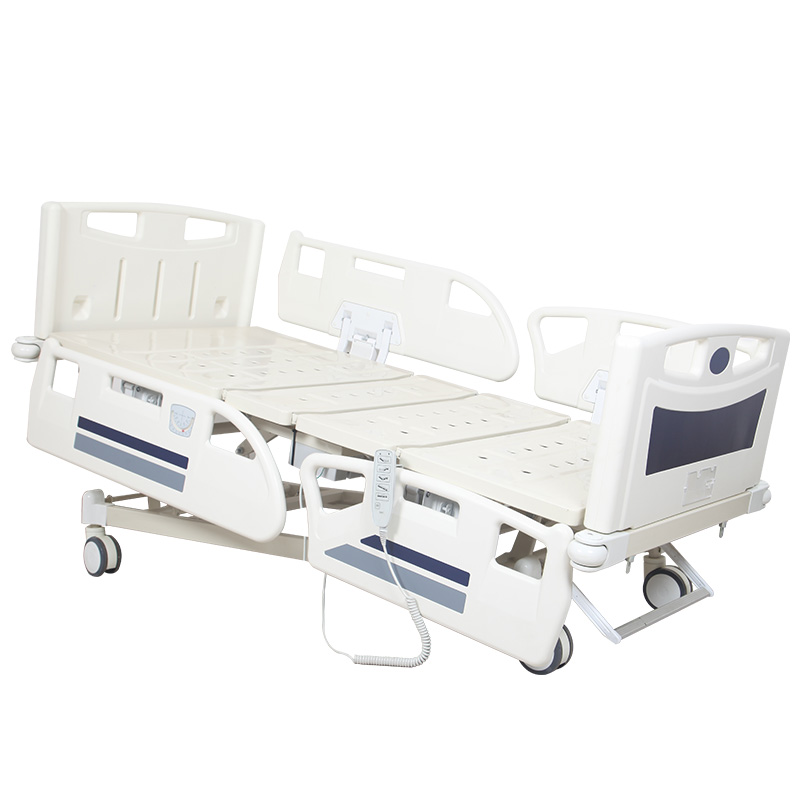
Electric hospital beds offer convenient positioning, while manual beds provide a simpler and often more economical structure. Neither option is automatically right for every project. The better choice depends on how frequently the bed will be adjusted, who will operate it, the level of patient dependency, the available budget, and the facility’s maintenance resources. Procurement teams should therefore compare beds by care workflow rather than by function count alone. A bed used in an intensive care area has different operating demands from one used in a general clinic, recovery room, or low-volume ward. Electric controls allow caregivers to adjust supported positions without repeatedly using hand cranks. This can be particularly useful where patients require frequent position changes for rest, meals, examinations, or nursing procedures. Depending on the model, an electric bed may control the backrest, knee section, platform height, or additional clinical positions. Height-adjustable models allow the mattress platform to be positioned for different tasks. Buyers reviewing an electric hospital bed range should compare the verified minimum and maximum heights, control method, emergency features, and braking system rather than focusing only on the number of motors. In wards where positioning changes are less frequent, a manual crank bed may provide the required functions with fewer electrical components. It can also be appropriate for facilities with limited access to technical maintenance or for projects that prioritize a controlled initial budget. Manual mechanisms are generally easy for facility technicians to understand. However, buyers should still examine crank quality, movement smoothness, frame construction, side rails, castors, and brake operation. Comparing several manual and electric medical bed options under the same checklist is more useful than comparing function names alone. Consider whether adjustments will mainly be made by nurses, family caregivers, attendants, or the patient. Control accessibility and ease of use should suit the intended operator. Frequent daily adjustment generally strengthens the case for electric operation. Occasional positioning may be handled effectively by a manual model. For electric beds, ask about emergency lowering, backup options, cable protection, voltage, plug type, and the procedure for manual intervention if applicable. Do not assume these features are standard across every model. Compare the complete configuration: mattress, side rails, head and foot boards, castors, braking system, IV pole, drainage hooks, electrical system, packaging, spare parts, and freight volume. This provides a more accurate cost comparison than the bed frame price alone. The best choice may also be a mixed procurement plan, using electric beds in higher-dependency areas and manual beds in general wards. To compare configurations for your facility, send us your ward requirements and expected quantities.There Is No Single Best Bed for Every Facility
When Electric Adjustment Adds Real Value
Frequent Repositioning
Caregiver Access and Working Height
When a Manual Bed May Be the Practical Choice
Lower Adjustment Frequency
Straightforward Maintenance
Use a Workflow-Based Decision
Ask Four Questions Before Requesting Prices
Who Will Operate the Bed?
How Often Will Positions Change?
What Happens During a Power Interruption?
What Is Included in the Total Cost?