

Battery backup is one of those electric care bed options that buyers often discuss late, usually after the price negotiation is already tight. That is risky. In a facility, power failure is not common every week, but when it happens the bed still needs to lower, raise, or return a patient to a safer position. For distributors, the bigger issue is expectation. If the end customer assumes every electric bed includes backup power and the shipment does not, the complaint is hard to solve after delivery.
Here is a practical way to decide when battery backup is necessary, how to specify it, and what to check before ordering motorized care beds in volume.
Start with the use environment, not the option list
A hospital ward, a nursing facility and a private clinic do not have the same power-risk profile. Some projects have stable building generators. Others rely on local wall sockets with no clear backup plan. A buyer should ask where the beds will be installed, how often power interruption occurs, and whether staff need to adjust the bed during an outage.
For a standard electric care bed, backup power may be optional. For beds used in recovery areas, higher-dependency rooms, or facilities with weaker electrical infrastructure, the battery becomes less of a luxury and more of a risk-control item.
Clarify what the battery is expected to do
A backup battery is not a second power plant. The buyer should define the expected function clearly: emergency lowering, one full adjustment cycle, several limited adjustments, or temporary use during transport inside the facility. These are different requirements, and they affect battery capacity, controller selection and cost.
I prefer to ask suppliers for plain-language confirmation: after full charge, what movements can the bed complete under a realistic patient load? A vague answer such as 'can be used when power off' is not enough for a serious B2B order.
Match the battery with the control system
The battery pack, control box and actuator system must be compatible. If the supplier changes motor brands between batches, the battery interface should also be reviewed. This matters for distributors who may sell replacement parts later. A clean system is easier to service and explain to customers.
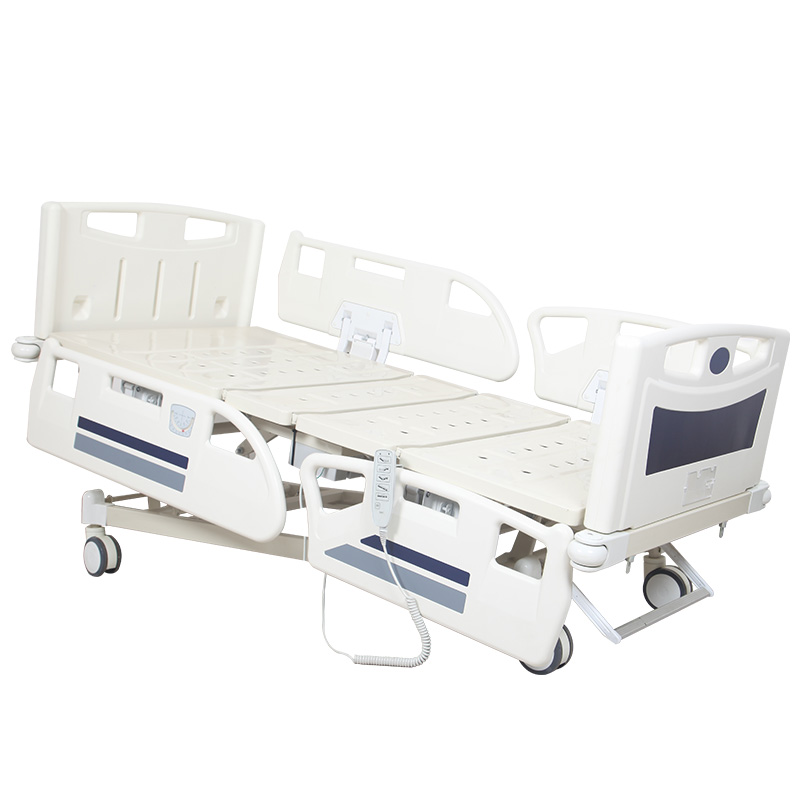
When comparing an electric hospital bed quotation with another supplier's offer, check whether the battery is included, optional, removable, rechargeable through the control box, and protected from accidental disconnection.
Think about storage before installation
Export orders may spend weeks in production, shipping, customs clearance and warehouse storage. Batteries do not like being ignored. Ask the supplier how the battery should be stored, whether it is shipped connected or disconnected, and whether there is any charging advice before final installation. This is especially important for distributors holding stock for multiple months.
The instruction sheet should be simple enough for a local installer. If the bed needs a first charge before handover, write that into the delivery process rather than relying on memory.
After-sales questions buyers should ask
Before placing a large order, ask whether replacement batteries are available as care bed accessories, what information is needed to identify the correct model, and whether the battery has a clear production label. A bed can remain useful for years, but only if the service parts can be sourced without confusion.
Also confirm warranty scope. Battery warranties are often different from the bed frame warranty. A clear answer in the purchase file prevents arguments later.
Final buying advice
Battery backup should be treated as a planned specification, not an emergency add-on. Decide based on facility risk, patient handling needs and service capability. When you request a quotation, describe the project and ask the manufacturer to confirm the matching control system, capacity expectation and replacement plan. For project pricing or distributor orders, send the requirement through the electric care bed supplier contact page before the final quote is locked.
Battery backup and quotation comparison
When two electric care bed quotations look close, check whether the battery is included in both. Sometimes one quote includes the battery, holder and cable, while another only reserves the interface. The price difference may look attractive until the buyer adds the missing parts later. For transparent comparison, ask the supplier to list battery backup as included, optional or not available.
It is also useful to ask whether the battery is fitted at the factory or packed separately. Factory fitting reduces installation work, but separate packing may be preferred for some shipping or storage situations. The right answer depends on how your local team receives and installs the beds.
Training installers to avoid battery complaints
Many battery problems are actually handover problems. The installer forgets to connect the battery, the first charge is skipped, or the customer expects the bed to run normally for a long time without mains power. A simple installation checklist can prevent most of these complaints. It should include battery connection, charging indicator, test movement and user explanation.
For distributors, I recommend keeping one page of local-language battery instructions with the service team. The wording should be plain. Explain what the battery is for, what it is not for, and who to contact if the bed does not respond after a power cut.
Service parts and stock planning
If you sell electric care beds as a long-term program, battery replacement should be planned before the first shipment. Ask the supplier for the battery model, expected replacement interval under normal use, label information and order code. This information lets your service team identify the part without opening a long email chain every time.
Keeping a small number of batteries and control-related parts in local stock may be more valuable than adding another slow-moving bed model. Service response is part of the product in B2B equipment sales, especially when the bed has electrical functions.
How to discuss this requirement with the supplier
When you send an inquiry for a electric care bed, do not only ask for the best price. Give the supplier the room type, expected user group, mattress or accessory plan, and the quantity range. A serious supplier can then answer with a suitable configuration instead of pushing the nearest standard model. This also makes the quotation easier to compare, because each offer is responding to the same working condition.
For a distributor, the discussion should include repeat-order stability. Ask whether the current design is a regular production model, whether important parts are shared with other models, and whether the factory expects any design change in the next batch. A low price is less attractive if the second order arrives with different fittings, different labels or a changed accessory interface.
What to keep in the purchase file
A good purchase file should contain more than the proforma invoice. Keep the approved model name, final slug or article reference, photos, key dimensions, accessory list, packing method and any special note agreed with the supplier. If a question appears after delivery, this file becomes the shared memory for your sales, service and purchasing teams.
For care equipment, small differences can matter. A cable route, rail release, mattress holder, wheel type or handset label may decide whether the bed is easy to use in the local market. If these details are recorded before production, the buyer has a clear basis for inspection and the supplier has a clear basis for manufacturing.
A practical inspection rhythm before shipment
Pre-shipment inspection does not need to be complicated, but it should be consistent. Start with the visible structure, then check moving parts, then confirm accessories and labels. After that, inspect packing. This rhythm prevents the team from spending all its time on appearance while missing the parts that create service problems after installation.
Ask for photos or video clips that show the real action, not only a clean showroom angle. For electrical beds, show movement under load where relevant. For manual or care-home beds, show locks, rails, castors and accessory positions. The goal is to see how the product behaves, because customers judge the bed by use, not by a specification table.
How to use supplier information after the goods arrive
The best technical information is useful after delivery, not only before payment. Keep the supplier's photos, part names and inspection notes in a place where your service team can find them. When a customer asks about a replacement part or a function, the local team should not need to search through old chat records to understand the product.
This habit is especially important for buyers who sell through dealers. The dealer may not know the factory background, but they still need clear answers. If the original order file is organized, the distributor can respond faster, protect the brand reputation and make repeat orders more consistent.
Adapting the specification to the local market
A product that works well in one market may still need adjustment for another. Local room sizes, caregiver habits, mattress brands, plug standards, language labels and delivery conditions all affect the final specification. Before treating the electric care bed as a fixed catalogue item, compare the supplier's standard configuration with the way your customers actually use care equipment.
This does not mean every order should become a custom project. Too much customization can make spare parts and repeat orders harder. The better approach is to identify the few changes that genuinely matter for your market and keep the rest stable. That gives the buyer a more suitable product without creating unnecessary complexity.
When customization is worth requesting
Customization is worth discussing when it reduces repeated complaints, helps the product fit local rooms, or makes service easier for the distributor. Examples include language labels, accessory position, packing method, mattress matching, cable length, spare part kits or a small change in documentation. These changes are practical because they support real use after delivery.
Customization is not worth requesting only because a competitor's brochure looks different. A unique feature that your service team cannot explain or your warehouse cannot support may become a burden. The strongest B2B specifications are usually simple, repeatable and clearly connected to customer use.