

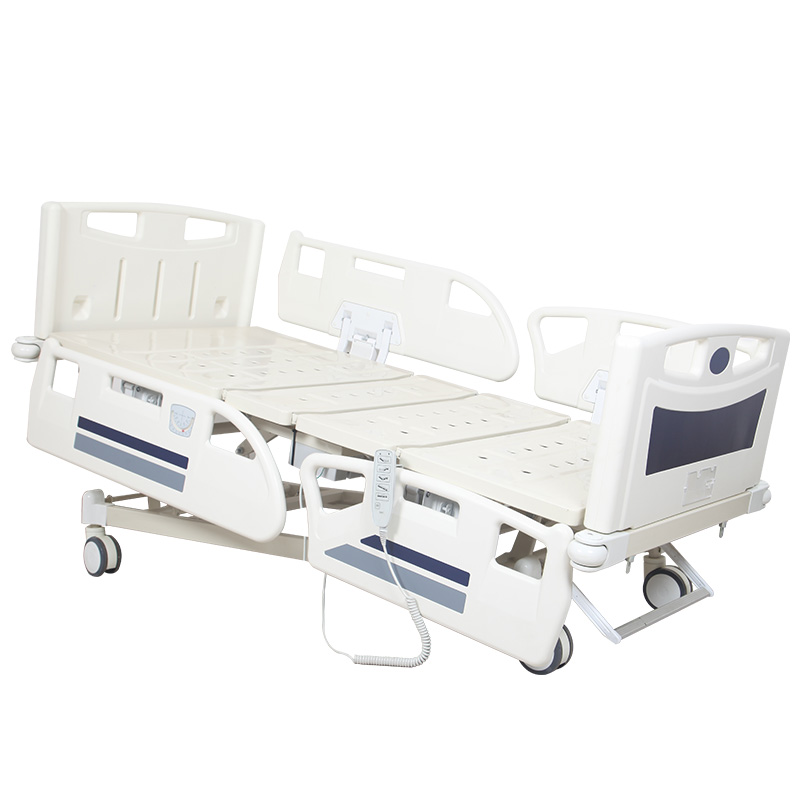
The control box is not a decorative part of an electric care bed. It connects the actuators, handset, power input, and sometimes battery backup. If it is poorly placed, the bed may still work at first, but service becomes harder and cable damage becomes more likely. Distributors should inspect control box placement before bulk ordering.
Look at protection and access together
A control box should be protected from impact, cleaning moisture, and accidental pulling. At the same time, service staff need to reach it when checking connectors. On an electric hospital bed, placement should balance protection with maintenance access.
If the box is hidden too deeply, technicians waste time. If it is too exposed, it may be hit during movement or cleaning.
Check nursing bed movement
A nursing bed may move through height and backrest functions many times per day. The control box and cable route should remain stable through the full movement range.
When reviewing the electrical layout, compare it with the related hospital bed category instead of checking the control box as an isolated component.
During sample testing, raise and lower every electric function while watching the connectors and cable loops.
Consider standing-related functions
If the model includes transfer support or is compared with a standing bed, cable movement may be more complex. Ask whether the control box position was tested through every function sequence.
The more functions a bed has, the more important clean electrical layout becomes.
Coordinate with small electrical accessories
Handset holders, cable clips, backup battery brackets, and other accessories should be approved with the control box position. These parts are small, but they keep the electrical system tidy after delivery.
A missing cable clip can create the same customer complaint as a larger electrical fault.
Check mattress and room setup
If an air mattress is used, the pump cable and bed cables may share nearby space. The layout should be easy to understand, with no tangled lines under the bed.
Ask for underside photos with the final mattress and pump arrangement when possible.
When reviewing the electrical layout, compare it with the related nursing bed category instead of checking the control box as an isolated component.
Final buying advice
Control box placement affects service speed, cable life, and user confidence. Buyers should inspect protection, access, routing, labels, and connector stability before shipment.
For control box layout questions or distributor orders, send the function list through the contact page before final approval.
Why control box position affects after-sales service
On an electric care bed, the control box is one of the parts most buyers do not notice until something goes wrong. When it is placed well, nobody talks about it. When it is placed badly, service staff may struggle to check connectors, cleaning staff may hit it, and cables may be pulled during bed movement. This is why distributors should inspect the layout before they commit to repeated orders.
The control box should be easy enough to access for maintenance, but protected enough to avoid casual impact. A position that looks neat in a product photo may still be poor in a real ward or care room. Ask the supplier to show the underside, not only the side view. The underside often tells the truth about cable discipline.
For export buyers, after-sales labor is usually more expensive than the part itself. A smart layout reduces the time needed to diagnose a loose connector or replace a handset.
Check cable movement through the full function range
A bed should be tested from its lowest position to its highest position, with backrest, knee section, and trend functions if available. Watch every cable during movement. The cable should not rub sharply against the frame, hang close to the floor, cross a moving joint, or become tight at the end of travel.
I recommend taking a short video during sample approval. It gives the buyer and factory the same record of how the cables move. If a cable loop looks acceptable in one position but poor in another, adjust it before mass production. Do not assume workers on the assembly line will solve it by instinct.
Cable clips and ties are small parts, but they decide whether the electrical system stays tidy after months of use. A missing clip can create the same customer complaint as a larger electrical defect.
When reviewing the electrical layout, compare it with the related standing bed category instead of checking the control box as an isolated component.
Ask practical service questions before ordering
A distributor should ask how a technician reaches the control box, how connectors are labeled, whether the handset cable can be replaced without disassembling major parts, and whether the backup battery position is clear. These questions sound simple, but they separate a mature electric care bed design from a product that only works in a demonstration.
If the bed will be sold in markets with many small dealers, the layout should be especially intuitive. Local service teams may not have deep factory training. The product should help them avoid mistakes through clear routing and logical connector positions.
The goal is not to make the bed more complicated. The goal is to make the electrical system understandable. That makes the buyer's business easier long after the first container is delivered.
What a buyer should photograph during sample testing
Photographs are a powerful tool for electric care bed procurement, but they must show the right things. Ask for front, side, underside, control box close-up, cable route, handset holder, actuator connection points, and power cord exit. A beauty photo is not enough. The underside and cable route are where many future service problems begin.
When the bed is raised to its highest point, photograph the cables again. Then lower the bed and photograph the same area. If the cable position changes in a risky way, the problem should be fixed before production. A single photo taken at one height may hide a tension point that appears only during movement.
The control box label should be readable after installation. If technicians cannot see connector marks or model references, service becomes slower. In export markets, the local service person may not have direct factory support, so clear labeling has real commercial value.
For buyers supplying different regions, check plug type, power input, and battery option early. These choices may affect cable routing and packing. It is better to confirm them together with control box placement rather than treat them as separate details.
A photo record also helps during claims. If a dealer reports a cable issue later, the buyer can compare the delivered unit with the approved layout. This makes communication faster and reduces emotional argument.
When reviewing the electrical layout, compare it with the related air mattress category instead of checking the control box as an isolated component.
How distributors can reduce electrical service complaints
Electrical complaints are not always caused by failed motors or controllers. Many are caused by loose plugs, pulled cables, damaged handsets, or moisture exposure during cleaning. A distributor can reduce these complaints by selecting a design that protects the electrical system and by training dealers in basic handling.
The product should have a logical cable path. Cables should not hang where cleaning tools hit them, and they should not sit near moving joints without protection. Handset storage should be obvious. If users leave the handset under the mattress or hanging near the floor, damage becomes more likely.
Ask the supplier whether connectors are easy to identify. Color coding, shape differences, or clear marks can help local service teams avoid wrong connections. This is especially useful when a bed has several actuators and optional battery backup.
A small service sheet can be packed with each bed or shared with dealers. It can show where the control box is located, how to check the power connection, and what not to pull during movement. This is not a full technical manual; it is a practical guide for the first level of service.
The best electric care bed design is not only smooth when new. It remains understandable after months of use, when different people have cleaned it, moved it, and adjusted it many times.
Warning signs in control box and cable layout
One warning sign is a cable that becomes tight when the bed reaches the end of movement. This may not fail on the first day, but repeated tension can damage connectors or internal wires. Any tight cable should be corrected before production approval.
Another warning sign is a control box placed where cleaning water or disinfectant spray may collect. Medical and care environments require frequent cleaning. Even when electrical parts have protection, it is better to avoid unnecessary exposure.
A third warning sign is confusing cable routing. If several cables cross each other without clear order, service staff may disconnect the wrong plug or route a replacement cable poorly. Simple routing is usually better than a layout that looks compact but is hard to understand.
Also check whether the handset cable has a natural storage path. If the handset hangs close to the floor or is easy to trap under the rail, damage complaints will increase. The best layout guides the user toward the correct habit.
Why this detail supports distributor reputation
Distributors are judged by after-sales experience as much as by first delivery. If electric beds create frequent small electrical complaints, dealers lose confidence and customers become nervous. Better control box placement helps reduce these avoidable problems.
A clean electrical layout also makes training easier. Sales staff can explain the product more confidently, installers can demonstrate it more clearly, and service teams can diagnose issues faster.
This is why control box placement should be included in the purchase checklist, especially for repeated container orders. It is a small inspection item with a direct effect on long-term satisfaction.
For a buyer building an electric care bed business, the most reliable product is not always the one with the longest function list. It is the one that keeps working clearly and predictably in ordinary daily use.
For final model confirmation, project quantities, or configuration questions, use the contact page after reviewing the technical details.