

The handset is the part of an electric care bed that users touch every day. A weak handset can make a good frame feel unreliable, while a clear and durable handset helps caregivers use the bed with confidence. For distributors and import buyers, handset quality deserves a separate check before bulk orders are confirmed.
Treat the handset as a service part, not only a control part
A handset looks small compared with the bed frame, motors, and rails, but it carries a large part of the user experience. It is dropped, pulled, cleaned, pressed with wet hands, and sometimes handled by people who are tired or unfamiliar with the bed.
When buyers review an electric care bed sample, they should test the handset as carefully as they test the lifting function. The question is not only whether the buttons work today, but whether the handset can survive ordinary use after delivery.
Check button feel and icon clarity
When comparing this detail, keep the relevant electric hospital bed range in the same procurement file so sales, purchasing, and service teams work from one clear standard.
Buttons should respond clearly without needing excessive force. If a button feels vague on the sample, it may become worse after months of use. Icons should be easy to understand, especially for markets where users may not read the same language as the instruction sheet.
For B2B distribution, clear handset icons reduce training time. A dealer can explain the bed faster, and a caregiver can use basic functions without repeatedly checking the manual.
Inspect cable strain relief
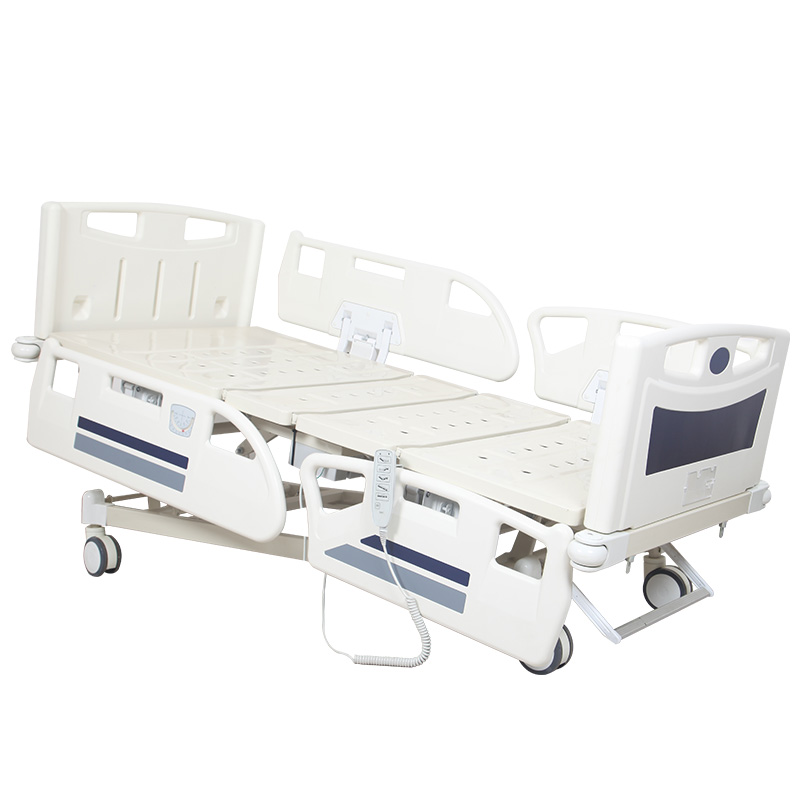
The cable entry point is one of the first areas to inspect. If the cable bends sharply near the handset body, repeated pulling may damage internal wires. The strain relief should feel firm, flexible, and suitable for repeated movement.
Ask the supplier how the handset cable is routed on the bed and where the handset is stored. A durable handset can still fail early if the cable is always stretched or trapped.
Review hanger design and storage position
A handset needs a natural place to rest. If the hanger is weak, too loose, or difficult to place on the rail, users may leave the handset on the mattress or floor. That creates damage risk.
During sample testing, hang and remove the handset several times from the positions users will actually use. The best design makes the correct habit easy.
Ask about replacement and connector matching
When comparing this detail, keep the relevant nursing bed projects in the same procurement file so sales, purchasing, and service teams work from one clear standard.
Distributors should know whether a replacement handset can be supplied quickly and whether connectors are model-specific. If several bed models use different handsets, spare part identification must be clear.
A simple label or part code helps local service teams avoid sending the wrong replacement. This is especially important when dealers support several electric care bed lines.
Test cleaning tolerance with common sense
Care environments involve regular cleaning. The handset should not have deep dirt-catching gaps around buttons, and the label should not peel easily. Buyers should avoid unsupported claims, but they can still inspect whether the surface and button area are practical for routine wiping.
A handset that looks modern but is difficult to clean may not suit long-term care environments.
Consider cable length carefully
A cable that is too short limits use. A cable that is too long gets tangled or caught under the bed. The right length depends on the bed function, rail position, and user workflow.
For sample approval, test the bed at different heights and backrest positions. The handset should remain reachable without creating loose loops near moving parts.
Build handset checks into incoming inspection
For bulk orders, inspect handset appearance, icon print, button response, cable entry, connector fit, and hanger strength. These checks are quick, but they catch many issues before products reach dealers.
When comparing this detail, keep the relevant standing bed functions in the same procurement file so sales, purchasing, and service teams work from one clear standard.
If the order is large, test several units from different cartons. Handset consistency matters because a single weak batch can create many after-sales calls.
Connect handset quality with brand reputation
End users may not understand actuator brands or control box layout, but they immediately notice a poor handset. If the buttons feel cheap or the cable fails, the whole electric bed is judged poorly.
For importers building a brand, handset durability is therefore part of market positioning. It is a small part with a large influence on perceived quality.
Final advice for distributors
Before a bulk electric care bed order, ask for handset photos, connector details, cable length, replacement part code, and sample testing notes. Keep these details in the product file.
This makes dealer training and after-sales work easier, and it helps the buyer choose a bed that performs well beyond the first demonstration.
Questions to ask the supplier about handset sourcing
The buyer should know whether the handset is a stable component or a part that changes frequently according to availability. A stable handset makes service easier because dealers can stock the right replacement and use the same training material across orders.
Ask whether the supplier can provide the handset part code, connector type, cable length, and compatible control box information. These details may seem technical, but they become important when a dealer needs one replacement quickly.
For private-label orders, ask whether the icon layout, label language, or logo can be customized without affecting delivery time. Customization should be controlled carefully. A beautiful label is not useful if it peels or if icons become less clear.
When comparing this detail, keep the relevant air mattress pump in the same procurement file so sales, purchasing, and service teams work from one clear standard.
If the supplier uses more than one handset source, request confirmation before each bulk order. Buyers should avoid receiving one version in the sample and another version in the container without approval.
How to train dealers to reduce handset damage
Some handset damage is caused by weak design, but some is caused by poor user habits. Dealers should show families and facilities where to hang the handset, how to avoid pulling the cable, and why it should not be placed under the mattress.
A short demonstration during installation can prevent many complaints. Press each main button, return the handset to its holder, and show what to check if the bed does not respond. This takes only a few minutes but gives users more confidence.
For distributor networks, provide a simple photo sheet. It should show correct handset storage, cable path, connector position, and common mistakes. Dealers are more consistent when they have visual support.
The handset is a small part, but it is often the first part the user blames when something feels wrong. Training and clear design work together to protect the brand.
A buyer-side handset test that takes ten minutes
A useful handset test does not require a laboratory. Press every button several times, operate the bed through its main functions, hang and remove the handset from its holder, gently move the cable near the strain relief, and check whether the icons remain easy to read under normal room light.
Then ask someone unfamiliar with the bed to use the handset after a short explanation. If that person hesitates over basic functions, the icon layout or button grouping may need improvement. User confusion becomes dealer training cost later.
Check the sound and feel of the buttons. A button does not need to feel expensive, but it should feel consistent. One soft button or one stiff button on a new sample is a warning sign.
Finally, record the test with photos. The buyer can use these photos during bulk inspection and after-sales training.
When handset specification should influence the purchase decision
If two electric care bed suppliers offer similar frames and functions, handset quality can be a deciding factor. The handset is visible, touched often, and easy for customers to judge. It affects confidence more than many hidden components.
A strong handset does not automatically mean the whole bed is excellent, but a weak handset is a practical warning. It may show that the supplier has not studied daily use deeply enough.
For dealers selling to care homes or home users, replacement speed also matters. If a handset fails, the customer wants a fast solution. A supplier with clear part codes and stable replacement supply is easier to support.
The smartest procurement decision balances frame quality, electrical system reliability, user interface, and after-sales part availability. The handset belongs in that discussion.
For model selection, project quantities, or configuration confirmation, use the contact page after reviewing the technical requirements.