

Emergency lowering is one of those electric care bed details that buyers may not discuss until they need it. A bed can look modern, move smoothly, and still create service pressure if staff do not understand how to bring the platform or backrest down during a power or control issue. Procurement teams should ask practical questions before bulk orders.
Clarify What Emergency Lowering Means
Different suppliers may use the same phrase for different solutions. Some refer to battery backup, some to a manual release method, and some to a control function that only works under certain conditions. The buyer should ask exactly what is included.
The answer should be written in plain language. Which function can be lowered? How is it operated? Does it require a tool? Does it require trained staff? Is it part of the standard model or an option?
When checking this point, keep the related electric hospital bed line in the same procurement file so sales, purchasing, and service teams follow one clear standard.
This clarity protects distributors because local dealers need to explain the product accurately. A vague promise in the quotation can become a complaint later.
Test The Procedure During Sample Approval
A feature that is never tested is only a claim. During sample approval, ask the supplier to demonstrate the emergency lowering procedure slowly. Record a short video and keep it in the product file.
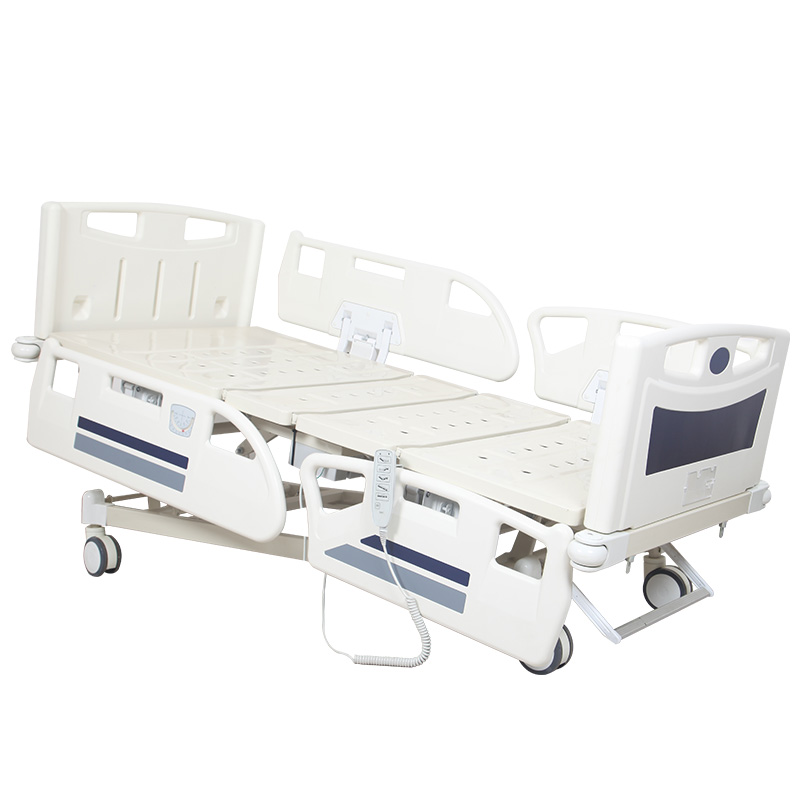
The test should be done with the mattress fitted and the bed assembled as it will be delivered. If the release point is hard to reach, hidden by accessories, or difficult to understand, the buyer should know before placing a container order.
If the bed will be used by care facilities, ask whether ordinary staff can perform the procedure after training or whether service staff are required. This affects training and after-sales planning.
Check Battery Backup Separately
Battery backup and emergency lowering are related but not always the same thing. A backup battery may support certain movements, but its capacity, charging method, and service life still need to be understood.
Ask whether the battery is included, optional, or only available on selected models. Ask where it is mounted and how it is replaced. A hidden battery can be neat, but service access still matters.
When checking this point, keep the related nursing bed use in the same procurement file so sales, purchasing, and service teams follow one clear standard.
For distributors, battery information should be included in dealer training. Users should know that backup systems need correct connection and periodic attention.
Look At Labels And User Guidance
Emergency functions should not depend on memory alone. Labels, instruction sheets, and service notes should help staff identify the right action. The label should be visible enough without looking messy.
If the bed is sold in markets with different languages, discuss label language early. A technically correct feature can still fail in practice if the user cannot understand the instruction.
For B2B orders, a short photo guide is often more useful than a long manual. Dealers can use it during installation and service calls.
Train Dealers Before The First Complaint
Emergency lowering should be explained before anything goes wrong. Dealers should know the procedure, limits, and service contact path. Waiting until the first urgent call is poor preparation.
A distributor can create a simple training file: normal operation, backup operation, emergency lowering, what not to do, and when to contact technical support. This keeps communication consistent across sales teams.
When checking this point, keep the related standing bed function in the same procurement file so sales, purchasing, and service teams follow one clear standard.
If the product line includes several control systems, do not assume the procedure is the same for every model. Model-specific notes prevent mistakes.
Inspect Cable And Control Layout
Emergency operation is harder when cable routing and control box placement are confusing. During procurement review, check whether the related components are accessible and logically arranged.
If the release point or backup connection is blocked by frame parts, mattress retainers, or optional accessories, ask for an adjustment. A rarely used function still needs to be usable.
The best design is understandable under pressure. Users should not need to solve a puzzle while trying to reposition the bed.
Keep Claims Careful And Accurate
Avoid broad claims that suggest the bed can solve every emergency situation. It is better to describe the actual function clearly and responsibly. Buyers appreciate honest technical language.
If the feature has limits, state them in training material. Clear limits reduce unrealistic expectations and protect the distributor from unnecessary disputes.
Professional procurement content should help buyers ask better questions, not overpromise outcomes.
When checking this point, keep the related bed accessories in the same procurement file so sales, purchasing, and service teams follow one clear standard.
Final Procurement Advice
Before buying an electric care bed in quantity, confirm what emergency lowering means, test it on a sample, record the process, train dealers, and keep replacement or battery information in the product file.
The value of this feature is not only in the mechanism. It is in whether staff understand it when they need it.
Questions To Include In The Purchase File
Buyers should record whether emergency lowering is standard or optional, which functions it covers, how it is operated, whether a battery is included, and what training material is available.
This information should stay with the model file. When dealers ask later, the distributor should not need to search through old chat messages.
If the mechanism requires a tool, the tool should be listed as part of the delivery package. If it requires staff training, the training note should be part of handover.
The more clearly the feature is recorded, the less likely it becomes a source of confusion.
How To Handle Market Communication
Marketing language should stay practical. Say what the bed can do, under what condition, and how the user should respond. Avoid dramatic claims that create unrealistic expectations.
Dealers can explain emergency lowering as part of responsible electric bed selection. It is not the only reason to buy a model, but it is a detail serious buyers should understand.
For facility projects, include the procedure in staff orientation. For home care sales, include a simple explanation during installation.
A feature is only useful when people know how to use it correctly.
For model selection, project quantities, or configuration confirmation, use the contact page after reviewing the technical requirements.