

Five Electric Functions Do Not Mean Five Independent Systems
A buyer receives quotations for several electric hospital beds.
The specifications appear very similar.
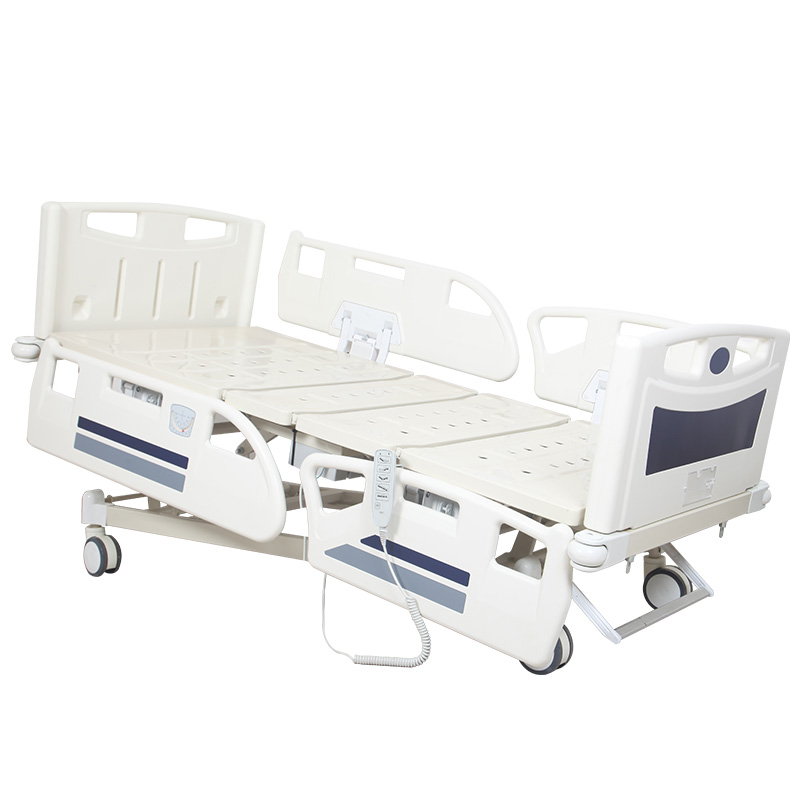
Each supplier offers an Electric 5-Function Hospital Bed with functions such as backrest adjustment, legrest adjustment, height adjustment, Trendelenburg and Reverse Trendelenburg.
The buyer confirms the adjustment angles, overall dimensions, safe working load and motor quantity.
Everything looks acceptable.
But one important question is often left until after the beds arrive:
What happens when one part of the electrical adjustment system stops working?
Does only one function stop?
Does the complete bed stop?
Can hospital technicians identify the failed component?
Can the component be replaced locally?
Or does the hospital need to wait for an entirely new electrical system from the overseas supplier?
For a hospital purchasing dozens or hundreds of electric beds, these questions can matter more over the product lifecycle than the number of buttons on the handset.
An Electric Hospital Bed Is an Electrical System, Not Just a Bed With Motors
The actuator is the most visible electrical component, but it does not work independently.
The Actuator Creates Mechanical Movement
Depending on the bed design, electric actuators may control different movements of the mattress platform and lifting structure.
Typical functions can include:
- Backrest adjustment
- Legrest adjustment
- Overall height adjustment
- Trendelenburg positioning
- Reverse Trendelenburg positioning
But the Actuator Needs Instructions and Power
The command normally travels through a system involving the handset or control panel, control box, wiring and actuator.
This means a bed can have perfectly good actuators and still develop an adjustment problem somewhere else in the electrical chain.
When a Function Stops, Do Not Immediately Assume the Motor Has Failed
This is one of the most useful principles for hospital maintenance teams.
Imagine the backrest suddenly stops moving.
The first conclusion may be:
“The backrest motor is broken.”
That may be correct, but it is not the only possibility.
The Fault Could Be Somewhere Else
Depending on the system design, possible causes can include:
- Actuator problem
- Loose connector
- Damaged cable
- Handset or control-panel problem
- Control-box problem
- Power-supply problem
- Mechanical obstruction
Good Troubleshooting Starts by Separating the Possible Causes
This is why buyers should understand the electrical architecture before purchasing the bed.
Ask Whether Each Actuator Can Be Identified Separately
For a five-function bed, the maintenance team should be able to understand which actuator is responsible for which movement.
Request an Electrical Layout From the Supplier
A useful document can identify:
- Actuator positions
- Actuator functions
- Control-box connections
- Handset connection
- Power input
- Other electrical accessories where fitted
A Wiring Diagram Is More Useful Than Guessing Under the Bed
When a bed eventually needs service, clear technical documentation can reduce unnecessary replacement of working components.
Can One Failed Actuator Be Replaced Without Replacing the Others?
This is a practical procurement question.
Suppose the backrest actuator eventually requires replacement while the other actuators continue operating normally.
Ask Whether the System Uses Replaceable Individual Components
The hospital should understand whether it can replace the affected actuator according to the manufacturer's service procedure.
Record the Correct Part Information
Useful information may include:
- Bed model
- Actuator model or part number
- Stroke or application
- Connector type
- Control-system compatibility
A motor that looks similar externally is not automatically a compatible replacement.
Actuator Stroke Is More Important Than Buyers Sometimes Realize
An actuator does not simply move “up and down.”
Its movement must correspond with the geometry of the hospital bed.
The Mechanical Travel Helps Determine the Final Bed Position
The actuator, mounting points and linkage geometry work together to create the specified adjustment range.
Do Not Replace an Actuator Only Because the Voltage Looks the Same
Compatibility should be confirmed according to the bed manufacturer's technical requirements.
Mounting Distance Also Matters
Two actuators can look similar in a photograph while having different installation dimensions.
Check the Physical Interface
Relevant factors can include:
- Retracted installation length
- Extended position
- Mounting interface
- Connection geometry
The Replacement Must Fit the Bed's Mechanical Design
Electrical compatibility alone is not enough.
The Control Box Is the Center of the Electrical System
If actuators are the muscles of an electric hospital bed, the control system coordinates their operation.
Multiple Components Connect Through the Control Box
Depending on configuration, these may include:
- Backrest actuator
- Legrest actuator
- Height-adjustment actuators
- Hand controller
- Side-rail control panels
- Nurse control panel
- Battery or backup components where equipped
Ask the Supplier to Identify Every Port
This becomes extremely useful during troubleshooting.
One Dead Function and a Completely Dead Bed Are Different Faults
This distinction can help maintenance staff narrow down the problem.
If Only One Function Stops
The technician may investigate the components associated with that particular movement.
If Every Electric Function Stops
The investigation may begin with common elements such as:
- Power supply
- Main cable
- Control box
- Emergency-stop status where fitted
- System protection or other common electrical components
Fault Isolation Saves Time
A serviceable bed design should support logical diagnosis instead of forcing technicians to replace parts by trial and error.
The Handset Is a Frequently Used Component
A hospital-bed handset may be operated many times every day.
Inspect More Than the Buttons
Buyers should also look at:
- Cable connection
- Cable strain relief
- Connector security
- Button response
- Housing condition
A Handset Problem Can Look Like an Actuator Problem
If a button does not send the intended command, the corresponding movement may not occur even though the actuator itself is still functional.
Side-Rail Controls Add Convenience — And More Components to Understand
Some ICU and higher-specification electric beds include integrated controls on the side rails.
This Can Improve Access for Patients and Caregivers
But it also creates additional electrical interfaces.
Ask Which Controls Can Be Replaced Independently
For long-term service, the hospital should understand whether a damaged control panel requires replacement of:
- The panel only
- A wiring harness
- The complete side rail
- Another integrated assembly
Nurse Controls and Patient Controls Should Not Necessarily Have the Same Authority
Advanced ICU Hospital Bed configurations may provide different levels of control access.
Some Functions May Need Caregiver Management
Depending on the product design, the caregiver control system may provide function locking or centralized operation.
Verify the Actual Control Logic Before Ordering
Do not assume every control panel shown in a product photograph provides the same functions.
A Function Lock Is Not the Same as a Broken Function
This sounds obvious, but it matters during real hospital use.
If a function has been intentionally locked from a caregiver control panel, pressing the patient control may produce no movement.
Staff Need to Understand the Locking Logic
Otherwise a correctly operating bed may be reported as faulty.
Training Reduces Unnecessary Service Calls
Include control-panel operation in product handover and staff instructions.
Emergency Stop Should Be Tested, Not Just Listed in the Quotation
Some electric hospital bed configurations include an emergency-stop function.
Ask the Supplier to Demonstrate the Actual Operation
Buyers should understand:
- Where the emergency control is located
- What happens when it is activated
- How normal operation is restored
Do Not Treat an Emergency Feature as a Decorative Label
If the ordered configuration includes it, its operation should form part of sample and pre-shipment inspection.
Electric CPR and Manual CPR Are Different Concepts
Some hospital beds may provide an electric positioning function intended to help return the bed toward a suitable emergency position.
Other designs may include a manual mechanical release for the backrest.
Ask Exactly What “CPR” Means on the Quotation
The buyer should confirm:
- Whether the feature is electric or mechanical
- Which section it affects
- How it is activated
- Whether it depends on electrical power
Do Not Compare Two CPR Labels Without Comparing Their Operation
Power Loss Is a Different Problem From Component Failure
An actuator can be healthy while the bed has no external power.
Ask What the Bed Is Designed to Do During a Power Interruption
This depends on the ordered electrical configuration.
Confirm Whether a Backup Solution Is Included
Do not assume every electric hospital bed automatically contains a battery backup simply because another supplier's model does.
The quotation and technical specification should state it clearly.
If a Battery Is Included, Ask What It Is Intended to Support
The word “battery” alone does not explain the complete operating capability.
Clarify the Intended Use
Questions can include:
- Which functions can be operated?
- Under what intended conditions?
- How is the battery charged?
- How is battery condition checked?
- What is the replacement procedure?
Backup Capability Should Be Verified According to the Manufacturer's Specification
Cable Routing Is One of the Easiest Things to Inspect — And One of the Easiest Things to Ignore
Turn the bed over or inspect the underside carefully.
Follow the Cables
Look at how they travel between:
- Control box
- Actuators
- Handset
- Control panels
- Power supply
Cables Should Not Be Randomly Hanging Under Moving Structures
The routing should account for the bed's adjustment movements.
Test the Wiring While the Bed Is Moving
A cable can look perfectly positioned when the bed is flat.
Then the geometry changes.
Operate Every Function Through Its Intended Range
Watch whether cables become:
- Excessively stretched
- Pinched
- Twisted
- Dragged across moving components
- Pressed against sharp edges
Static Inspection Is Not Enough for a Moving Bed
Connector Security Matters During Transport and Daily Use
Hospital beds are moved, cleaned and adjusted repeatedly.
Inspect Electrical Connections
Ask whether the connectors are properly retained according to the system design.
A Loose Connection Can Create an Intermittent Fault
Intermittent problems can be more difficult to diagnose than a completely failed component because the bed may operate normally during inspection.
Do Not Diagnose an Electrical Problem Before Checking for Mechanical Obstruction
An actuator moves a mechanical structure.
If that structure is obstructed, the symptom may initially appear electrical.
Inspect the Moving Section
Check for foreign objects, damaged components or other physical interference according to safe service procedures.
Never Force the Bed to Continue Moving Against an Obstruction
Actuator Noise Should Be Compared Across Functions and Across Beds
Electric actuators naturally produce operating sound.
The useful question is whether one unit sounds significantly different from comparable units.
Listen During the Complete Travel
Pay attention to:
- Sudden changes in sound
- Repeated clicking
- Unusual vibration
- Irregular movement
Compare Multiple Production Beds
Consistency can reveal more than judging one isolated sample.
Speed Should Be Consistent Enough for Controlled Positioning
Faster is not automatically better for a medical bed.
The Goal Is Controlled Patient Positioning
Observe whether movement begins and stops predictably.
Compare Similar Functions Across Several Beds
Large unexplained differences can justify further technical inspection.
Height Adjustment Deserves Special Attention on a Five-Function Bed
Depending on the bed design, height adjustment may require coordinated movement within the lifting structure.
Watch the Complete Mattress Platform
Move from minimum height to maximum height and back.
Look for Controlled and Balanced Movement
The buyer should evaluate the complete bed structure rather than watching only the actuator.
Trendelenburg Is More Than a Button With a Bed-Tilt Symbol
For a five-function bed, Trendelenburg and Reverse Trendelenburg are important positioning functions.
Observe How the Bed Reaches the Tilted Position
Watch the relationship between:
- Head end
- Foot end
- Lifting structure
- Electrical control sequence
Confirm the Actual Angle According to the Ordered Specification
The button symbol alone does not verify performance.
Combined Movements Should Be Tested According to the Bed's Intended Control Logic
Some control systems may allow certain functions to operate in particular combinations, while others may use different control logic.
Ask the Manufacturer to Demonstrate the Intended Operation
This is particularly important when the bed includes advanced nurse-control functions.
Do Not Assume All Five-Function Beds Use Identical Programming
The Electrical System Should Be Accessible for Service
Imagine replacing a control box several years after installation.
Can a Technician Reach It Without Dismantling Half the Bed?
Serviceability affects maintenance time.
Inspect Mounting Positions Before Ordering
Look at:
- Control-box access
- Connector access
- Actuator mounting access
- Cable-routing access
Ask Whether Special Tools Are Required for Common Replacements
A hospital engineering department needs to understand the practical service process.
Common Spare-Part Replacement Should Be Documented
Ask the supplier for instructions where appropriate.
Good After-Sales Support Begins Before the First Failure Occurs
A Spare Actuator Is More Useful When It Is Clearly Labeled
Suppose a distributor keeps several replacement actuators in stock.
Label Them by Application
For example:
- Bed model
- Function
- Part reference
- Compatible control system
Do Not Depend on Visual Memory
Similar-looking electrical components can have different specifications.
Ask Whether the Supplier Can Support Spare Parts Several Years Later
This question becomes increasingly important for project orders.
A Hospital May Use the Beds Long After the Original Shipment
Future requirements may include:
- Actuator
- Control box
- Handset
- Power cable
- Control panel
- Wiring components
Lifecycle Support Is Part of Supplier Evaluation
Do Not Buy 100 Beds Without Discussing a Spare-Parts Strategy
The larger the project, the more important this becomes.
Ask Which Electrical Components the Supplier Recommends Keeping
The appropriate spare-parts package depends on:
- Order quantity
- Bed configuration
- Local technical support
- Expected usage
- Project requirements
There Is No Universal Spare-Parts Quantity for Every Hospital
The strategy should match the project.
Standardization Across a Hospital Project Can Simplify Maintenance
Imagine one hospital buys five different electric-bed configurations with different control systems.
Spare-parts management becomes more complicated.
Where Clinical Requirements Allow, Consider Configuration Consistency
This can simplify:
- Technician training
- Spare-parts inventory
- Troubleshooting
- Replacement identification
Customization Should Solve a Real Requirement
It should not create unnecessary variation.
OEM Customization Must Include Electrical Documentation
Changing a bed configuration can change more than its appearance.
If the Buyer Changes Electrical Features
Confirm whether this affects:
- Control box
- Handset
- Control panels
- Wiring harness
- Power configuration
Update the Technical Documents With the Final Production Version
An old wiring diagram is not useful if the final OEM configuration has changed.
Different Markets May Require Different Power Configurations
International buyers should confirm the electrical configuration intended for their destination market.
Do Not Leave Power Requirements Until Production Is Finished
Confirm relevant electrical requirements during technical approval.
The Final Configuration Should Match the Order Specification and Applicable Market Requirements
Cleaning Procedures Must Consider Electrical Components
Hospital beds require regular cleaning, but an electric bed contains electrical connections and control components.
Follow the Manufacturer's Cleaning Instructions
Staff should understand the appropriate cleaning method for:
- Handsets
- Control panels
- Electrical housings
- Cables
- Connectors
Do Not Assume Every Component Can Be Treated the Same Way
Ask for the Applicable Electrical Protection Information
When comparing electric medical beds, buyers should request the technical documentation relevant to the offered configuration.
Avoid Vague Claims Such as “Waterproof Motor”
Ask what protection characteristics apply to the actual components and complete configuration being supplied.
Use Documented Specifications Instead of Marketing Language
Do Not Approve the Bed After Testing Each Button Only Once
A showroom demonstration often looks like this:
Back up.
Back down.
Leg up.
Leg down.
Bed up.
Bed down.
Finished.
That Confirms Basic Function — Not System Quality
A better evaluation checks:
- Complete adjustment travel
- Repeated operation
- Movement consistency
- Cable behavior during movement
- Control response
- Abnormal sound
- Connector stability
Watch the Bed From Underneath as Well as From the Side
A Factory Video Should Show the Electrical System, Not Only the Finished Bed
For overseas procurement, ask for a continuous technical video.
Useful Video Content Includes
- Complete bed overview
- All five adjustment functions
- Actuator positions
- Control box
- Wiring arrangement
- Handset
- Side-rail or nurse controls where equipped
- Emergency functions where equipped
A Close-Up of the Electrical System Can Answer Questions That a Product Rendering Cannot
Pre-Shipment Inspection Should Include Random Electrical Function Testing
One approved sample does not guarantee every production unit is identical.
Select Finished Beds Randomly
Test the electrical functions according to the agreed inspection plan.
Look for Consistency Across Units
Pay attention to:
- Function response
- Movement
- Noise
- Controls
- Wiring
- Connections
Keep a Record of the Electrical Configuration Shipped With the Order
This becomes valuable years later.
Useful Records Can Include
- Bed model
- Electrical configuration
- Actuator references
- Control-box reference
- Handset reference
- Wiring diagram
- Replacement-part information
Technical Records Turn Future Repairs Into Identification Instead of Guesswork
Do Not Choose an Electric Hospital Bed Only by the Motor Brand
Motor brand can be one factor in supplier evaluation.
It should not become the entire evaluation.
A Reliable Electric Bed Depends on the Complete System
That includes:
- Actuators
- Control box
- Controls
- Wiring
- Connectors
- Mechanical mounting
- System configuration
- Service support
A Good Component Cannot Compensate for Poor System Integration
A Better RFQ Should Ask About Electrical Architecture
Instead of requesting only:
“Electric five-function hospital bed with motors,”
buyers can define the requirement more clearly.
Functions
- Backrest adjustment
- Legrest adjustment
- Height adjustment
- Trendelenburg
- Reverse Trendelenburg
Control System
- Handset configuration
- Side-rail controls where required
- Nurse control where required
- Function lock where required
- Emergency functions where required
Electrical Information
- Actuator identification
- Control-box information
- Power configuration
- Wiring diagram
- Applicable protection information
After-Sales Requirements
- Individual spare actuators
- Replacement control box
- Replacement handset
- Replacement electrical accessories
- Technical service documentation
This Creates a More Meaningful Comparison Between Suppliers
Use This Eight-Step Electrical Check Before Approving a Sample
Step 1: Identify Every Actuator
Know which component controls each movement.
Step 2: Identify the Control Box and Connections
Understand the electrical layout.
Step 3: Operate Every Function Through Its Full Intended Range
Do not test only a few seconds of movement.
Step 4: Watch the Cables While the Bed Moves
Check routing throughout changing bed positions.
Step 5: Test Every Available Control Interface
Include handset and other control panels fitted to the ordered model.
Step 6: Demonstrate the Specified Emergency Functions
Confirm how they actually operate.
Step 7: Review Spare-Part Identification
Make sure future replacement components can be correctly ordered.
Step 8: Repeat the Test on Another Unit
Production consistency matters for bulk procurement.
The Real Question Is Not Whether the Bed Works Today — It Is Whether You Can Keep It Working Tomorrow
An electric hospital bed can look impressive during a ten-minute supplier demonstration.
Every button works.
Every actuator moves.
The bed reaches all five positions.
That proves the bed operates at that moment.
It does not answer what happens after years of hospital use.
For professional buyers, the deeper questions are different:
Can the fault be identified?
Can one component be replaced?
Are spare parts available?
Does the supplier provide technical documentation?
Can hospital technicians understand the system?
A reliable Electric 5-Function Hospital Bed is not simply a hospital bed with several actuators. It is an integrated electrical and mechanical system designed to remain serviceable throughout its working life.
Hebei Heyuan Medical Equipment Co., Ltd. manufactures electric hospital beds, ICU beds and medical patient beds for hospitals, medical equipment distributors and healthcare projects.
Buyers can explore our Electric Hospital Bed range to compare different functions, control systems, side-rail configurations and hospital-bed structures.
For distributor orders, hospital projects or OEM requirements, please contact us with your required quantity, functions, electrical configuration and destination market.