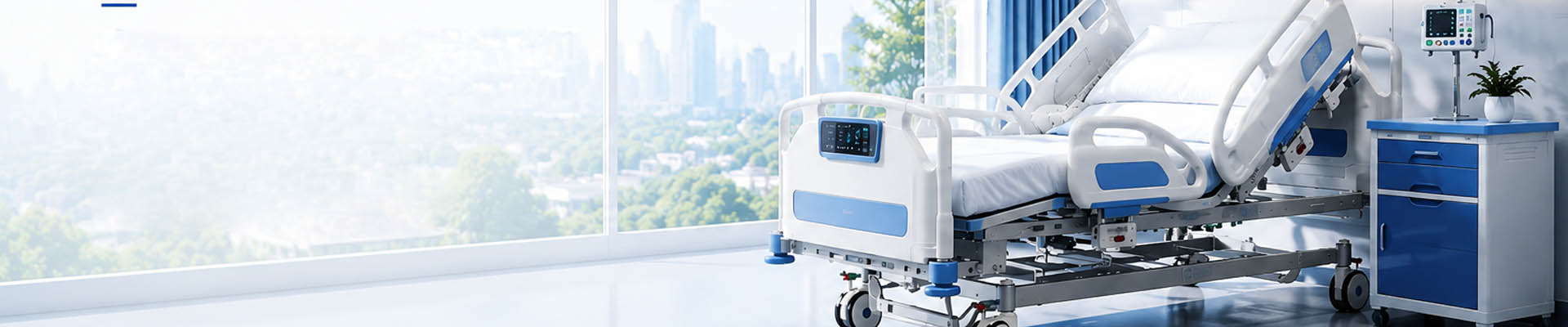

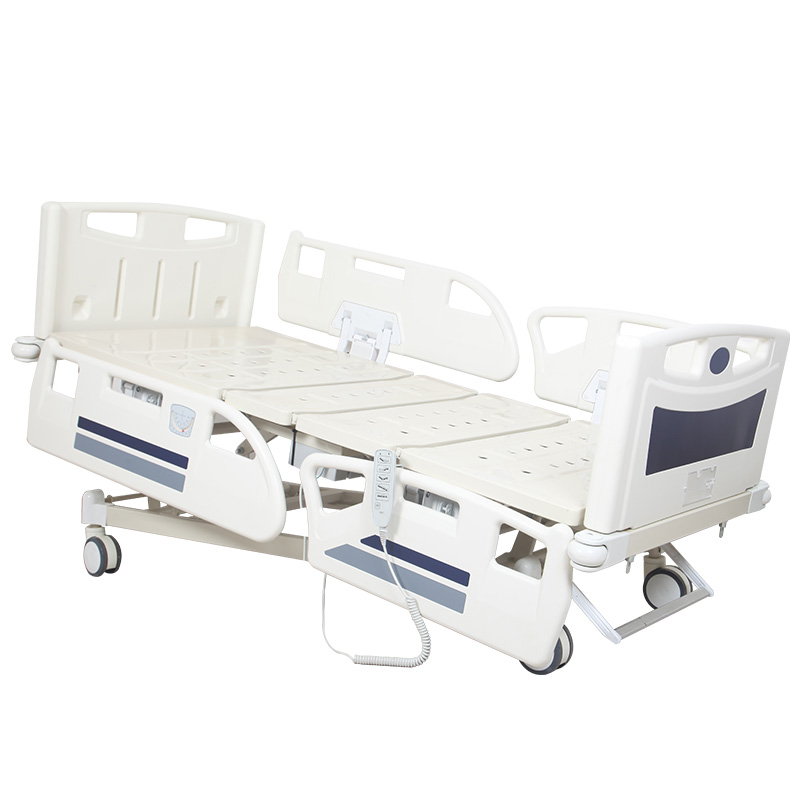
On a conventional electric hospital bed, the operating handset may hang from the side of the frame or rest in a designated holder. On some advanced electric and ICU beds, however, control buttons are integrated directly into the side rails. At first glance, this may appear to be a small design difference. In reality, adding controls to the rail changes the construction of several interconnected components: the rail panel, electrical wiring, control interface and the way the bed's movements are operated. For medical equipment distributors and hospital buyers, an electric hospital bed with side rail controls should be evaluated as a complete product configuration rather than a standard hospital bed with extra buttons attached to its guardrails. Some models provide controls on the inner surface of the rail, while others may include caregiver-facing controls on the outer surface. Depending on the design, the buttons may offer different functions or access permissions. Not every electric hospital bed includes these interfaces. Even among ICU beds, the number, position and functions of integrated rail controls can vary significantly. This article examines the actual product structure behind side-rail controls, including ABS panels, button layouts, wiring connections, actuator compatibility and function-locking options. Explore our electric hospital bed with side rail controls and ICU bed models to review available configurations. A traditional wired handset is a separate operating device connected to the bed's electrical system. It can be positioned within the limits of its approved cable arrangement and designated mounting or storage location. A side-rail control interface is built into a particular rail assembly or an approved mounting structure attached to it. The electrical controls therefore become part of the rail's physical design. These elements must be compatible with the complete electric bed model. A conventional ABS side rail cannot automatically be converted into an electronically controlled rail simply by installing a button panel. Some hospital bed models may have controls positioned on both the patient-facing and caregiver-facing sides of a rail. These surfaces are in different physical locations and may provide different approved functions. The inside interface may be designed for permitted patient adjustments, while the outside interface may provide designated caregiver controls, depending on the model. Buyers should not assume that both sides of the rail operate every bed movement. The supported functions and access permissions should be listed separately in the technical specification. Many electric ICU beds use molded ABS side-rail panels. Where controls are integrated into these panels, the rail assembly must provide an approved location for the electrical interface and its supporting components. The presence of control buttons changes the component arrangement compared with a conventional rail that contains no electronics. The electrical interface must not interfere with the intended operation of the rail mechanism. A panel with integrated controls may therefore use a different construction from an otherwise similar ABS panel without electronics. On an integrated rail assembly, buyers may see several buttons or operating components close together. However, a mechanical release control and an electrical bed-positioning button perform different tasks. The mechanical release is associated with the approved rail movement and locking mechanism. The electrical controls command supported bed functions through the control system. The presence of an electrical button panel does not mean the side rail uses an electrically powered release mechanism. Likewise, a rail with a convenient mechanical release button does not automatically have integrated electrical positioning controls. Side-rail controls may be used to operate selected electric hospital bed movements. Common powered movements on suitable models include backrest elevation and leg-section adjustment. However, the buttons themselves do not create these functions. The bed must have the corresponding actuators, articulated platform and control-system capabilities. A rail panel containing additional buttons cannot provide a movement that the bed's mechanical and electrical systems do not support. For professional buyers, the control layout and actual bed functions should always be specified together. Some electric hospital beds allow overall height adjustment through an integrated side-rail interface. Other models may reserve particular functions for a caregiver panel or a separate handset. The arrangement depends on the approved operating system. Buyers should distinguish the physical availability of a control button from the permissions and conditions under which the movement can be operated. A button symbol shown in a catalog image is not sufficient evidence of the complete operating behavior. An integrated control interface communicates with the electric bed's approved control system. Depending on the design, the connection may involve a cable assembly, connector and other model-specific electrical components. The interface must be compatible with the control box and supported movements. Two control panels may use similar button symbols but different electrical connections. They should not be treated as interchangeable unless the manufacturer confirms compatibility. The rail assembly itself may move between approved raised and lowered positions. When the control interface is integrated into a moving component, the electrical connection must be designed for that mechanism. Depending on the product, the cable arrangement may include designated routing paths, protective components and provisions for permitted movement. The cable must not be arbitrarily shortened, rerouted or replaced with an unapproved substitute. Electrical and mechanical compatibility should be considered together for any service work involving an integrated rail control. Electric hospital beds may have an articulated backrest and leg section in addition to movable side rails. These are different types of movement within the same complete product. Where a control interface is installed in a rail, the manufacturer's design must accommodate the approved relationships among the rail assembly, bed platform and electrical connections. Buyers should not assume that all rail-control designs are compatible with every articulated mattress-platform arrangement. The complete system should be evaluated as one approved bed configuration. Some electric hospital beds provide a function-locking feature that can restrict selected powered movements through designated controls. This may be available through a caregiver interface, a central control arrangement or another manufacturer-approved system. The exact implementation varies by model. The presence of side-rail buttons does not automatically mean that the bed includes function lockout. Similarly, the existence of a separate nurse control panel does not establish that every button can be locked. These features should be documented for the exact electric bed model. Some electric hospital beds may use integrated side-rail controls together with a separate handset or caregiver control panel. Others may use different interface combinations. Therefore, the installation of controls within the side rail does not necessarily eliminate the need for other control components. These arrangements are examples of possible designs rather than standard features on every electric bed. Buyers should request the exact control interfaces supplied with the model and identify optional equipment separately. Electric three-function hospital beds commonly provide powered backrest adjustment, leg adjustment and overall height adjustment. An ICU bed may offer additional movements and control features, depending on its configuration. However, neither the three-function designation nor the ICU designation determines whether side-rail controls are provided. Two electric ICU beds may have similar ABS rail designs but offer different electrical interfaces. For accurate comparison, buyers should examine the complete control configuration rather than infer it from the bed category. Electric hospital bed control components have manufacturer-defined operating conditions. Depending on the model, relevant specifications may include electrical ratings, ingress protection information and cleaning restrictions. These requirements apply to the actual component or assembly, not automatically to every electrical part of the bed. An IP rating for an actuator or control box should not be assumed to apply to the integrated rail control panel. Likewise, a molded ABS panel does not establish that the electrical controls can withstand any cleaning chemical or exposure condition. For distributors supporting previously supplied electric beds, replacement components should be selected using approved part identification. A damaged rail-control panel may involve more than the visible button surface. Depending on the design, the serviceable assembly may include the interface, cable and other manufacturer-specified components. Changing the electrical interface without confirming compatibility can affect the approved operation of the complete bed. Service work should follow the manufacturer's instructions and applicable electrical safety requirements. A photograph of an ABS side rail can show the location and exterior design of the buttons. However, it may not reveal which bed movements the interface can actually operate. For product evaluation, a manufacturer-approved demonstration can provide useful additional information. The demonstration should follow the operating instructions and use the exact configuration being quoted. It should supplement the technical datasheet rather than replace the manufacturer's documentation. A quotation for an electric hospital bed with integrated side-rail controls should describe the control interfaces as clearly as the mechanical adjustment functions. A general statement such as ABS side rails with controls may not identify the actual equipment included. Buyers should also distinguish standard equipment from optional interfaces. If two quotations include different control arrangements, they should not be compared as though the beds have identical specifications. An electric hospital bed with side rail controls is more than an adjustable frame with an additional button panel. The rail structure, integrated electrical interface, wiring, control box and supported actuators must form a compatible system. The most useful product comparison therefore follows this sequence: Bed Model → Rail Design → Control Location → Supported Functions → Electrical Connections → Lockout Options → Approved Product Configuration This approach helps medical equipment buyers identify meaningful differences between electric bed models that may look similar in a catalog. Explore our electric three-function, five-function and ICU hospital bed range to review available product configurations. HEYUAN manufactures electric and manual hospital beds and related medical furniture in China. Integrated side-rail controls, caregiver interfaces, lockout functions and other electrical features depend on the selected model. If you are sourcing electric hospital beds for distribution or a healthcare project, please contact our team with your required adjustment functions, control-panel configuration, quantity and destination market. We can help confirm available models and provide product-specific FOB Tianjin quotations.An Electric Hospital Bed with Side Rail Controls Puts the Buttons Where They Matter
What Makes an Integrated Side-Rail Control Different?
Components of a typical integrated control arrangement
Inside and Outside Controls Can Serve Different Users
Control layout details to check
ABS Rail Construction Must Accommodate the Control Interface
Physical rail details
The Rail Release Button and the Bed Control Buttons Are Not the Same
Keep these components separate
Backrest and Leg Functions Depend on the Bed's Actual Drive System
Relevant technical components
Overall Height Adjustment May Be Available from Selected Rail Controls
Height-control details to confirm
The Rail Panel Is Connected to the Main Bed Control System
Connection information worth reviewing
Moving Side Rails Create Specific Cable-Routing Requirements
Wiring characteristics to verify
Rail Movement and Mattress-Platform Movement Are Different
Relevant product characteristics
What Is Function Lockout on an Electric Hospital Bed?
Lockout details to confirm
Integrated Controls Do Not Automatically Replace the Handset
Possible interface combinations
Three-Function Beds and ICU Beds May Use Different Control Layouts
Compare these details separately
Integrated Buttons Must Match the Intended Electrical Environment
Technical information to request
Replacement Rail Controls Must Match the Exact Bed Model
Replacement information
A Product Demonstration Should Show the Rail Controls in Use
Demonstration details
What Should Buyers Request in the Technical Quotation?
Recommended product specifications
Side-Rail Controls Are Part of the Complete Electric Bed Design