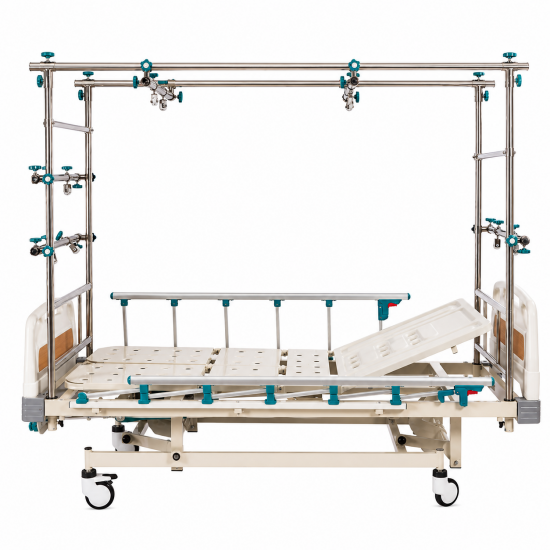
Orthopedic Hospital Bed Designed Around Traction and Limb Positioning
Orthopedic wards often require a different bed configuration from general inpatient departments. This manual orthopedic hospital bed integrates a full stainless steel traction structure with independently adjustable lower-limb sections, giving hospitals a practical solution for orthopedic patient positioning, trauma care and rehabilitation applications.
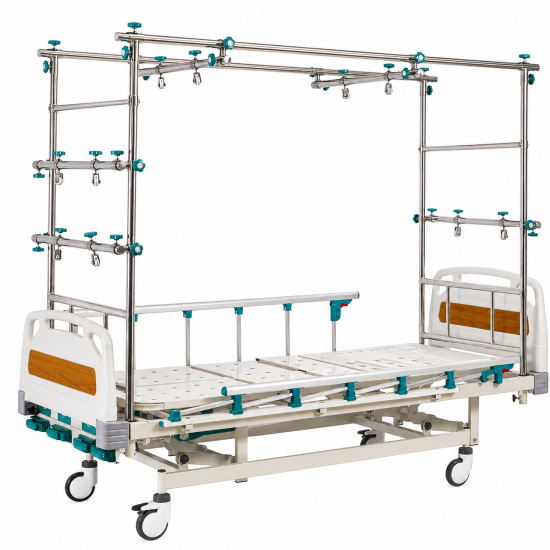
Rather than treating the traction frame as a simple accessory, the bed is designed as a complete orthopedic care platform. Its surrounding four-post structure provides multiple adjustable mounting positions, while the segmented mattress platform allows caregivers to change the patient's back and lower-limb positions manually.
Adjustable Stainless Steel Traction System
The most distinctive feature of this model is its stainless steel orthopedic traction frame. Vertical posts on both sides are connected by upper horizontal rails to create a stable structure around the Hospital Bed.
Multiple Adjustable Mounting Positions
The traction structure incorporates multiple adjustable clamps and attachment points. Their positions can be changed along the stainless steel rails, providing flexibility when configuring compatible traction components for different orthopedic care requirements.
Stainless Steel Construction for Hospital Use
The traction frame is manufactured from stainless steel, providing the durability and corrosion resistance required for repeated clinical use. Its smooth metal surfaces also simplify routine cleaning and maintenance in hospital environments.
Separate Positioning for the Left and Right Legs
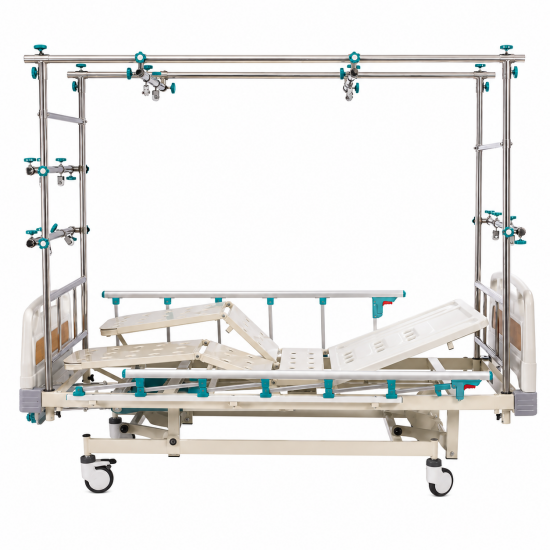
A conventional manual hospital bed normally moves the lower leg section as one complete platform. This orthopedic model uses separated left and right lower-limb sections, allowing each side to be positioned independently.
Two Independent Leg Adjustment Mechanisms
Separate manual crank mechanisms control the two leg sections. Either side can be elevated according to the required patient position, with an adjustment range of approximately 0–40°. This independent design is especially useful where the affected limb requires different positioning from the opposite leg.
0–70° Backrest Elevation
The back section can be raised from approximately 0° to 70°. Caregivers can therefore change the patient from a flat position to a semi-seated or more upright position for daily nursing, resting and rehabilitation activities.
Height Adjustment for Daily Orthopedic Care
The mattress platform height can be adjusted between approximately 530 mm and 730 mm. This provides a 200 mm working range that allows the bed height to be adapted for different bedside procedures and caregiver requirements.
The combination of backrest elevation, independent lower-limb positioning and height adjustment gives the bed greater flexibility than a basic fixed-height orthopedic traction bed.
Practical Configuration for Hospital Departments
Foldable Aluminum Alloy Side Rails
Foldable aluminum alloy side rails provide bedside protection while maintaining convenient access to the patient. The rails can be lowered when caregivers require closer access during nursing or treatment procedures.
PP Head and Foot Boards
The head and foot boards use PP components suitable for routine hospital environments. Together with the epoxy-coated steel main frame, they provide a practical combination of structural durability and convenient daily maintenance.
Central Braking for Controlled Mobility
The bed is fitted with four medical casters and a central braking system. Staff can move the bed when necessary and secure all casters efficiently once the required position is reached.
Where This Orthopedic Traction Bed Can Be Used
This configuration is intended primarily for healthcare facilities that need dedicated orthopedic patient equipment rather than a general-purpose ward bed. Typical applications include orthopedic departments, trauma wards, fracture care units, rehabilitation hospitals and postoperative recovery areas.
For hospital projects where orthopedic and general ward beds are being purchased together, this model can complement standard manual and electric hospital bed configurations by providing a dedicated solution for departments requiring traction support and independent lower-limb positioning.
Product Specifications
Dimensions and Adjustment
Overall Size: 2235 × 960 mm
Bed Height: 530–730 mm
Mattress Platform Size: 1910 × 830 mm
Backrest Angle: 0–70°
Leg Adjustment: 0–40°
Leg Positioning: Independent adjustment of left and right sections
Structure and Materials
Main Bed Frame: Epoxy-coated steel
Traction Structure: Stainless steel orthopedic traction frame
Side Rails: Foldable aluminum alloy
Head and Foot Boards: PP components
Net Weight: Approximately 152 kg
Load Capacity: Up to 250 kg
Casters: Four medical casters
Brake: Central braking system
For Orthopedic Ward and Hospital Procurement Projects
When selecting beds for an orthopedic department, buyers should consider more than the number of manual adjustment functions. Traction frame construction, lower-limb positioning flexibility, bed height, mobility and the availability of suitable traction accessories can all affect how well the equipment matches the intended clinical environment.
This model combines these requirements in one specialized orthopedic bed platform. Different configurations and compatible accessories can be discussed according to hospital project requirements, procurement quantities and target market needs. Please contact us for product specifications, quotation and configuration information.