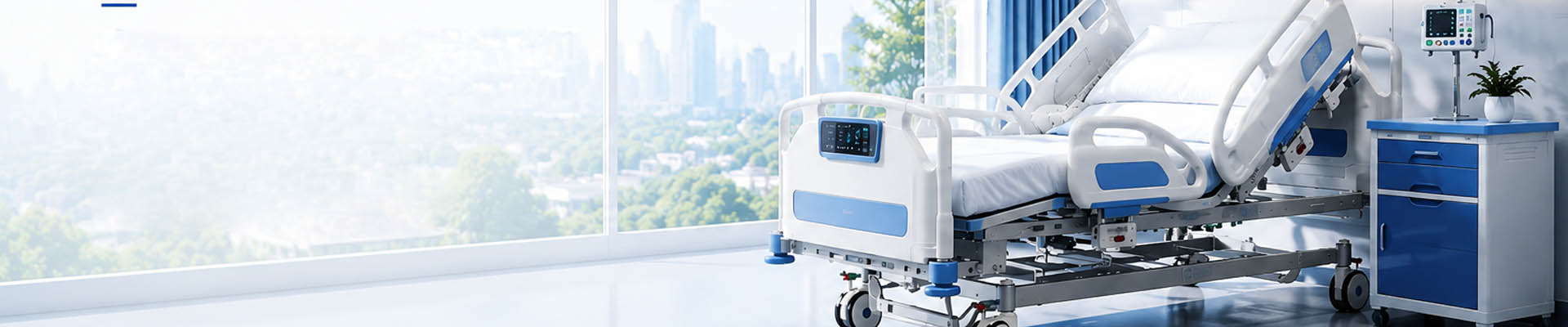

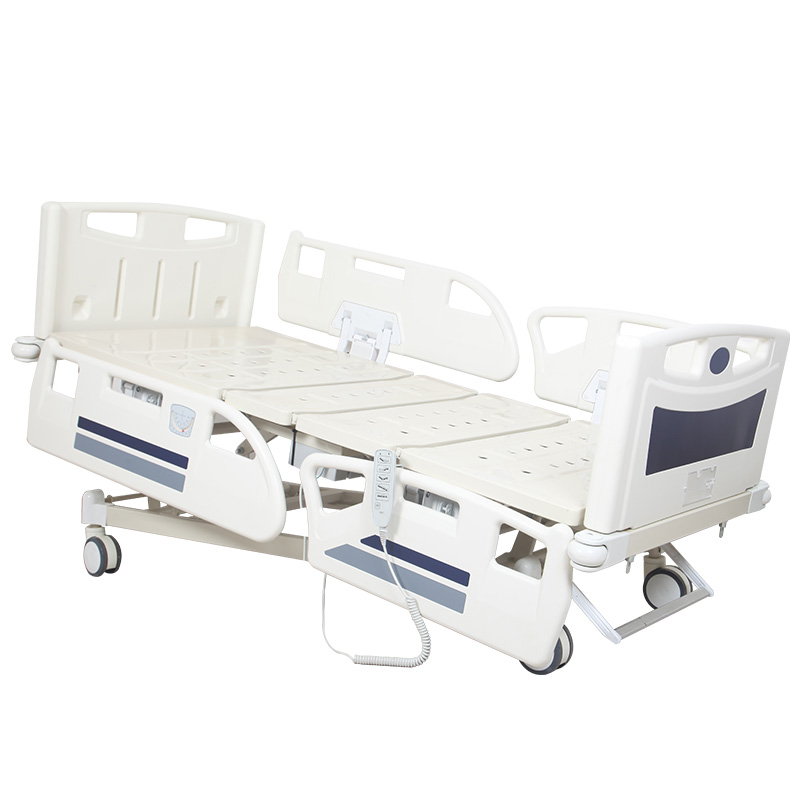
An electric hospital bed may have several ways to operate its positioning functions. A patient handset can control selected adjustments, while some advanced models include buttons integrated into the side rails. Other beds also provide a separate control interface intended for authorized caregivers. These interfaces may look similar because they all operate electric bed movements. However, they do not necessarily provide the same functions or permissions. For medical equipment distributors, an electric hospital bed with nurse control panel is a specific product configuration that deserves closer examination. The caregiver control interface may provide designated adjustment functions, restrictions on other controls, or additional positioning commands depending on the model. Some electric ICU beds use a nurse control panel mounted at the foot end. Others may have a separate wired caregiver controller or another manufacturer-approved arrangement. The location of the panel, the buttons it contains and its connection to the electrical system all influence the complete bed configuration. Understanding these differences helps overseas buyers compare electric hospital beds according to their actual control architecture rather than simply counting the number of buttons or adjustment functions. This guide examines the structure, supported functions, mounting arrangements and compatibility requirements of nurse control panels used on selected electric hospital beds. Explore our electric hospital bed with nurse control panel and ICU bed configurations to review available electric medical beds. A nurse control panel is a designated interface through which authorized caregivers can operate permitted bed functions according to the manufacturer's instructions. Depending on the design, it may be mounted to the bed or supplied as a separate approved control device. Its main purpose is to provide a defined way to access selected electric positioning functions and, on certain models, manage restrictions affecting other operating interfaces. Not every nurse control panel includes all these components. The exact layout, electrical interface and operating functions must be confirmed for the selected electric hospital bed. A patient handset is commonly designed to operate a defined set of bed movements. It may be connected to the bed through a cable and placed in a designated holder when not in use. A nurse control panel is a separate product interface that may provide different permissions or positioning functions. The presence of a caregiver panel does not necessarily eliminate the patient handset. Some electric beds can be configured with both interfaces, while other models may use a different combination of controls. Caregiver control interfaces can be positioned in different locations on an electric hospital bed. Some models use a panel mounted near the footboard. Other designs may position the controls on a separate holder or integrate them into a designated bed component. The location forms part of the approved bed design. A control panel should not be relocated without manufacturer approval. Its mounting arrangement must remain compatible with the surrounding frame and moving components. Some advanced electric hospital beds have control interfaces associated with the footboard or foot-end structure. These arrangements may make the panel a visible part of the product's exterior design. However, the presence of an ABS footboard does not establish that an integrated control panel is included. A removable footboard and an integrated caregiver panel must be evaluated together if they are supplied as part of the same assembly. Buyers should request the exact configuration rather than assume that every electric ICU bed uses an identical foot-end control design. The available functions depend on the electric hospital bed model and its control system. Some nurse panels may provide commands for conventional powered adjustments. Others may include additional positioning features supported by the bed. These are examples of possible features, not a list of functions provided by every nurse control panel. The control interface cannot operate a movement that the bed's mechanical and electrical systems do not support. When a caregiver presses an approved positioning button, the control system operates the corresponding electric drive according to the bed's design. For backrest and leg adjustments, the relevant actuators move designated sections of the mattress platform. The nurse control panel is one part of this larger electrical and mechanical arrangement. The number of control buttons does not determine the number of actuators installed on the bed. Likewise, the presence of a nurse control panel does not change the approved adjustment limits of the underlying mechanisms. On selected electric hospital beds, the caregiver panel can operate the overall height-adjustment mechanism. This system moves the mattress platform relative to the floor through an approved lifting structure. Depending on the model, the control architecture may also define which other interfaces can access this movement. A hospital bed offering electric height adjustment does not automatically include dedicated height controls on a nurse panel. The panel and bed model must be checked together. Some electric five-function and ICU hospital beds provide Trendelenburg and reverse Trendelenburg positioning. These movements involve changing the orientation of the bed's supporting platform or upper structure relative to the floor. The nurse control panel may provide designated commands for these functions where the model supports them. The availability of a nurse panel does not establish that either whole-bed tilt function is included. These positioning functions must be documented separately for each bed. Some electric hospital beds provide mechanisms for restricting selected powered adjustments. These systems are commonly described as function lockout features. Depending on the model, designated caregiver controls may be used to apply or change certain restrictions. Not all nurse control panels include function lockout. Similarly, the word lockout does not establish that all bed movements can be independently disabled. The exact capabilities must be confirmed through the product documentation. A function lockout controls access to selected operations according to the manufacturer's design. An emergency positioning or release function, where provided, serves a different purpose. These features should not be treated as interchangeable. The presence of a nurse control panel does not guarantee a CPR release or emergency lowering mechanism. Any emergency function must be identified by its actual mechanical or electrical design and the manufacturer's instructions. Some advanced electric hospital beds may provide a control associated with an approved CPR positioning function. Other products may use a mechanical backrest release or another manufacturer-defined mechanism. An electronic command and a mechanical release are not the same component. The term CPR function should not be used without clarifying the actual feature. Medical personnel must follow the manufacturer's instructions and applicable clinical procedures. A nurse control panel must communicate with the bed's compatible electrical system. Depending on the design, it may use a designated cable, connector and approved control interface. The control box interprets supported commands and operates the appropriate actuators according to the system architecture. A control panel with a similar exterior appearance cannot automatically replace another model. Connector compatibility and control functions must be confirmed by the manufacturer. An advanced electric hospital bed may include several operating interfaces. Depending on the model, these can include a patient handset, integrated rail controls and a separate caregiver panel. Each interface connects to the approved control architecture. These combinations are examples rather than universal configurations. Where more than one interface is installed, the manufacturer must define the supported commands, restrictions and system behavior. Buyers should avoid assuming that all interfaces have identical permissions. A nurse control panel includes an external housing or supporting structure designed for its intended location. Depending on the product, the housing may use molded polymer components or other specified materials. The housing protects and supports the interface according to its approved construction. A smooth molded surface does not automatically establish that the panel is waterproof or resistant to all cleaning chemicals. Relevant protection and cleaning specifications must be confirmed for the actual assembly. Electric hospital beds can contain several electrical components with different protection characteristics. For example, a motor or actuator may have a specified ingress protection rating. That rating does not automatically apply to the nurse control panel, handset or complete bed. Buyers should not assume that an IPX4-rated actuator makes every electrical component on the hospital bed IPX4. Each claim should be supported by the appropriate component or product documentation. Electric three-function hospital beds generally provide backrest, leg and height adjustments, depending on the model. Five-function beds may add whole-bed positioning features such as Trendelenburg and reverse Trendelenburg. These differences influence the list of available commands but do not automatically determine the control-panel design. A five-function electric hospital bed does not automatically include a nurse panel. Likewise, a three-function bed may offer an approved caregiver interface depending on its configuration. Some electric ICU beds use caregiver panels mounted near the foot end. Other designs may use different mounting or control arrangements. The ICU designation alone does not identify the exact caregiver interface. The exact configuration should be documented for each ICU model. Buyers should not infer the complete control system from a photograph of the side rails or footboard. For distributors supplying replacement parts, the nurse control panel should be identified by its approved model or part number. Two panels may have similar buttons or symbols while using different connectors, software behavior or supported functions. Unauthorized substitutions can affect the approved operation of the bed. Electrical service and replacement should follow the manufacturer's instructions and relevant safety requirements. For international medical equipment procurement, a quotation should identify the caregiver interface and its supported functions. A statement such as electric ICU bed with nurse controls may leave important details unclear. Buyers should also clarify whether the nurse panel is included in the standard product price or offered as an approved option. If two quotations specify different control systems, the difference should be reflected in the technical comparison. An electric hospital bed with nurse control panel combines a caregiver interface with the approved control box, actuators and mechanical positioning system. The panel's value comes from the functions and permissions it is designed to provide, not merely from the number of buttons on its surface. The mounting position, control architecture, restrictions and replacement compatibility should all be confirmed for the selected bed. For professional buyers, an effective evaluation follows this sequence: Electric Bed Model → Caregiver Panel Location → Supported Functions → Control Permissions → Control-Box Compatibility → Electrical Connections → Approved Product Configuration Explore our electric three-function, five-function and ICU hospital bed collection to review available adjustment and control configurations. HEYUAN manufactures electric and manual hospital beds and related medical furniture in China. Nurse control panels, patient handsets, integrated rail controls and function lockout capabilities vary by model. If you are sourcing electric hospital beds for distribution or healthcare projects, please contact our team with your required bed functions, caregiver control configuration, quantity and destination market. We can help confirm suitable models and prepare product-specific FOB Tianjin quotations.Who Controls the Bed? Inside an Electric Hospital Bed with Nurse Control Panel
What Is a Nurse Control Panel on an Electric Hospital Bed?
Possible panel components
The Caregiver Panel Is Not the Same as a Patient Handset
Important distinctions
Why the Control Panel Location Matters
Mounting specifications to identify
Footboard Controls Are a Model-Specific Feature
Foot-end specifications
Which Bed Functions Can a Nurse Panel Operate?
Possible electric adjustments
Backrest and Leg Adjustments Depend on the Actual Drive System
Components involved
Overall Height Adjustment May Have Dedicated Caregiver Controls
Height-related details
Trendelenburg Controls Require Compatible Bed Mechanics
Specifications to verify
Function Lockout Is an Important Difference Between Control Interfaces
Lockout information to confirm
Lockout and Emergency Functions Are Different Features
Separate product characteristics
A CPR Button Is Not Necessarily a Manual CPR Release
Questions buyers should ask
How Does the Nurse Panel Connect to the Control Box?
Electrical specifications
Multiple Control Interfaces Must Work as One Approved System
Possible interface combinations
The Panel Housing Must Suit Its Installation Location
Housing details to review
Ingress Protection Ratings Belong to Specific Components
Protection details to request
Three-Function and Five-Function Beds May Use Different Nurse Panels
Compare these items separately
ICU Beds Can Have More Than One Caregiver Control Layout
ICU control specifications
Replacement Nurse Panels Must Match the Original Electrical System
Replacement information
What Should Buyers Request in a Nurse Control Panel Quotation?
Recommended quotation specifications
The Control Panel Is Part of the Bed, Not Just an Accessory