

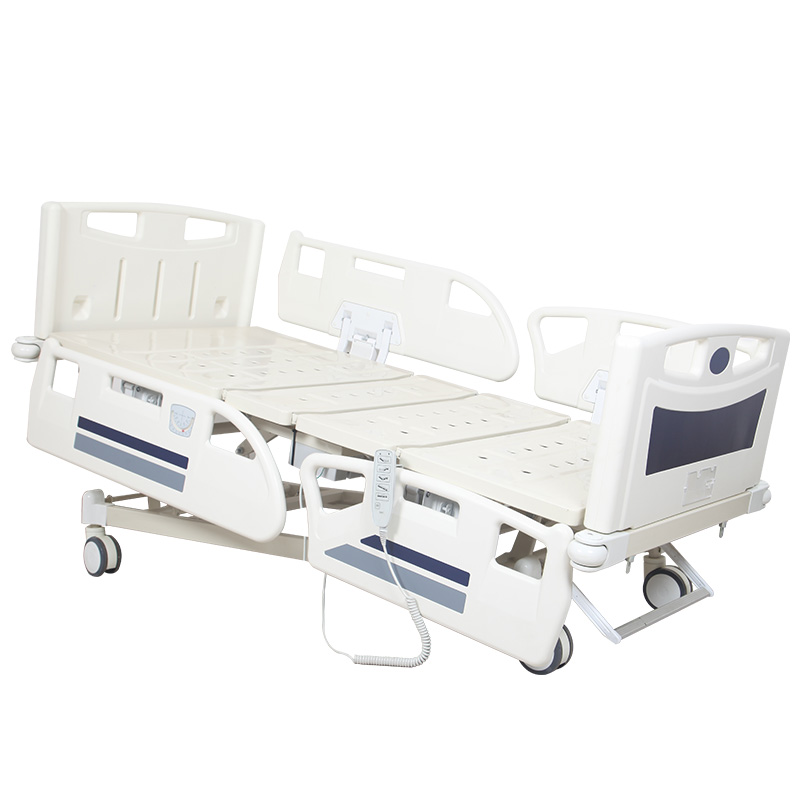
Healthcare facilities across Southeast Asia vary greatly, from large urban hospitals and private medical centers to regional clinics and rehabilitation facilities. This means there is no single electric hospital bed configuration that is suitable for every project. For buyers, the more important question is not how many functions a bed has, but whether those functions match actual clinical needs, operating conditions, maintenance capabilities, and procurement budgets. Before comparing models or quotations, buyers should determine where the beds will be used and what level of patient care they need to support. For general wards, practical electric adjustment functions, reliable side rails, stable casters, and easy cleaning may be more important than complex features that are rarely used. Departments requiring more intensive patient management may benefit from additional positioning functions, height adjustment, Trendelenburg positioning, and more advanced control options. Facilities serving rehabilitation or elderly patients should also consider ease of transfer, comfortable positioning, and caregiver workload. Buyers can compare different Electric Hospital Bed configurations according to their facility requirements. More functions do not automatically mean a better purchasing decision. Unnecessary features can increase acquisition costs and make maintenance more complicated. Backrest adjustment, leg positioning, and height adjustment can provide a practical solution for many hospital applications. For facilities requiring more flexible patient positioning, five-function models can add Trendelenburg and reverse Trendelenburg adjustments. Hospital beds may be adjusted, moved, cleaned, and used repeatedly every day. Buyers should therefore evaluate the complete structure rather than focusing only on motors or appearance. A strong frame and stable bed platform help maintain reliable performance during long-term institutional use. Side rail mechanisms, caster quality, and braking systems are frequently used components and should be evaluated carefully before bulk purchasing. Electric beds contain motors, control systems, handsets, and other components that may eventually require maintenance or replacement. Importers and healthcare facilities should confirm whether commonly used replacement parts can be supplied after delivery. A practical design can make future maintenance easier and reduce unnecessary downtime. When electric beds are supplied to different countries, buyers should confirm electrical specifications before production. Electrical configuration should match the destination market and project requirements. Motors, controllers, and handsets should provide stable operation for repeated daily adjustments. Two electric hospital beds may look similar in photographs while using different structures, components, side rails, casters, motors, and control systems. Before comparing prices, buyers should request clear specifications so that quotations are based on equivalent configurations. For distributors and project buyers, supplier capability becomes especially important when orders involve multiple models or large quantities. A professional manufacturer should be able to maintain consistent specifications across an entire order. OEM requirements may include colors, accessories, logos, packaging, electrical configurations, and other market-specific details. Clear technical communication and spare-parts support can reduce long-term risks for importers and distributors. You can review our Factory information to learn more about manufacturing and quality control capabilities. For Southeast Asian healthcare buyers, the best electric hospital bed is not necessarily the model with the most functions. A better choice is a configuration that balances clinical requirements, durability, maintenance, budget, and reliable supplier support. If you are planning an electric hospital bed procurement or distribution project, Contact Us to discuss suitable configurations for your market.Choosing Electric Hospital Beds for Southeast Asian Healthcare Facilities
Start With the Actual Application
General Hospital Wards
ICU and Higher-Acuity Care
Rehabilitation and Long-Term Care
Four Factors Buyers Should Compare Before Ordering
1. Functions Should Match Real Care Needs
Three-Function Electric Beds
Five-Function Electric Beds
2. Durability Matters in High-Use Environments
Frame and Bed Platform
Side Rails and Casters
3. Maintenance Should Be Considered Before Purchase
Spare Parts Availability
Simple Component Replacement
4. Electrical Requirements Must Be Confirmed
Voltage and Plug Requirements
Control System Reliability
How Importers Can Reduce Procurement Risk
Do Not Compare Quotations Without Comparing Specifications
Evaluate the Manufacturer Behind the Product
Production Consistency
Customization Capability
After-Sales Communication
Questions to Ask Before Placing an Order
Expert Tip