

Why Four Independent Side Rails Make a Difference on an Electric Nursing Bed
When comparing electric nursing beds for long-term care facilities, buyers usually pay attention to the number of electric functions, bed height range, motor configuration and mattress platform. However, the design of the side rails can make a significant difference to how caregivers access the bed.
Some nursing beds use one long side rail on each side. Others feature two separate rail sections on each side, allowing the head-end and foot-end sections to be operated independently.
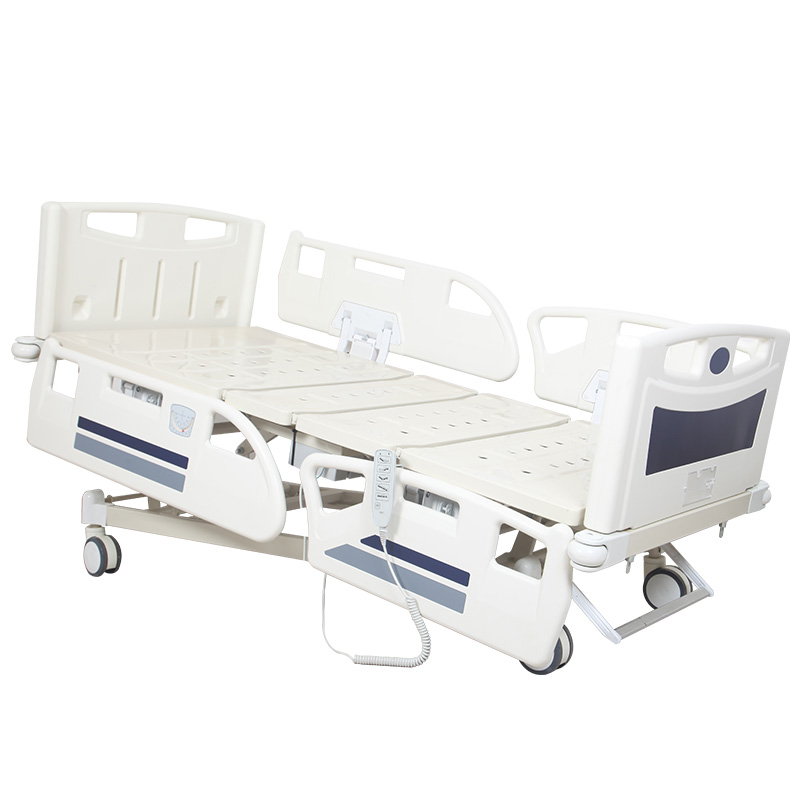
An Electric Nursing Bed with Four Independent Side Rails provides four individually operated protective sections around the mattress platform. This arrangement allows caregivers to access selected areas of the bed without necessarily lowering an entire side rail assembly.
For nursing home operators, rehabilitation facilities and medical equipment distributors, understanding the rail construction, release mechanisms, mounting structure and mattress compatibility is essential when comparing different electric care bed configurations.
How Are Four Independent Side Rails Arranged?
A four-section side rail system typically consists of two separate rail assemblies on each side of the nursing bed.
Each section has its own supporting structure and designated operating mechanism.
Head-End Side Rails
The head-end sections are positioned beside the upper part of the mattress platform.
They provide side protection within their designated area while allowing the complete bed to retain its electric backrest adjustment function.
The exact rail dimensions and mounting locations depend on the model.
Foot-End Side Rails
The lower sections are installed beside the leg area of the bed.
They can be operated separately from the head-end sections on a properly designed independent rail system.
Four Separate Operating Sections
With two rail sections on each side, the caregiver has more choices about which section to lower during an approved care activity.
For example, access to the upper body may require a different rail arrangement from access to the lower legs.
Independent Rails Do Not Mean Independent Electric Motors
The word "independent" describes the ability to operate the rail sections separately.
On many nursing bed models, the side rails use mechanical release systems rather than individual electric motors.
Buyers should confirm the actual mechanism fitted to the selected product.
What Is the Advantage of Separate Head and Foot Rail Sections?
The main difference between split and full-length side rails is the ability to manage individual areas of bedside access.
Access to the Upper Body
During appropriate nursing activities, the head-end rail may be lowered according to the care procedure while another section remains in its designated position.
This creates a different access arrangement from a conventional full-length side rail.
Access to the Lower Body
Where permitted, the foot-end rail can be lowered independently to allow access to the lower part of the mattress platform.
This may be useful for selected daily care activities and equipment arrangements.
Bedside Transfer Configuration
For approved transfer procedures, the relevant rail sections can be positioned according to the manufacturer's instructions and the resident's assessed needs.
However, a particular rail arrangement does not automatically make a transfer safe or suitable for every resident.
Caregiver Access from Both Sides
A four-section arrangement provides individually operated sections on the left and right sides of the bed.
The actual operating procedure should remain consistent with the manufacturer's instructions and the facility's care requirements.
How Does the Mechanical Release System Work?
Each independent side rail must have an operating mechanism that allows it to move between its designated positions.
Release Control
Depending on the model, a side rail may use a release lever, button or another mechanical control.
This releases the approved retention mechanism so that the rail can be moved according to the manufacturer's instructions.
Moving the Rail
The rail assembly moves through its designed path.
Different products may use folding, swinging, sliding or other engineered mechanisms.
Buyers should verify the actual movement used on the selected nursing bed.
Raised Position Locking
The locking mechanism must secure the rail in its designated protective position.
Trained operators should verify that the locking component has engaged correctly before relying on the rail in its intended use.
Lowered Position
When lowered, the rail should remain within its manufacturer-defined operating arrangement.
The lowered position must not interfere with the approved movement of the mattress platform or nearby components.
Inspect All Four Sections Individually
During product evaluation, buyers should test each rail rather than inspecting only one section.
The movement, release control and retention components should function as intended on all four assemblies.
How Are the Side Rails Connected to the Bed Frame?
The mounting arrangement is an important part of the complete four-section side rail system.
Supporting Brackets
Each rail assembly connects to the designated bed structure through mounting components.
Depending on the model, these may include metal brackets, supporting plates or engineered connections.
Pivot and Linkage Components
Moving side rails may use pivot joints or mechanical linkages.
These components must remain compatible with the intended operating loads and movement range.
Relationship with the Mattress Platform
The rail installation must account for the movement of the articulated mattress platform.
This is particularly important on beds that provide electric backrest and knee adjustment.
Replacement Component Compatibility
Side rail mounting dimensions and release mechanisms can differ between models.
A visually similar replacement rail should never be installed without confirming manufacturer-approved compatibility.
Why the Gap Between Split Side Rails Matters
A four-section rail system introduces a separation between the head-end and foot-end rail assemblies.
This separation must be assessed as part of the complete bed, mattress and rail configuration.
Gap Between Rail Sections
The distance between adjacent rail sections depends on the product geometry and operating positions.
The gap must be evaluated for potential entrapment hazards under applicable safety requirements.
Space Between the Rail and Mattress
The mattress dimensions and position influence the clearances around the side rail assemblies.
An incorrectly sized or displaced mattress may create unintended gaps.
Effective Rail Height
The relevant protective height depends on the relationship between the top of the installed mattress and the raised rail.
A thicker mattress can reduce the effective height above the sleeping surface.
Moving Platform Geometry
Backrest elevation and other electric movements may change the relative positions of the mattress and nearby structures.
Buyers should evaluate the complete configuration through its approved operating range.
Four Rails Are Not Automatically Safer Than Two
The number of rails does not independently establish product safety.
Correct geometry, locking performance, mattress compatibility, intended use and entrapment risk assessment are all necessary considerations.
How Do Independent Side Rails Work with Five Electric Functions?
Selected electric nursing beds combine a four-section side rail system with five powered positioning functions.
These systems operate through different mechanical arrangements but must remain compatible within the complete bed design.
Electric Backrest Adjustment
The backrest mechanism raises or lowers the upper mattress platform.
The head-end rails must remain compatible with the approved backrest movement and mattress configuration.
Electric Knee Adjustment
The knee adjustment mechanism changes the position of the lower mattress platform.
The foot-end rails must accommodate the intended movement without mechanical interference.
Electric Overall Height Adjustment
The complete patient support structure moves vertically through the bed's designated lifting mechanism.
Rail operation should remain compatible with the approved height adjustment range.
Trendelenburg Position
On models providing this function, the complete mattress support structure can tilt longitudinally into the designated Trendelenburg position.
Reverse Trendelenburg Position
The reverse function tilts the platform in the opposite longitudinal direction.
Neither function should be assumed suitable for every resident or care procedure without appropriate professional assessment.
Side Rail Operation and Electric Adjustment Are Separate Systems
Buyers should verify the permitted combinations of rail positions and powered bed movements.
The manufacturer's operating instructions define the approved use of the complete system.
What Makes the Four-Rail Configuration Practical on a Hi-Low Care Bed?
On an electric hi-low nursing bed, the mattress platform can be positioned at different heights.
The four-section rail system remains part of the patient support arrangement as the bed height changes.
Low-Level Resting Position
Some five-function care beds provide a low mattress platform position for long-term care environments.
The actual finished mattress-top height depends on both the platform height and mattress thickness.
Raised Caregiver Working Position
Electric height adjustment can raise the bed to a suitable working position within its approved range.
Caregivers can then arrange the rail sections according to the intended activity and care plan.
23–70 cm Height Adjustment Configuration
HEYUAN offers a five-function electric care bed with an approximately 230–700 mm platform height adjustment range and four independently operated side rails.
This configuration combines broad height adjustment with separately managed head-end and foot-end rail sections.
Check the Actual Measurement Reference
The specified platform height should not be confused with the height of the upper mattress surface.
Procurement teams should confirm the approved mattress thickness and the reference points used for the height measurements.
What Should Distributors Inspect Before Bulk Ordering?
For nursing home projects and international medical equipment distributors, a product sample provides an opportunity to verify the four-section rail design.
1. Confirm Four Independent Sections
Verify that the head-end and foot-end rails on each side can be operated separately.
2. Check the Release Mechanisms
Demonstrate the intended release method for all four rails.
3. Inspect the Locking Components
Confirm that each rail locks correctly in its approved operating position.
4. Review the Mounting Connections
Inspect the brackets, pivots, fasteners and accessible supporting components.
5. Verify Rail and Mattress Dimensions
Check the approved mattress size, rail height and relevant clearances.
6. Evaluate Entrapment Risks
Request appropriate safety information covering the complete bed, mattress and side rail configuration.
7. Test the Electric Bed Functions
Operate the approved backrest, knee, height and tilt functions and observe the surrounding rail assemblies for interference.
8. Confirm the Replacement Parts
Ask whether compatible rail sections, release devices, pivots and mounting components can be supplied separately.
9. Verify the Final Product Configuration
Confirm that the rail arrangement shown in the technical drawings and quotation matches the model intended for delivery.
HEYUAN Five-Function Electric Care Bed with Independent Side Rails
HEYUAN manufactures electric nursing beds, hospital beds and related care equipment for international distributors and long-term care facilities.
Our five-function electric care bed with independent side rails combines multiple powered positioning functions with four separately operated protective rail sections.
The model includes the following principal features:
- Electric backrest adjustment
- Electric knee-rest adjustment
- Electric overall height adjustment from approximately 230 to 700 mm
- Trendelenburg positioning
- Reverse Trendelenburg positioning
- Four independently operated side rail sections
- Two rail sections on each side
- Wired handset control system
- Wood-finish headboard and footboard design
- Model-specific steel supporting frame and mattress platform
The combination of five electric positioning functions and four independent side rails makes this model an option for nursing homes, elderly care institutions and rehabilitation facilities requiring flexible bed configurations.
View the 5-Function Electric Care Bed with Independent Side Rails for detailed product information.
Additional models are available in our electric nursing bed collection.
Frequently Asked Questions About Four-Section Nursing Bed Rails
Can all four side rails be operated separately?
On models designed with four independent rail sections, each section has its own approved operating arrangement. The actual mechanism should be verified for the selected product.
Are four independent side rails electrically operated?
Not necessarily. Many electric nursing beds use manually operated mechanical side rails even though the mattress positioning functions are powered.
Can the head-end rail be lowered without lowering the foot-end rail?
Yes, on properly designed independent rail systems. This is one of the differences between split rails and a single full-length rail.
Does a five-function bed always have four side rails?
No. Five-function describes the bed's available positioning movements, while the side rail configuration is a separate specification.
Can a thicker mattress be used with these rails?
Only when the mattress is approved for the complete bed and side rail configuration. Mattress thickness affects rail height and potential entrapment areas.
Can individual damaged rail sections be replaced?
Compatible replacement sections may be available. Buyers should confirm the exact bed model and approved component specification.
Four Independent Rails Provide More Than a Different Appearance
A nursing bed with four independent side rails offers a different approach to bedside access from a conventional full-length rail design.
The individual head-end and foot-end sections, mechanical release components, mounting structure and mattress compatibility all contribute to the complete system.
For nursing home operators and medical equipment distributors, understanding these details is important when selecting a five-function electric care bed for institutional use.
HEYUAN supplies electric nursing beds with different rail configurations and powered adjustment systems for international healthcare projects.
For technical specifications, OEM/ODM requirements, bulk quantities or FOB Tianjin quotations, contact HEYUAN with your required functions, order quantity and destination market.